This is not a traditional travel guide. It pairs personal observations with practical advice for travelers who would rather see the United States as it is, with rough edges, loose ends, and all. Despite the tone, this guide contains practical planning advice, safety context, and logistical realities intended to help travelers decide whether the United States is right for them.
If you are of the sort who enjoys a pleasant sojourn, a brief respite from the troubles of the world, then I must regretfully inform you that the United States is likely not the place for you. It is a vast and varied country, a landscape of peculiar difficulties, and one can never be entirely certain what fresh horror or peculiar delight awaits them.
After nearly twenty years of residing in the United States – a span of time long enough for a person to acquire a great many unsuitable habits – I have accumulated what might be described as a wealth of firsthand experience concerning life here, including the exploration of a wide variety of cities. Along the way, I was obliged to learn a few things the difficult way, a method of learning that is rarely enjoyable and often involves some degree of bewilderment. Among the lessons one must absorb is the strange truth about the most necessary of facilities: when one is in need of a toilet in the U.S., one must ask for the restroom, even if one has absolutely no intention of resting. Furthermore, you will soon observe that the local population regularly and, I suspect, out of sheer laziness, omits the letter “u” from their spelling of perfectly good words. Finally, while other, more sensible places might celebrate a turkey-related holiday earlier, here, the first turkey holiday does not take place until the very end of November, an inconvenient delay that is simply one more vexing scheduling matter in an already vexing world.
But the journey begins, as all such things do, with a passport and a ticket – documents that promise a journey, but cannot, of course, guarantee a safe return. You might find yourself in a city like New York, a place so crowded and full of noise that it resembles a swarm of particularly loud, disgruntled bees. There, you will encounter towering buildings that scrape the sky, as if in a desperate attempt to escape the pavement below. The streets are a labyrinth of taxis and pedestrians, all in a hurry, presumably to get somewhere else, though where that might be is anyone’s guess.
Should you prefer a more natural setting, you might venture to the Grand Canyon, a chasm so wide and deep it seems to have been carved by a god with a very large, and very sad, knife. The colours are of the sort that painters would consider too gaudy to be believable, and the silence is of the kind that is not peaceful, but rather unsettling, as if the world itself is holding its breath. One cannot help but feel very small and very insignificant in such a place, a feeling that is, for some, a relief, and for others, a source of great anxiety.
Then there is the matter of the food. In some places, you may find an abundance of deep-fried butter, a concoction so unwholesome it would make even the most robust of stomachs turn. In others, you might encounter a peculiar dish called gumbo, a stew so thick with strange and unidentifiable ingredients that one might well suspect it was concocted by a desperate chef in the midst of a terrible crisis.
United States at a Glance
Best Time to Visit
May and September are the sweet spots. During these months, the weather is generally cooperative across all fifty states, and the National Parks are breathtaking rather than overcrowded bottlenecks.
If you enjoy the sensation of being steamed like a dim sum, visit the South or the East Coast in July.
If you prefer your eyelashes to freeze instantly upon stepping outside, the Midwest in January offers a bracing, character-building experience.
For the masochists who enjoy tracking the light, October in New England offers stunning fall foliage – provided you don’t mind sharing the view with ten thousand other leaf-peepers and their cameras.
Currency
The U.S. Dollar ($). In America, your phone is your wallet (Apple Pay and Google Pay are ubiquitous), but the tipping screen is your shadow. You will be prompted to tip for everything from a five-course meal to a bottle of water you grabbed from a fridge yourself.
A word on cash: it’s still useful for valet parking and the occasional rural diner that hasn’t updated its technology since 1994. However, be prepared for the psychological warfare of the sales tax, which is never included on the price tag and is only revealed at the register as a final, surprising parting gift.
Language
The newly declared official language is English, though it varies wildly from the rapid-fire clip of a New Yorker to the honey-slow drawl of the Deep South.
Because the U.S. is essentially a collection of fifty smaller countries in a trench coat, you will hear a symphony of other tongues. Spanish is the second most spoken language; in places like Miami or El Paso, it’s practically the primary one. You’ll also find vibrant pockets of Mandarin, Vietnamese, and Arabic. Don’t worry about the slang – half the locals don’t understand what the Gen Z tourists are saying either.
Cost Level
High (and climbing). Visiting the U.S. is an exercise in fiscal stamina. Between the base price of a hotel, the hidden resort fees, the mandatory 20% tip, and the aforementioned sales tax, your budget will feel like it’s being nibbled away by a very polite but very hungry shark.
While a road trip through the Heartland can be relatively affordable, a weekend in New York or San Francisco is priced as if the air itself were a premium vintage.
More Dire Travel Warnings About the United States
Travel, as any sensible person knows, is a matter of preparing for the worst, and a trip to the United States is no exception. The official advice from the Government of Canada and the United Kingdom’s Foreign, Commonwealth & Development Office (FCDO) does not, of course, speak in terms of calamities, but their warnings, when translated, are a veritable list of reasons to reconsider your journey.
- Petty Crime and Car-Related Crime: While many areas appear safe, there are places, particularly after the sun has set, where a person is liable to be separated from their possessions by unscrupulous characters. These bad guys, with a great lack of respect for private property, are skilled in the art of petty crime, a truly tiresome business. Furthermore, a peculiar and dreadful form of theft exists here where bad guys feign a problem with their vehicle on the side of a lonely road, a ruse to distract you just before they rob you of everything you hold dear.
- Mass Shootings, Gun Violence, and Terrorism: The advisories speak of gun violence and the possibility of mass shootings, a most unsettling turn of phrase for an ordinary travel guide. They suggest that at any moment, and in any public place, a truly tragic event could unfold. One is also warned of the presence of terrorism, a threat so vague and yet so terrifying that it could occur anywhere, at any time, for any reason.
- Natural Disasters: While you may expect a pleasant holiday, you may instead find yourself contending with a hurricane, a tornado, or a flood, all of which are a great inconvenience and a significant danger. One is advised to keep a close eye on the sky, a task made difficult by the many other spectacles one must be on the lookout for.
- Cost of Healthcare: Perhaps the most distressing part of all is the matter of medical care. Should you fall ill or suffer an injury, you will find that the cost of your recovery is so astonishingly high that it may leave you in a state of financial ruin. The country’s medical system, while full of good intentions, is an expensive and complicated apparatus that does not take kindly to those without a great deal of money.
These are just some of the misfortunes that await you in the United States. And although current as I write this, these travel advisories are ever-shifting documents, meaning that you, as a traveler, are in a constant state of uncertainty. You must check these advisories again and again, like a witness scanning the crowd for a familiar, dangerous face. But even then, you will not have peace of mind, for a disaster can strike at any time, in any place, and in any form. To travel is to accept that you are living in a state of suspended dread.
Here are links to the most current travel advisories from these governments.
- Government of Canada Travel Advice and Advisories for the United States
- United Kingdom Foreign Travel Advice about the United States
So, as you can see, even the most sober and formal of sources agree that United States is not a place for the faint of heart. It is a country of layered sorrows, each one more complex and bewildering than the last. Do not say you were not warned, for the warnings are, I am afraid, everywhere.
Practical Realities
Public Transport
In the United States, public transport is a tale of two realities. In the northeast corridor (New York, D.C., Boston) and Chicago, the subways and “L” trains are the gritty, steel arteries of life – loud, functional, and running 24/7. However, once you leave these dense urban pockets, public transport often becomes a single, lonely bus that arrives once an hour if the weather is nice. The Greyhound is the great equalizer. If you must cross the country without a car, these buses will take you through the vast, empty heartland. Just be prepared for stations that are often located in the adventurous parts of town and a schedule that is more of a polite suggestion than a commitment. Amtrak (the rail system) is a cleaner, more comfortable (though often more expensive) alternative for the Northeast and West Coast.
Rental Car Reality
In America, the car is not a luxury; it is your second skin. Outside of Manhattan, if you don’t have wheels, you don’t exist.
You must master the Right Turn on Red. In almost every state (except New York City), you can turn right at a red light after coming to a full stop. If you sit there waiting for green, the chorus of horns behind you will remind you that you are wasting the nation’s collective time.
Driving is a game of scale; the highways are wide, the truck stops are the size of small villages, and a short drive is anything under four hours.
Also, beware of the school bus – if those red lights are flashing, you stop in both directions, or you will face the wrath of the law and every parent in a five-mile radius.
Restaurant Timing
The service is performative and caffeinated. Your server will introduce themselves by name, tell you their life story, and refill your water every time you take a sip. This is because of the tip culture. In the U.S., a 20% tip is the standard social tax for decent service.
The check arrives before you want it. Unlike in Europe, where you have to hunt down the waiter, an American server will drop the bill on your table while you’re still chewing your last bite. This isn’t rudeness; it’s an invitation to freedom. They want to clear the table for the next party, and they assume you have somewhere very important to be.
Bureaucracy
Digital life is seamless but fragmented. You can pay for a taco with your watch, but you’ll need a different app for every city’s parking meters. Always carry a backup card.
The sales tax surprise: the price you see on the shelf is never the price you pay at the register. Taxes are added at the very end, varying by state, city, and sometimes even the type of snack you’re buying. It is a daily mathematical exercise designed to keep the population sharp.
Pace of Life
The local philosophy is “The Hustle.” Time is money, and money is the scoreboard. Americans are the only people in the world who will drink a to-go coffee while running to a meeting about how to be more mindful. However, this is balanced by an aggressive, genuine friendliness. A stranger in a checkout line will tell you their medical history or ask about your day with zero irony. Do not mistake this for deep intimacy; it is small talk, a social lubricant that keeps the giant machine moving.
Life is measured in “Grind” during the week and “Brunch” or “Tailgating” on the weekend.
Popular Destinations (and Why They May Disappoint)
If you insist on a list of places to add to your ledger of sorrows, here are some of the most prominent, and therefore most crowded, experiences one can have in the United States:
- New York City is a metropolis of such relentless and noisy hubbub that a person could easily become convinced that the entire population had gone mad and was merely attempting to shout over one another. Here, the pursuit of happiness is reduced to a frantic and claustrophobic shuffling from one crowded sidewalk to the next, while the famous sights are so vast and so numerous that a truly thorough tour would take a lifetime, and in the end, you would still be no closer to a happy conclusion.

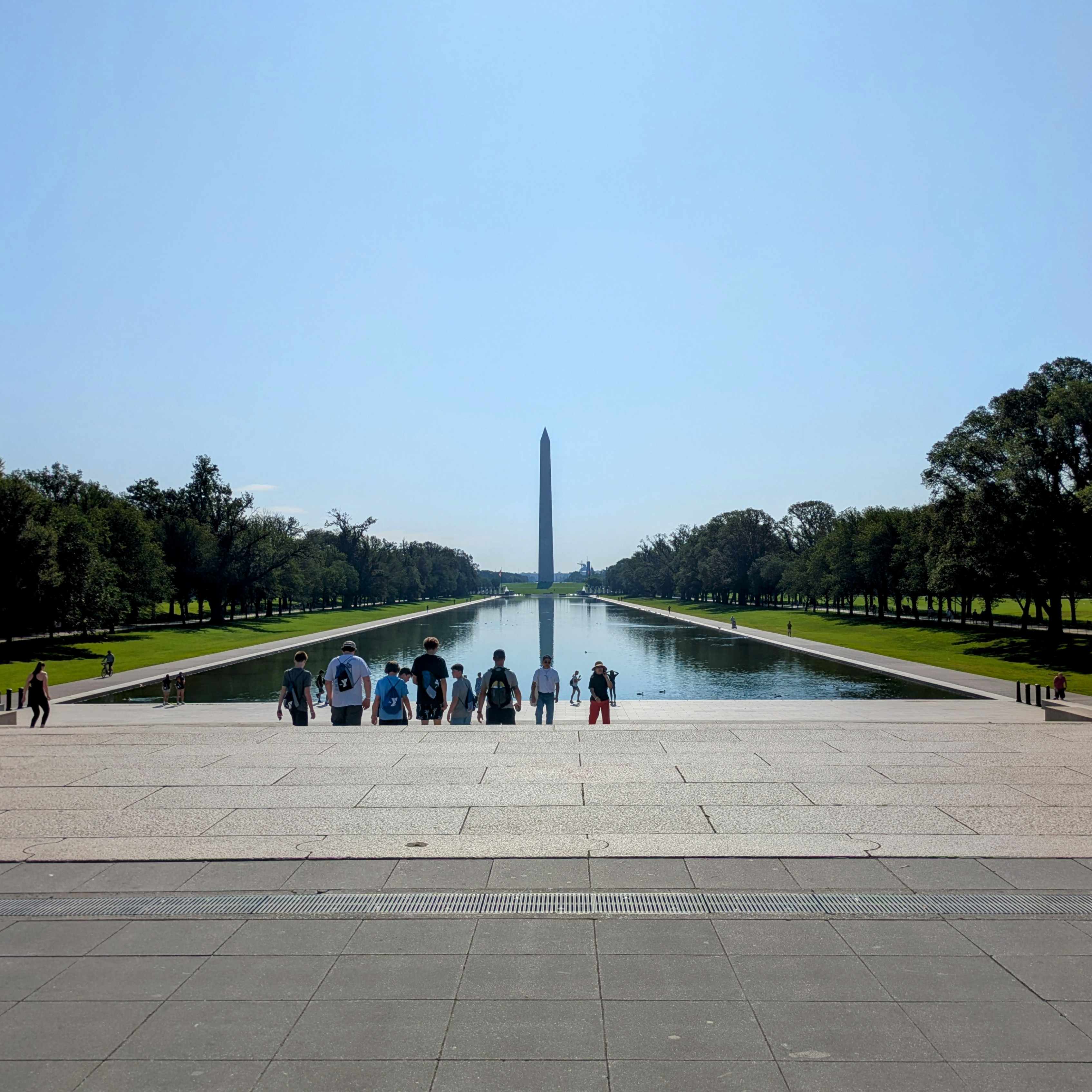
- Washington, D.C. is a city of such self-congratulatory splendor that one is immediately put on edge. Its famous monuments – great obelisks and marble memorials – are not a testament to grand ideas but rather a collection of massive, cold stones that serve as a constant and nagging reminder of all the solemn and tragic events that have transpired in the past. To visit is to be a part of a vast, slow-moving procession of tourists, all shuffling dutifully from one ancient stone to the next, much like a line of particularly listless sheep, contemplating a past that is, as a rule, not a very cheerful sort of past at all.
Read: Exploring Washington, D.C.: A Journey Through Its Dark Attractions.

- Boston is a city so saturated with the self-important history of its own past that it feels less like a city and more like a permanent and unmoving rebuke to the very idea of modernity. The famous Freedom Trail is a red-bricked line on the ground, a tedious path that leads one from one old building to another, each with a plaque reminding you of a tragic event from long ago that a kind person would never mention. You will find yourself elbow-to-elbow with a million other unfortunate souls, all craning their necks to stare at a tea party that was, in all likelihood, a very messy and ill-mannered affair, and a cemetery filled with graves of people who, I am told, were not nearly so interesting in life as their tombstones suggest.
Here’s more about The Grim Reality of Boston Sightseeing.

- Raleigh, North Carolina, a city that seems to be in a perpetual state of becoming something it is not, is a most depressing affair. One finds here a peculiar and confusing mix of earnest, academic quiet and the sudden, jarring noise of new construction. The downtown, with its modern glass buildings and scattered, historic homes, is a collection of sights so disparate that it feels less like a cohesive place and more like a public and unavoidable dinner party where no one can quite agree on a topic of conversation. The very air is thick with a humidity that is as oppressive as a tyrannical government, and the landscape, while undeniably green, is merely what happens when suburban sprawl tries to wear a forest costume.
Here’s how to Explore the Unsettling Side of Raleigh.

- Savannah, Georgia, a city shrouded in Spanish moss, is a place so saturated with its own haunted reputation that it seems to be actively trying to scare you away. The beautiful old squares, with their great oak trees and their polite benches, are not a place of peaceful contemplation but rather a constant and nagging reminder that even beauty is merely a temporary reprieve from a profound and disquieting sense of dread. The air is thick with a humidity that is as oppressive as a curfew that never lifts and a mournful, musical sound that is, in all likelihood, nothing more than the city itself sighing with a deep and existential sadness. To visit is to experience a dizzying and confusing state of affairs, a macabre and architectural puzzle to which there is no satisfying answer.

- Las Vegas is a city of such garish and ostentatious vulgarity that it serves as a constant and nagging reminder of how little thought goes into modern design. It is a place of perpetual, blinking light and a complete lack of natural darkness, as if the sun itself had been replaced by a million buzzing neon signs. The purpose of this city, I am told, is to provide entertainment, but a person of discernment will recognize that gambling is merely a slow and financially draining game of chance, and the elaborate shows are simply a new kind of disappointment, costing more money and offering less satisfaction than a particularly long and boring movie.

- New Orleans is a city so saturated with the heat of the sun and the mournful wail of jazz music that it feels like a perpetual fever dream. The grand and beautiful buildings, with their delicate ironwork, are not a testament to good taste but rather a reminder of a grand and tragic past, which, as a rule, is not a very cheerful sort of beauty at all. You will be tempted to indulge in plates of gumbo, a confusing and muddy stew that is almost always more expensive than it should be. The very air is thick with a humidity that is as oppressive as a parade you’re forced to smile through.
- Chicago is a city once known for its industrious but profoundly uninteresting industry. This all changed with the arrival of towering skyscrapers of such immense and preposterous design that they serve as a monument to the very idea of things not fitting in, which, as a person of discernment, you will find a most familiar and unpleasant concept. The very river that runs through the city is sometimes of an improbable and unnatural shade of green, as if the entire population had gone mad and decided to dye a perfectly good body of water. To visit is to be a part of a vast, slow-moving procession of tourists, all shuffling dutifully from one architectural marvel to the next, much like a queue of sleep-deprived zombies in sensible footwear.

- San Antonio is the location of a magnificent but profoundly disappointing fortress known as the Alamo, a place of such historical importance that it serves as a constant and nagging reminder of how little thought goes into modern construction. To visit is to stand before a crumbling stone facade and contemplate a battle of such immense and tragic loss that it is not, as I have been told, a place to feel a sense of pride, but rather a profound sense of sadness. The famous River Walk, a meandering, man-made waterway, is a place so saturated with the clatter of restaurants and the relentless, deafening chatter of tourists that it feels less like a tranquil promenade and more like another public and unavoidable dinner party.

Who the United States Is (and Isn’t) For
✔️ Good for:
- Fiscal Marathoners: Travelers prepared for the psychological warfare of hidden sales tax, mandatory 20% tips, and rising resort fees.
- Automotive Adventurers: Those who view the car as a second skin and are comfortable mastering the right turn on red and navigating truck stops the size of small villages.
- Lovers of The Hustle: People who appreciate aggressive friendliness, performative service, and a pace of life where even a coffee is consumed to-go on the way to a meeting.
- Shoulder-Season Explorers: Visitors who can plan for May and September to find cooperative weather and breathtaking National Parks without the overcrowded bottlenecks.
- Fans of Scale and Variety: Those who want to see everything from gaudy canyon colors to gritty 24/7 subways and a symphony of tongues ranging from rapid-fire New York English to Spanish and Mandarin.
❌ Not ideal for:
- The Budget-Conscious: Anyone who would feel their budget is being nibbled away by a very polite but very hungry shark or who is unprepared for the ruinous cost of healthcare.
- Seekers of Tranquility: Travelers who might be unsettled by the disgruntled bees of New York noise, the deafening chatter of San Antonio, or the garish vulgarity of Las Vegas.
- The Safety-Sensitive: Those who are deterred by official warnings regarding gun violence, mass shootings, or unscrupulous characters feigning car trouble on lonely roads.
- Lovers of Traditional Public Transport: Anyone planning to travel outside major Northeast hubs without a car, as they may find themselves waiting for a lonely bus that is more of a polite suggestion than a schedule.
- Climate Critics: Travelers who dislike being steamed like a dim sum in southern humidity or having their eyelashes freeze instantly in a Midwest winter.
So if you are looking for a simple holiday, a place where everything is as it should be, then you would be wise to reconsider your plans. The United States is a country of inexplicable roadside attractions, of peculiar local customs, and of weather that can change from a gentle drizzle to a destructive tornado in a matter of moments. It is, in short, a compendium of unfortunate destinations, and to travel there is to embark on an adventure from which you may never fully recover. A much more sensible course of action would be to light a candle, ignore all texts, and read poetry written before electricity.
Here’s more dismal content you might enjoy:


Something went wrong. Please refresh the page and/or try again.