This is not a traditional travel guide. It pairs personal observations with practical advice for travelers who would rather see Switzerland as it is, with rough edges, loose ends, and all. Despite the tone, this guide contains practical planning advice, safety context, and logistical realities intended to help travelers decide whether Switzerland is right for them.
Switzerland, you see, is a country of appalling efficiency, which is to say, nothing ever goes wrong. The trains arrive precisely on time, the cheese is inexplicably of the highest quality, and the mountainous scenery is so immaculate it feels less like a landscape and more like a brightly colored, infuriating trap.
One is tempted to visit Lucerne, with its wooden bridge and placid lake, and imagine a momentary respite from their troubles. But even the reflection in the water is too clear, too perfect – a constant, sparkling reminder that your own life is a chaotic, mud-splattered affair.
Should you venture into the Alps, you will find that the air is relentlessly crisp, the vistas are breathtaking, and the atmosphere is entirely too wholesome. You may climb for hours, expecting a thrilling brush with danger, only to find a perfectly clean chalet at the summit, serving expertly tempered chocolate that costs a small fortune.
The towns, such as Zurich and Geneva, offer not the comfort of chaos, but the chilling order of Swiss Banking. Everything is quiet, everything is clean, and everything is expensive. It is a place where every franc is accounted for, and where the only mystery is why people insist on vacationing in a place so aggressively devoid of the sort of fascinating mishaps that truly make life memorable.
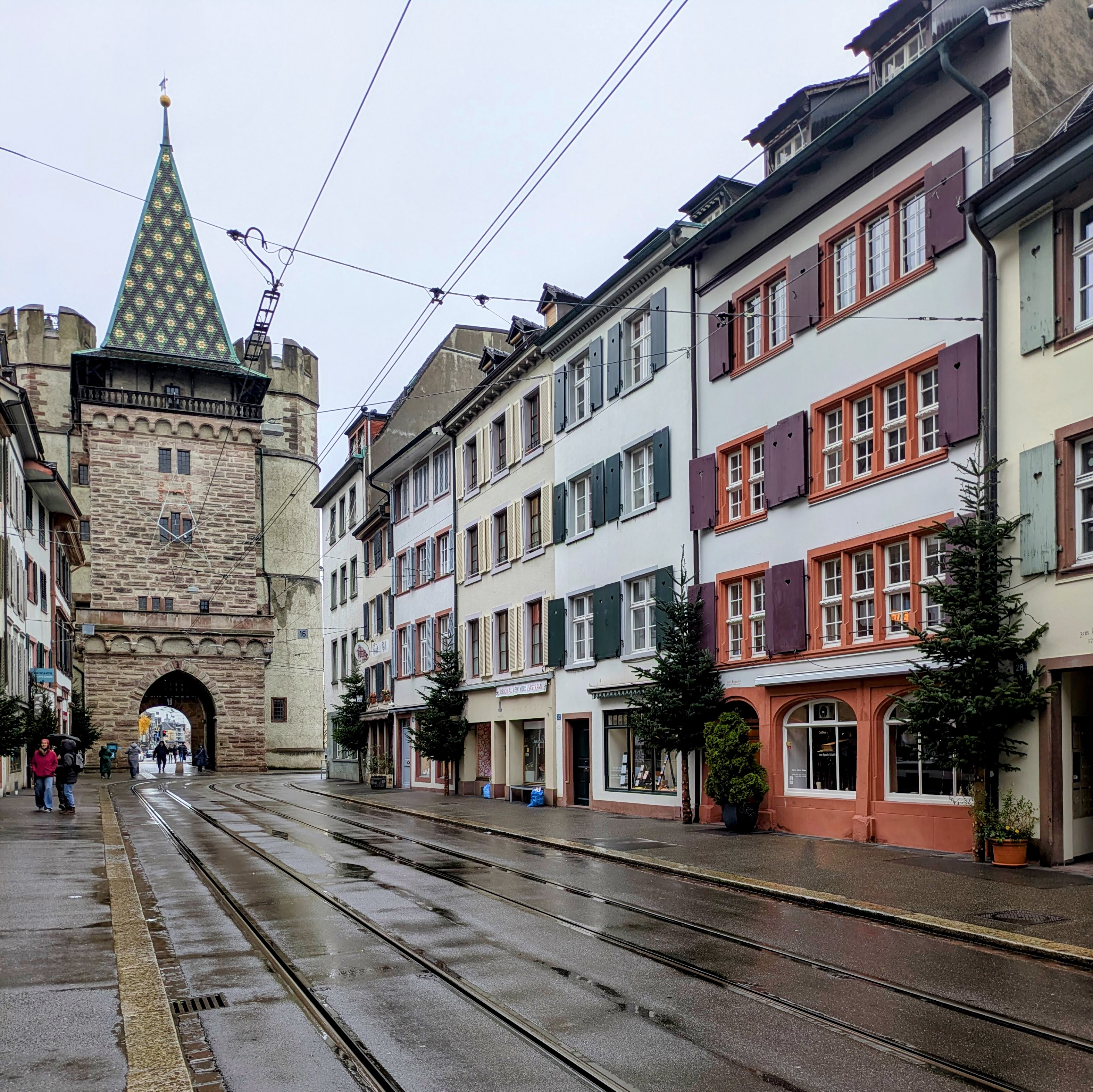
I feel compelled to share a story about a visit to Basel last year. While admiring the artisan ornaments at the Barfüsserplatz Christmas Market – tiny wooden angels that cost roughly the same as a mid-sized television – I decided to indulge in a cup of Glühwein. I handed over a twenty-euro note, forgetting for a moment that I was in a land that remains fiercely independent. The vendor accepted the foreign tender with the grimace of one handling a biohazard and handed me my change in Swiss Francs. As I walked away, calculating the impatience tax I had just paid, I realized that the exchange rate was so punishing that each sip of the warm wine cost approximately four dollars. As I stood by the Rhine, clutching my cup, the water’s sparkling perfection seemed to mock my dissolving net worth, proving that in Switzerland, even a cinematic winter moment comes with a side of financial frostbite.
Switzerland at a Glance
Best Time to Visit
May to June and September are the prime windows. During these months, the Alpine meadows are either exploding with wildflowers or turning a deep, cinematic gold, and the weather is perfect for hiking without the high-summer humidity. September is particularly great as the crowds thin out, but the mountain cable cars are still running.
If you are here for the White Christmas dream, December is peak season for fairy-tale markets and fondue.
For skiers, January to March offers the best powder, though February coincides with local school holidays, meaning the slopes (and prices) reach their zenith.
October and November are the shutdown months – the weather turns grey, and many mountain lifts and hotels close for maintenance before the ski season kicks off.
Currency
The Swiss Franc (CHF). While Switzerland is surrounded by the Eurozone, it remains fiercely independent with its own currency. Most places will technically accept Euros, but they’ll give you a terrible exchange rate and your change will be in Francs – basically an impatience tax.
The country is highly digital; you can pay for a mountaintop coffee or a village bus with a tap of your phone or card. Tipping is low-pressure because a service charge is legally included in every bill. However, it’s customary to round up to the nearest 5 or 10 Francs for good service. If your meal is 47 CHF, saying “make it 50” is the standard Swiss way of being polite.
Language
Switzerland is a linguistic puzzle with four official languages: German, French, Italian, and Romansh.
- German (Swiss German): Spoken in Zurich, Bern, and the central/eastern regions.
- French: Dominates the west (Geneva, Lausanne).
- Italian: Spoken in the sunny south (Ticino).
Don’t worry about being a polyglot – English proficiency is incredibly high, especially in cities and tourist hubs. Because the Swiss often use English as a neutral bridge between their own language regions, you’ll find that a polite “Grüezi” (German hello) or “Bonjour” (French hello) followed by English works perfectly everywhere.
Cost Level
Extreme. There is no way to sugarcoat it: Switzerland is one of the most expensive countries on earth. A basic burger can cost $25, and a short train ride can feel like a monthly car payment.
However, you can hack the system:
- The tap water is some of the best in the world; never buy bottled water.
- Many grocery stores have excellent ready-to-eat sections that will save you a fortune compared to restaurants.
- If you plan on moving every day, the Swiss Travel Pass is expensive upfront but covers trains, boats, buses, and 500+ museums – saving you hundreds in the long run. The Half Fare Card is a more affordable option if you don’t move around as much.
More Dire Travel Warnings About Switzerland
For those foolhardy enough to believe that the pristine peaks of Switzerland offer a sanctuary from the world’s many calamities, you will find that the various governmental bodies, in their own dry and clinical way, have compiled a list of misfortunes that await you. These agencies, with their penchant for understatement, categorize the country under “Normal Precautions,” a phrase that offers a thin and deceptive veil of security over a landscape fraught with hidden sorrows.
- Petty Crime and Distraction Scams: The U.S. State Department, the Canadian government, and the UK’s Foreign Office all agree that while serious violence is rare, your belongings are in constant peril. Pickpockets in Geneva and Zurich operate with a sinister efficiency, often employing accomplices to spill drinks or engage you in meaningless chatter while your wallet vanishes into thin air. It is a grim reminder that in crowded stations and airports, your luggage is merely a temporary possession waiting to be claimed by someone more attentive than yourself.
- Mountain and Outdoor Safety: Given the treacherous terrain of the Alps, the advisories speak of the high-altitude horrors that await the adventurous. Weather conditions can change with a sudden, cruel finality, bringing forth avalanches and falling rocks to crush the unwary. The UK and Canada offer the unsettling truth that if you find yourself broken upon a mountainside, the cost of a helicopter evacuation is so astronomical that it may lead to your financial ruin before you have even reached the hospital.
- Terrorism: While Switzerland may seem a peaceful haven, the various governments maintain a baseline level of dread. They warn that lone actors – individuals whose dark intentions are nearly impossible to detect – could target public events or religious holidays at any moment. It is a sobering thought that even during a festive gathering, a most unfortunate turn of events could be lurking just out of sight.
- Local Laws and Rigid Regulations: Switzerland is a land of strict enforcement, where a simple lapse in memory is met with immediate and heavy-handed punishment. Should you step onto a tram without a pre-purchased ticket, or dare to cover your face in the cantons of Ticino and St. Gallen, you will find yourself facing on-the-spot fines of a truly staggering nature. Furthermore, the constant threat of identity checks means you must carry your passport or photo-ID at all times, a bureaucratic burden that ensures you are never truly free.
- Health and Financial Perils: The government advisories touch upon the terrifying cost of Swiss healthcare, which is as excellent as it is prohibitively expensive. You may find that medical providers demand payment in full before they even deign to treat your non-emergency injuries, an unfortunate financial reality for the uninsured. Even the simple act of driving requires the purchase of a vignette toll sticker; to forget this small detail is to invite a significant fine that will surely add to your sense of impending doom.
These are just some of the misfortunes that await you in Switzerland. And although current as I write this, these travel advisories are ever-shifting documents, meaning that you, as a traveler, are in a constant state of uncertainty. You must check these advisories again and again, like a librarian reorganizing a shelf of books that are already on fire. But even then, you will not have peace of mind, for a disaster can strike at any time, in any place, and in any form. To travel is to accept that you are living in a state of suspended dread.
Here are links to the most current travel advisories from these governments.
- Government of Canada Travel Advice and Advisories for Switzerland
- U.S. Department of State Travel Advisory for Switzerland
- United Kingdom Foreign Travel Advice about Switzerland
So, as you can see, even the most sober and formal of sources agree that Switzerland is not a place for the faint of heart. It is a country of layered sorrows, each one more complex and bewildering than the last. Do not say you were not warned, for the warnings are, I am afraid, everywhere.
Practical Realities
Public Transport
In Switzerland, the SBB (Federal Railways) is not just a transport company; it is a national religion. The trains are so punctual that the Swiss use them to synchronize their watches. If a train is three minutes late, the station undergoes a collective existential crisis.
The Half Fare Card is the secret handshake. Without it, a single train ticket can cost more than a small used car.
Every mode of transport – train, bus, boat, and even some mountain cable cars – is perfectly synchronized. If your train arrives at 10:02 AM, your connecting bus will depart at 10:06 AM. Do not stop to buy a croissant; the bus waits for no one, not even the spirit of Alpine hospitality.
Rental Car Reality
Renting a car is the only way to experience the terrifying glory of the mountain passes (like the Furka or Grimsel), but it comes with a side of extreme discipline. To drive on the highway, you must have a vignette (toll sticker) on your windshield; if you don’t, the fines are legendary.
Speed cameras are everywhere and are hidden with the stealth of a mountain sniper. If you go 3 km/h over the limit, a fine will find you before you’ve even returned the car. Also, in mountain tunnels, the etiquette is to keep a massive distance – Swiss drivers are very fond of their safety margins and very suspicious of tailgaters.
Restaurant Timing
The service is efficient and expensive. In Switzerland, customer service means the waiter provides exactly what you ordered with surgical precision. Do not expect small talk or free refills – water usually costs as much as wine.
Lunch is often served strictly between 12:00 PM and 2:00 PM. If you show up at 2:05 PM, the kitchen is legally and spiritually closed.
And if you are eating fondue, never drink cold water or soda; the Swiss believe this will cause the cheese to turn into a solid brick in your stomach. You drink white wine or hot tea, or you suffer the judgmental stares of the entire dining room.
Bureaucracy
Digital life is exceptionally smooth, but the Swiss still love a good physical rulebook. Everything is organized, labeled, and sorted.
You must master the trash bag system. You cannot simply throw away garbage; you must buy specific, expensive municipal bags (like the Züri-Sack). Using a non-official bag is a civil offense that could lead to the Garbage Police sifting through your trash to find a stray envelope with your name on it.
Sundays are a sacred, silent day. In many cantons, you are forbidden from mowing your lawn, washing your car, or even recycling glass. If it makes noise, don’t do it, or your neighbors will send a very polite, very firm letter of complaint.
Pace of Life
The local philosophy is one of “Pragmatic Perfection.” It is a country that functions like a high-end watch: quiet, reliable, and incredibly costly to maintain. The Swiss value privacy and discretion above all else. Do not mistake their reserved nature for coldness; they simply believe that being loud or flashy is a sign of poor character.
Life is measured in mountain hikes and chocolate quality. They aren’t in a hurry because they have already optimized every aspect of existence – there is nowhere left to rush to.
Popular Destinations in Switzerland (and Why They May Disappoint)
Switzerland is a country of breathtaking beauty; a place where the altitude is so high it literally deprives your brain of oxygen, and where the scenery is so dramatic it borders on the theatrical. If you insist on venturing into this land of watches, chocolate, and neutral facial expressions, here is a list of destinations you will likely find yourself regretting – or at least, feeling very cold in.
Swiss Alps (Majestic Peaks, Skiing, Glaciers)
- Zermatt is a village so devoted to a mountain called the Matterhorn that it has banned cars, presumably so you can hear your own knees knocking together in the frost. The Matterhorn is a jagged, tooth-like peak that looms over the town like a giant, stony reminder of one’s own insignificance. It is famous for appearing on chocolate bars, which is the only way most sensible people should ever consume a mountain.
- Interlaken is a town sandwiched between two lakes, Brienz and Thun, like a piece of cheese in a particularly damp sandwich. It is the adventure capital of Switzerland, a term used by people who enjoy jumping off perfectly good cliffs with nothing but a colorful sheet of nylon to prevent them from becoming a permanent part of the landscape. It is a place for those who find sitting quietly in a chair to be an unacceptable lifestyle choice.
- The Bernese Oberland is a region of high-altitude meadows and cows wearing bells. These bells are not for the cows’ musical enjoyment, but rather to ensure that if a cow wanders off into the fog, it can be found before it falls off a precipice. The villages here, like Lauterbrunnen, sit at the bottom of deep valleys where the sun rarely visits, making it the perfect destination for those who find Vitamin D to be overrated.
Central Plateau (Lakes, Cities, Rolling Hills)
- Zurich is a metropolis where the streets are so clean you could eat your lunch off them, though given the price of lunch in Zurich, you would likely be eating a single, very expensive crouton. It is a center of finance and luxury, where the clocks are always synchronized and the trains depart with a punctuality that is frankly intimidating to anyone who has ever been five minutes late for anything in their life.
- In Lucerne, you will find a lake that is very blue and a bridge – the Kapellbrücke – made of wood that has a habit of catching fire. It is a city filled with medieval architecture – you can expect that the buildings are very old and likely haunted by the ghosts of watchmakers who died trying to find a screw the size of a dust mite. Do not be fooled by the serene water; it is deep enough to hide many secrets, or at least a very expensive pair of sunglasses.
- Geneva is a city so international and polite that it hosts organizations dedicated to world peace, which is a noble but exhausting endeavor. Its most famous feature is the Jet d’Eau, a giant fountain that shoots water high into the air for no reason other than to prove it can. It is a city of diplomats and bankers, meaning everyone is wearing a suit and no one will tell you what they are actually thinking.
- Basel is a city perched on the elbow of the Rhine, staring suspiciously at France and Germany to ensure they aren’t having more fun. It is a place obsessed with art and pharmaceuticals, meaning the population is either contemplating a minimalist painting or manufacturing the aspirin you’ll need afterward. It is famous for Rhine swimming, an activity where locals stuff their clothes into waterproof bags and surrender to a current strong enough to carry them to the Netherlands if they lose focus.
Read The Truth About Basel’s Best Sights and Culinary Disasters: Basel’s Restaurant Guide.

Jura Mountains (Watchmaking, Nature, Hiking)
- La Chaux-de-Fonds and Le Locle are two grimly industrious towns designed with a mathematical precision that would make a ruler weep. The streets are laid out in a rigid grid solely to ensure that watchmakers receive every possible ray of sunlight to better assemble tiny, agonizingly small gears. It is a place where the passage of time is not just a concept, but a local obsession involving tweezers and magnifying glasses.
The Sunny South (Italian Flair, Palms, Lake Lugano)
- Lugano is a city that has mistakenly wandered across the Italian border and decided to stay by a lake of the same name. It is filled with palm trees that look startled to be surrounded by granite peaks, and boulevards where people walk with a Mediterranean flair that suggests they have forgotten the bleak, snowy reality of the rest of the country.
- Locarno is a sun-drenched trap for the unsuspecting optimist. It is famous for its plazas and a film festival where people sit in the dark to watch stories that rarely have a happy ending. It is the warmest part of Switzerland, so it’s marginally less likely to cause frostbite.
Who Switzerland Is (and Isn’t) For
✔️ Good for:
- The Meticulous & Punctual: People who value appalling efficiency and want trains that arrive exactly when the second hand hits the mark.
- Safety Seekers: Those who prefer normal precautions and a country that functions with the quiet reliability of a high-end watch.
- Nature Lovers with High Standards: Travelers who want immaculate mountain scenery, crisp air, and Alpine meadows without the comfort of chaos.
- Digitally Savvy Travelers: People who prefer to tap-and-go for everything from mountaintop coffees to village buses.
- Rule-Followers: Those who appreciate a society where everything is organized, labeled, and sorted, and don’t mind a sacred, silent day on Sundays.
❌ Not ideal for:
- The Budget-Conscious: Travelers who will flinch at extreme costs, such as $25 burgers or train tickets that feel like monthly car payments.
- Spontaneous Diners: People who expect a hot meal after 2:00 PM or who prefer free water and bread with their service.
- The Disorganized: Those who might forget a vignette for their car, lose track of their passport, or miss a 4-minute train connection.
- Adrenaline Junkies on a Budget: Adventure seekers who aren’t prepared for the astronomical cost of a helicopter evacuation should something go wrong.
- The Loud and Flashy: Travelers whose style clashes with a culture that values privacy and discretion and views loud behavior as a sign of poor character.
In short, Switzerland is a place of such unrelenting, polished perfection that one can only conclude that its true purpose is to make the rest of the world feel woefully inadequate. Against all my best advice, you may still choose to visit Switzerland, but a much more sensible course of action would be to read the manual for an appliance you don’t own and pretend it matters more than it does.
Here’s more dismal content you might enjoy:


Something went wrong. Please refresh the page and/or try again.