This is not a traditional travel guide. It pairs personal observations with practical advice for travelers who would rather see Spain as it is, with rough edges, loose ends, and all. Despite the tone, this guide contains practical planning advice, safety context, and logistical realities intended to help travelers decide whether Spain is right for them.
If you have opened this travel guide, you have most likely come to the conclusion that a description of Spain would be a lighthearted and delightful affair, filled with sunny beaches and endless plates of food. You imagine a country of warm-hearted people, of vibrant fiestas, and of buildings that seem to defy gravity with a certain joyous nonchalance.
I am sorry to inform you that you are, as is often the case with such pleasant imaginings, dreadfully mistaken.
Despite years of my husband’s enthusiastic descriptions of its architectural marvels and sun-drenched plazas – descriptions I assure you were as relentless as a flock of seagulls on a fishing pier – I had never once set foot in Spain. That is, not until quite recently. For three weeks, we “worked from home,” although in this case, “home” was a succession of four distinct Spanish cities.
Spain, you see, is not merely a country of sunshine; it is a land where the sun beats down with a relentless and often unsettling intensity, making one long for the merciful shade of a storm cloud. Its cuisine, while praised by many, is a succession of lamentable experiences for the unprepared. You may be offered a serving of jamón, a Spanish word which means, quite literally, ham, but without the reassuring presence of a sandwich, leaving you to ponder the curious fact that a whole leg of an animal can be cured and hung in the open air. And the famed siesta, far from being a leisurely nap, is a grim necessity, a period of forced inaction during which the entire country seems to have been abruptly abandoned, leaving you to wander a desolate landscape of closed shops and silent streets.
As for the architecture, while you might admire the unsettlingly surreal forms of Antoni Gaudí’s work, such as the Sagrada Família, you must remember that a building that has been under construction for over a century is, by definition, a project of profound and perhaps eternal failure.
Spain at a Glance
Best Time to Visit
May, June, and September are the Goldilocks months – warm enough for the beach but cool enough that you won’t feel like a piece of jamón being slow-roasted in an oven.
If you enjoy the sensation of walking across the surface of the sun, July and August are for you. During this time, locals wisely vanish to the coast, leaving the cities to brave tourists and the rhythmic, deafening buzz of cicadas.
Conversely, winter is lovely in the south, though the north will happily remind you that Spain is not just one giant palm tree by drenching you in Atlantic rain.
Currency
The Euro (€). Unlike the digital-only northern neighbors, Spain still has a lingering love affair with physical cash. While you can tap your card for a fancy dinner in Madrid, that tiny, hole-in-the-wall bar serving the world’s best olives might only accept crinkly five-euro notes. Always keep a few coins on hand; they are the secret key to unlocking coffee, public lockers, and the respect of elderly bartenders.
Language
The official language is Spanish (Castilian), delivered with a speed and passion that makes every conversation sound like a dramatic plot twist.
In regions like Catalonia, the Basque Country, or Galicia, you’ll encounter co-official languages that look and sound delightfully nothing like your high school Spanish textbooks.
While English is widely understood in tourist hubs, your attempts at “Dos cervezas, por favor” will be met with polite appreciation – or at least a sympathetic smile at your pronunciation.
Cost Level
Moderate. Compared to the rest of Western Europe, Spain is a refreshing bargain. You can live like royalty on a tapas budget, though prices in Barcelona and Madrid can occasionally induce a mild heart tremor. Generally, the cost of a beer is often less than a bottle of water, a fiscal reality that makes Spain’s vibrant social life both inevitable and highly sustainable.
More Dire Travel Warnings About Spain
For those foolhardy enough to disregard my personal warnings, you will find that the various governmental bodies of the world, in their own dry and clinical way, also have a list of misfortunes that await you in Spain. These agencies, with their penchant for understatement and their focus on things like “level of caution” and “threat,” offer some unsettling truths that will surely add to your sense of impending doom.
- Terrorism: The U.S. State Department, the Canadian government, and the UK’s Foreign, Commonwealth & Development Office all agree that you must “Exercise increased caution” due to the ongoing threat of terrorism. This means that a seemingly pleasant stroll through a market or a visit to a train station could be interrupted by a most unfortunate event. It is a grim reminder that even in a place of supposed leisure, danger, like an uninvited cat, can appear at any moment.
- Petty Crime: All three advisories speak of the very high risk of petty crime. Your belongings, you see, are not truly your own. Pickpockets operate with a sinister efficiency in crowded areas like airports, train stations, and tourist sites. You may believe your wallet is safe in your pocket, but it is not. A truly unfortunate traveler will find that their most important documents, their passport and other identifying papers, have vanished into thin air, leaving them in a most dreadful and complicated situation.
- Demonstrations: It is a well-known fact that large groups of people can, at a moment’s notice, become a source of profound unrest. In Spain, both the U.S. and Canadian governments warn of frequent demonstrations and protests that can turn violent without warning. To find yourself in the middle of a peaceful demonstration that has suddenly become a stampede of angry citizens is an unfortunate event of the highest order.
- Natural Disasters: The government advisories also touch upon the natural disasters that plague this seemingly idyllic country. Wildfires, brought on by the oppressive summer heat, are a constant threat. A seemingly innocent summer trip could be brought to a halt by a fire that forces you to change your plans, or worse, to flee for your life. And the threat of flash floods, a particular terror of the autumn months, adds another layer of unpredictable chaos to your journey.
- Entry and Exit Requirements: The UK government has a particular warning about passport validity, noting that one’s travel document must have been issued within the last 10 years and be valid for at least three months after your departure. This is a cruel bureaucratic trick, a hidden sorrow designed to trap the unwary traveler in a web of paperwork and frustrating delays.
These are just some of the misfortunes that await you in Spain. And although current as I write this, these travel advisories are ever-shifting documents, meaning that you, as a traveler, are in a constant state of uncertainty. You must check these advisories again and again, like a worried parent checking on a sleeping child. But even then, you will not have peace of mind, for a disaster can strike at any time, in any place, and in any form. To travel is to accept that you are living in a state of suspended dread.
Here are links to the most current travel advisories from these governments.
- Government of Canada Travel Advice and Advisories for Spain
- U.S. Department of State Travel Advisory for Spain
- United Kingdom Foreign Travel Advice about Spain
So, as you can see, even the most sober and formal of sources agree that Spain is not a place for the faint of heart. It is a country of layered sorrows, each one more complex and bewildering than the last. Do not say you were not warned, for the warnings are, I am afraid, everywhere.
Practical Realities
Public Transport
In Spain, the AVE (Alta Velocidad) trains are the crown jewels of the continent – whisper-quiet rockets that make the journey from Madrid to Barcelona feel like a brief nap. However, the local Cercanías (commuter trains) operate on a more emotional schedule. Within the cities, the Metro systems are immaculate, but in the south, the bus is king.
You must learn the bus stop salute. In many Spanish towns, a bus will not stop just because you are standing there looking hopeful. You must extend your arm clearly, like a Roman general, to signal the driver. If you don’t, the bus will sail past you while the driver maintains a stoic gaze toward the horizon.
Rental Car Reality
Renting a car is a gateway to the white villages of Andalusia or the rugged coast of Galicia, but it requires nerves of steel for the Rotonda (roundabout). Spanish roundabouts are a lawless frontier. While the law says you should exit from the outer lane, local custom often dictates a diagonal dive from the inner lane across four rows of traffic. If you hesitate, you will be honked at with a passion usually reserved for football matches.
Also, beware of the Blue Zone parking; you must find a machine hidden three blocks away to get a ticket, or return to find a multa (fine) tucked under your wiper that looks like a small scroll.
Restaurant Timing
The service is social and stubborn.
The most important thing to understand about Spain is the Horario. Lunch is at 2:00 PM. Dinner starts at 9:00 PM at the earliest. If you show up at a restaurant at 7:00 PM, you will find the chairs on the tables and a waiter staring at you with genuine pity.
The Sobremesa is sacred. This is the hour spent talking after the food is gone. A Spanish waiter will almost never bring you the bill unprompted, as it is considered rude to kick you out. You must practically perform a theatrical dance to get their attention and say, “La cuenta, por favor.”
Bureaucracy
Digital life is surprisingly slick for banking and Bizum (the national mobile payment app everyone uses to split tapas bills).
However, official state bureaucracy is a monster known as Cita Previa (the previous appointment). You cannot do anything – from registering a dog to getting a residency card – without an appointment that must be booked online at 8:00 AM on a Tuesday when the lunar cycle is just right.
Cash is for the cerveza. While cards are widely accepted, many small bars still prefer efectivo for a single coffee or a €2 beer. Trying to pay for a tiny glass of beer with a credit card is seen as a bureaucratic burden that disrupts the flow of the barman’s day.
Pace of Life
The local philosophy is “Mañana,” which does not mean tomorrow – it simply means not now. It is a rejection of the stress of the clock. This is balanced by the Siesta, which is less about sleeping and more about the Great Closing. Between 2:00 PM and 5:00 PM, the country effectively shuts down. Do not try to buy a hammer or a pair of shoes during these hours; the shopkeeper is at home eating a three-course meal with their family.
Life is measured in Paseos (evening strolls) and the absolute certainty that no problem is so big it can’t be discussed over a plate of jamón.
Popular Destinations (and Why They May Disappoint)
To add to your list of misfortunes, a truly thorough tour of Spain requires an understanding that the country is not a single, cohesive tragedy, but rather a collection of distinct and equally unsettling locales. Each city and each region offers its own particular brand of misery, and to ignore them would be a grave mistake.
- Barcelona is a city of such peculiar and chaotic architecture that one might suspect the entire population had gone mad and began building things out of melted sugar and discarded bits of tile. One finds here the grotesque and fascinating creations of a man named Gaudí, including an unfinished church of such immense size and preposterous design that it has been in a state of construction since before your grandparents were born. You will find yourself elbow-to-elbow with a million other desperate souls, all craning their necks to stare at something that resembles a sandcastle left to the whims of a very confused tide.
Read: A Warning for Barcelona: Exceptional Yet Overwhelming

- Madrid is the capital, and as such, a place of relentless, noisy hubbub. Here, the art museums are so vast they could swallow a small village and still have room for a gift shop. The Prado, for instance, contains so many somber and unsettling portraits that a person with a sensitive disposition could easily become convinced that a life of painting portraits is a life not worth living. The streets, meanwhile, are a constant performance of noise and jostling, a sort of dreadful ballet where everyone is either trying to get somewhere else or sell you a novelty fan.
Read more about Madrid’s Most Misunderstood Attractions.
And read this if you’re interested in Exploring Madrid’s Unforgettable Food Fiascos.

- Seville is a city so saturated with the heat of the sun and the mournful wail of flamenco music that it feels like a perpetual fever dream. The grand monuments, such as the Alcázar and the cathedral, are beautiful, of course, but their beauty is the sort that reminds you of a grand and tragic past, which, as a rule, is not a very cheerful sort of beauty at all. You will be tempted to indulge in plates of tapas, small, deceitful portions of food that are never quite enough to sate a truly hungry person and are almost always more expensive than they should be.
- Granada is the location of a magnificent palace known as the Alhambra, a fortress of such intricate and splendid design that it serves as a constant and nagging reminder of how little thought goes into modern construction. To visit is to be a part of a vast, slow-moving procession of tourists, all shuffling dutifully from one ancient courtyard to the next, much like a line of particularly listless sheep. The views are, I am told, quite spectacular, but they are views of a mountain range that is quite cold, and a city that is quite warm, which is a confusing state of affairs that should be avoided.
- The Canary Islands are a collection of volcanic islands floating in the vast, unforgiving Atlantic. To go here is to trade one set of troubles for another. You may be seeking respite from the dreary business of everyday life, but you will find only a landscape of scorched earth and a population of sun-addled vacationers who are, one and all, dressed in the most embarrassing of tourist attire. The beaches are sandy, it is true, but sand is simply a collection of tiny, innumerable rocks, and one is surrounded by them in a most inconvenient fashion.
- Bilbao is a city once known for its industrious but profoundly uninteresting industry. That all changed with the arrival of a museum that looks like a great, metallic pile of crumpled laundry. The Guggenheim is a building so strange and so utterly out of place that it serves as a monument to the very idea of things not fitting in, which, as a person of discernment, you will find a most familiar and unpleasant concept.

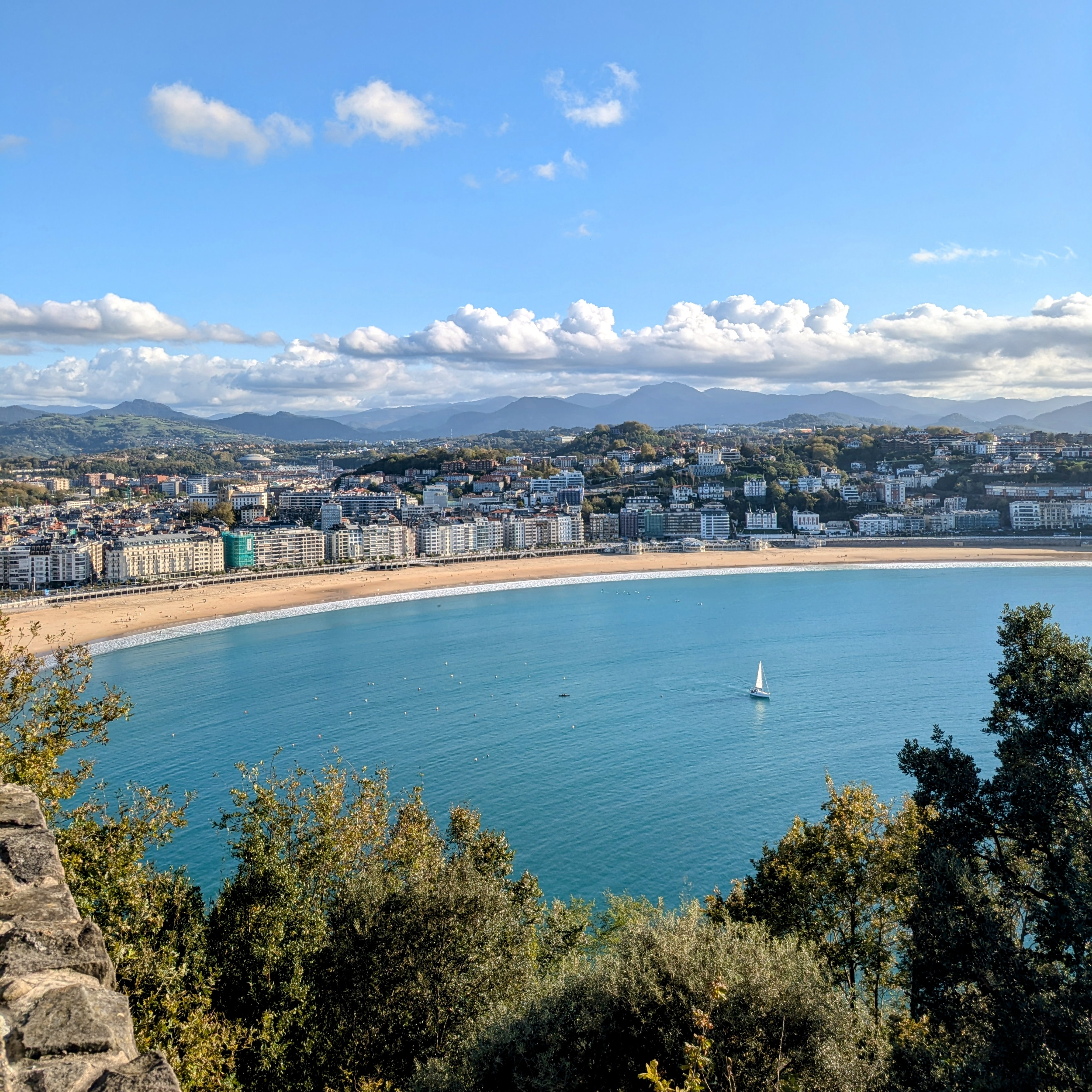
- San Sebastián is a city of such improbable and ostentatious beauty, it seems to have been constructed solely to make the rest of the world feel inadequate. It is a place where a beach, a mere stretch of sand and pebbles, is so perfectly curved it is named La Concha (The Shell), as if to suggest that nature itself has put on a performance just for the benefit of the tourists. Here, the pursuit of happiness is reduced to a relentless pilgrimage from one pintxo bar to the next, consuming small, elaborate, and entirely too-precious morsels of food that are impaled with a stick, much like a tiny, culinary crime scene.
Read: Unforgettable Food Experiences in San Sebastian.

Who Spain Is (and Isn’t) For
✔️ Good for:
- Budget-conscious socialites: Ideal for those who enjoy a “tapas-budget” where beer is cheaper than water and the social life is vibrant and sustainable.
- History and art “sufferers”: Travelers who appreciate vast museums like the Prado, intricate Moorish fortresses like the Alhambra, and “grotesque” architectural marvels.
- Off-peak explorers: Those who can visit during the “Goldilocks” months (May, June, September) to avoid being “slow-roasted” by the sun.
- Nostalgic cash-carriers: People who don’t mind carrying physical Euro notes and coins to unlock the secrets of “hole-in-the-wall” bars and public lockers.
- Practitioners of “Mañana”: Travelers who are happy to reject the stress of the clock, embrace 2:00 PM lunches, and enjoy the sacred, unhurried “Sobremesa” after a meal.
❌ Not ideal for:
- The “Faint of Heart” regarding safety: Anyone uncomfortable with “Exercise increased caution” advisories regarding terrorism, frequent protests, or high risks of professional pickpocketing.
- Punctuality enthusiasts: People who will be frustrated by the “emotional” schedule of commuter trains, the 2:00 PM – 5:00 PM “Great Closing” (Siesta), or restaurants that won’t serve dinner until 9:00 PM.
- Heat-sensitive travelers: Those who dislike the “relentless and unsettling intensity” of the summer sun or the threat of seasonal wildfires and flash floods.
- Impatient diners: Travelers who want a quick meal and a bill brought promptly without having to perform a “theatrical dance” to get the waiter’s attention.
- Strict rule-followers: Drivers who might be unnerved by “lawless” roundabouts or visitors who find the “Cita Previa” (appointment) bureaucracy a “monster.”
So, as you can see, Spain offers a vast and varied landscape of despair. You are free to embark on this journey if you must, but do not expect a happy ending. The sun will be too hot, the crowds will be too large, and the very best parts of Spain are, in all likelihood, precisely the parts you will never find. A much more sensible course of action would be to stay home, close the blinds, and read a particularly long book about something that is not nearly so fraught with disappointment.
Here’s more dismal content you might enjoy:


Something went wrong. Please refresh the page and/or try again.