This is not a traditional travel guide. It pairs personal observations with practical advice for travelers who would rather see Germany as it is, with rough edges, loose ends, and all. Despite the tone, this guide contains practical planning advice, safety context, and logistical realities intended to help travelers decide whether Germany is right for them.
If you, a sensible and well-meaning individual, were to consider a journey to a place called Germany, you would be well advised to prepare for bewildering and somewhat tidy contradictions. It is not, you see, a place of delightful chaos or charming disarray, but rather one of meticulously organized perplexity.
I first had the misfortune of encountering this particular brand of precision some two decades ago, during a misspent youth spent hauling a heavy pack across Europe. The intervening years offered a temporary reprieve until, six or seven years past, I found myself returning to Munich, dragging my in-laws along for their maiden European voyage. Finally, just last year, I submitted to a tour of the Christmas markets with my mother and brother, a festive endeavor that, regrettably, involved several mandatory stops within Germany itself.
So I can understand that you might be tempted by the promise of fairy-tale castles. And indeed, they are there, perched on hilltops like the fantastical illustrations in a particularly harrowing children’s book. You will find Neuschwanstein, a building so deliberately and suspiciously beautiful that it is said to have inspired a rather saccharine and well-known entertainment company. But be warned, a castle is not merely a pretty building. It is a structure of stones and turrets that whispers of sieges, dreadful family feuds, and the sort of historical mischief that often ends with someone’s head being placed upon a pike – a fate, I should add, that no traveler with even a modicum of good sense would wish upon themselves.
Next, you will encounter the vast and foreboding forests, such as the Black Forest. A more ominous name for a place of natural beauty has seldom been devised. It is a land of cuckoo clocks and dense evergreen trees, where one might be tempted to believe that a simple stroll could lead to a confrontation with a wicked witch or, more likely, a terribly stern hiker who frowns upon those who deviate from the marked path. The German penchant for order, you see, extends even to the wilderness.
The cities themselves are a veritable museum of past woes and present efficiency. Berlin, for instance, is a city of ghosts, where the remnants of a most unfortunate and frankly dreadful wall can be seen. It is a place of grand museums and sober memorials, where the past is not so much forgotten as it is catalogued and put on display, like a particularly unsettling collection of historical taxidermy. The streets are clean, the trains are punctual to a degree that is frankly unnatural, and the locals have a reputation for being rather direct, which is a word that, in the secret vocabulary of travel, means they are not afraid to tell you when you have done something wrong, which, if you are anything like me, is quite often.
The food, too, is an acquired taste, and one that may leave you with a rather disconcerting feeling of heaviness. There are sausages of every shape and size, and pastries called Schneeballen, which are not, as one might hope, delightful fluffy snowballs, but rather a rather hard and unyielding doughy orb. They are, in a word, a conundrum, much like the entire country.
Germany at a Glance
Best Time to Visit
May, June, and September are the undisputed champions of German travel. In late spring, the beer gardens begin to sprout locals like wildflowers, and by September, the air is crisp, the wine festivals are in full swing, and the legendary Oktoberfest transforms Munich into the world’s largest gathering of people in leather trousers.
If you enjoy the aesthetic of a dark, brooding forest or a cozy medieval town, December is essential for the Christmas Markets – just be prepared to fight through crowds for a mug of Glühwein.
January and February are best avoided unless you are a fan of the grey, a season where the sky becomes a permanent shade of concrete and the sun is merely a theoretical concept.
Currency
The Euro (€). Germany is a country that prizes efficiency in engineering but clings to the 18th century when it comes to payments. While big cities are finally embracing the 21st century and card-tapping, “Nur Barzahlung” (Cash Only) is still the most terrifying phrase a tourist can read on a restaurant door.
Always carry physical euros. You will need them for the legendary currywurst stands, small-town bakeries, and the coin-operated turnstiles that guard the public restrooms.
Tipping is a polite rounding-up affair; if your bill is €18.20, giving the waiter €20 and saying “Stimmt so” (Keep the change) is the ultimate move of cool, German-approved confidence.
Language
The official language is German, a tongue that looks like someone dropped a bag of Scrabble tiles and decided to keep the result. It is famous for compound words so long they require a snack break halfway through reading them (like Rindfleischetikettierungsüberwachungsaufgabenübertragungsgesetz).
Don’t be intimidated: English proficiency is exceptionally high, especially among those under 50. Most Germans will switch to English the moment they hear you stumble over a verb, though they will often apologize for their terrible English right before speaking it more precisely than you do. A simple “Guten Tag” (Good day) is the mandatory password for entering any shop if you want to be treated like a human being rather than an intruder.
Cost Level
Moderate. Germany is surprisingly affordable compared to its neighbors like France or Switzerland, although costs are rising, especially in cities like Munich and Frankfurt that will happily lighten your wallet.
The public transport is an absolute bargain – provided the trains are actually running on time (a national myth that is currently being tested). You can find a world-class beer for less than the price of a soda, and a hearty meal of schnitzel usually costs about the same as a sad airport sandwich in London.
More Dire Travel Warnings About Germany
A careful reading of government advisories about Germany – those necessary and grim documents – reveals that even in a place of such apparent efficiency, misfortune can be found lurking in the most unpleasant of places.
- Terrorism: This is a word that, much like the sound of a nefarious scheme, should make any sensible person shiver with a sort of dreadful anticipation. The advisories, in their gloomy way, warn that attacks could happen at any moment and with no regard for whether you are a tourist or a perfectly innocent local. They particularly mention crowded places, such as the festive Christmas markets, which is the sort of thing that can spoil an otherwise lovely holiday with a great deal of anxiety.
- Petty Crime: While one might be tempted to believe that a country known for its order would have no place for such scoundrels, the advisories are quite clear that pickpockets and bag-snatchers are a common nuisance. They are, it seems, terribly clever, often working in groups to distract their victims before making off with their valuable possessions. They seem to particularly favor crowded train stations and subways, which is an unfortunate state of affairs for anyone who relies on such conveyances.
- Demonstrations and Strikes: While some might find such gatherings exciting, a person of true refinement understands that they are a recipe for chaos. The advisories warn that these events can lead to traffic disruptions and, on occasion, turn quite violent. It would be a profound error to insert yourself into such a situation; it is far better to find a quiet corner and wait for the tumult to subside.
- Cybercrime: There is the rather unsettling business of cybercrime, which suggests that even when you are safely in your hotel room, your personal information is not entirely secure.
These are just some of the misfortunes that await you in Germany. And although current as I write this, these travel advisories are ever-shifting documents, meaning that you, as a traveler, are in a constant state of uncertainty. You must check these advisories again and again, like an editor scanning the same paragraph for a typo. But even then, you will not have peace of mind, for a disaster can strike at any time, in any place, and in any form. To travel is to accept that you are living in a state of suspended dread.
Here are links to the most current travel advisories from these governments.
- Government of Canada Travel Advice and Advisories for Germany
- U.S. Department of State Travel Advisory for Germany
- United Kingdom Foreign Travel Advice about Germany
So, as you can see, even the most sober and formal of sources agree that Germany is not a place for the faint of heart. It is a country of layered sorrows, each one more complex and bewildering than the last. Do not say you were not warned, for the warnings are, I am afraid, everywhere.
Practical Realities
Public Transport
In Germany, the public transport system is a marvel of engineering that suffers from the crushing weight of its own expectations. The U-Bahn and S-Bahn in cities operate with a mechanical soul, but the Deutsche Bahn (DB) is currently undergoing a collective midlife crisis. A five-minute delay is treated by locals as a catastrophic failure of the social contract. You will find yourself on a platform surrounded by people staring at their watches with a look of betrayed fury, even though the train is still coming, eventually. Realistically, travelers should now plan for 30 – 60 minute delays on major routes.
Rental Car Reality
Renting a car is your ticket to the Autobahn, a place where the concept of a speed limit is treated as a quaint suggestion for the weak. You must respect the sanctity of the left. If you are cruising at 160 km/h and see a pair of headlights flickering in your rearview mirror, move over immediately. That is a businessman in an Audi who believes it is his constitutional right to travel at the speed of sound. If you linger in the fast lane, you aren’t just a nuisance; you are an obstacle to the national identity. And do keep an eye out for the occasional permanent or temporary speed limits (marked by signs or overhead displays).
Restaurant Timing
The service is straightforward, which means the waiter is there to provide food, not friendship. Efficiency is the goal; do not expect a “How are you doing today?” unless they actually want to know your medical history.
In a traditional Biergarten, tables are communal. You don’t wait to be seated; you find a gap, ask “Is this seat free?”, and sit down next to a stranger.
When you want the bill, you must ask for “Die Rechnung”; if you wait for them to bring it, they will assume you are waiting for the next century to begin.
Bureaucracy
Digital life is a confusing landscape where you can book a high-speed train on an app, but the local bakery only accepts a physical Girocard or cold, hard cash. Germany remains deeply suspicious of the cashless society. You must carry Bargeld. Many restaurants and shops will display a “No Cards” sign with a defiance that suggests credit cards are a passing fad.
Furthermore, Sunday is a Ruhetag (Rest Day). The shops are closed, the streets are quiet, and if you try to use a vacuum cleaner or mow your lawn, your neighbors will report you to the authorities for disturbing the peace.
Pace of Life
The local motto is “Ordnung muss sein” – there must be order. This manifests as a total devotion to rules, even the ones that seem nonsensical. You will see Germans standing at a red pedestrian light at 3:00 AM on a completely empty street, waiting for the green man. Do not mistake this for a lack of imagination; it is a profound belief that if the rules fail, the sky will fall.
Life is measured in “Feierabend” – the sacred moment work ends and the beer begins. They are in no hurry to change the world, as long as the world follows the scheduled plan.
Popular Destinations (and Why They May Disappoint)
Germany, much like a particularly dense and troubling book of philosophy, is a country that seems to promise a great deal of order and efficiency, only to reveal a labyrinth of historical sorrows and baffling artistic expressions. To set foot upon this land is to embark on a journey that is both grand and filled with a profound sense of foreboding, much like the feeling one gets when a character in a movie, despite all warnings, decides to go into a cabin alone.
For those who, in a display of a truly unfortunate lack of judgment, wish to see the sights, I have compiled a list of places that are either deceptively pleasant or tragically revealing:
Bavaria & Southern Germany (Nature, Tradition, Castles)
- Munich, which is the capital of a region known as Bavaria, is a place that appears, at first glance, to be rather jovial and festive, much like a person who laughs too loudly at a funeral. It is famous for a large, boisterous festival known as Oktoberfest, which, despite its name, begins in September, a fact that proves that even in a country of order, a great deal of confusion is possible. The city itself is a collection of grand squares and beer halls, and is the gateway to the Alps, a collection of mountains that are both majestically beautiful and terribly dangerous.

- Neuschwanstein Castle is a testament to the fact that even a king with a great deal of money and a vivid imagination can build something that is utterly and completely unnecessary. It is a glorious, fairytale-like confection perched on a remote hillside, and its very existence seems to be a desperate attempt to escape from reality. It is a monument to a king’s sad and solitary life, a beautiful but melancholy place that is so overrun with tourists it is difficult to find a moment of quiet contemplation.

- The Black Forest is a region of such a dense and oppressive landscape that it is named for its color. The trees grow so close together that they block out the sun, and the air is filled with the kind of damp and heavy quiet that one associates with a particularly dreadful secret. It is a place where one might, with a great deal of bad luck, find themselves alone in a cabin with a woodsman, and one can only hope that the woodsman is of a friendly disposition.
- Rothenburg ob der Tauber is a town so perfectly preserved that it is entirely unnatural. Its medieval walls and cobbled streets are so pristine that one might feel as though they have wandered onto a film set, a place that is all appearance and no reality. It is a cruel deception, a cheerful and colorful lie about a past that was, in all likelihood, rather unpleasant and filled with plague.
- Nuremberg is a city that carries its history like a heavy, ill-fitting coat that it can never quite take off. It was once a place of great imperial significance and artisanal craft, famous for its delicate toys and gingerbread, though one suspects the sweetness of the latter is intended to mask a more bitter aftertaste. It is most known for being the stage for grand, terrifying spectacles of order and, subsequently, for the somber rooms where the world attempted to untangle the resulting chaos. Today, it presents a facade of restored half-timbered houses and a castle that looks down upon the streets with the weary expression of someone who has seen far too much and would prefer to be left alone.
Read: Nuremberg’s Best (and Most Dismal) Attractions.

Berlin & East Germany (History, Culture, Cities, Medieval Towns, Mountains)
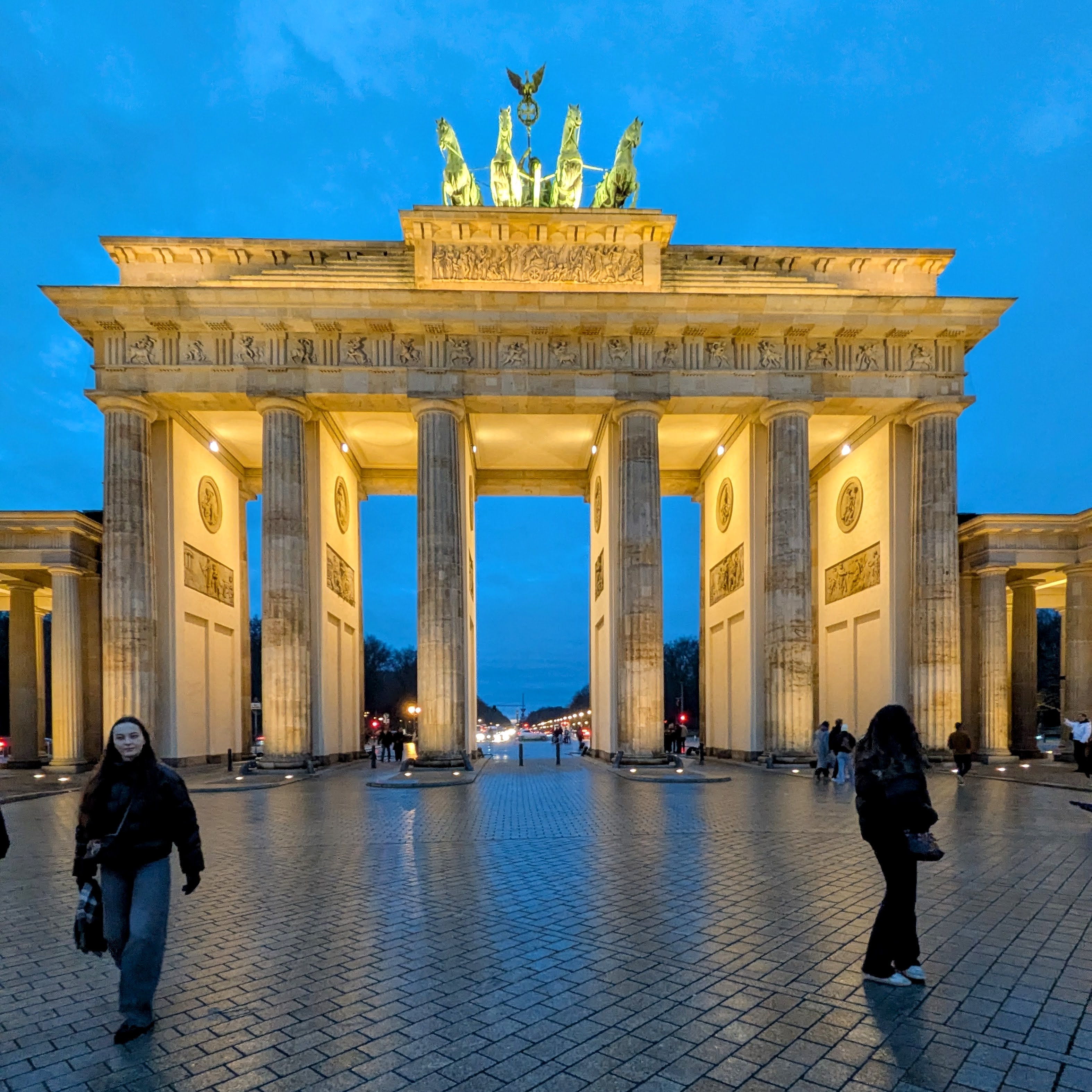
- Berlin, the capital, is a city that, much like a person with a great many troubles in their past, is a patchwork of scars and attempts at cheerfulness. One can visit the Brandenburg Gate, a grand triumphal arch that has, at various points in its long and solemn existence, been a symbol of both a nation’s division and its troubled unification. One might also be drawn to the remnants of the Berlin Wall, a grim and silent reminder of a time when people were separated by an utterly senseless barrier, a concept that a person of any sense should find deeply unsettling. The city is also a place of great sadness, with a memorial to the murdered Jews of Europe, an unsettling and powerful field of concrete slabs that, in their cold and severe geometry, convey a great deal of sorrow.
Read: Berlin’s Best: Conveying Beauty Amidst Gloom.

- Dresden is a city of such breathtaking, polished beauty that it feels like a porcelain vase that has been shattered and meticulously glued back together. It sits along the Elbe River, boasting a skyline of domes and spires so ornate they seem to be competing for the title of Most Likely to Be Overwhelmed by Their Own Grandeur. It was once called the Florence on the Elbe, a name that suggests a desperate desire to be somewhere else entirely. Despite its shimmering galleries and Baroque palaces, there is an inescapable feeling of fragility to the place, as if the entire city is holding its breath, aware that the elegance of the present is merely a thin veil over a past that was once reduced to ash and silence.
Rhine Valley & West Germany (Wine, Castles, Cities)
- For those who prefer their unfortunate experiences to be picturesque, there is the Rhine Valley. This river valley is a place of such breathtaking scenery that one might be tempted to believe that all is well. But one must remember that this river is lined with more castles than a person can count, all of them built for a purpose that was, no doubt, a combination of power, greed, and a great deal of squabbling. A river cruise here is a pleasant way to view a great deal of terrible history from a safe distance.
- Frankfurt is a city that, much like a well-tailored but utterly soulless suit, is both impressive and a little bit unsettling. It is a city of such gleaming modernity that one might believe they have mistakenly wandered into a very large and very peculiar bank. On one hand, you have a skyline of towering glass and steel, a veritable forest of skyscrapers that house a great many bankers who spend their days in a state of perpetually serious anxiety. On the other hand, you have the city’s Old Town, which was, in a truly ruinous chain of events, largely destroyed and then reconstructed with a great deal of effort and a peculiar sort of inauthenticity. It is a place that, much like a person who has lost their memory, is trying to recreate a past that is no longer truly there.

- Cologne is a city that, much like a stubborn and determined person, has been rebuilt a great many times, and each time has decided that a certain towering cathedral must be the centerpiece of its existence. The Cologne Cathedral is a masterpiece of Gothic architecture, a magnificent and awe-inspiring sight that is also a constant reminder of the long and arduous process of construction, a process filled with a great deal of hard work and, one must assume, a fair number of accidents.
North Germany & Baltic Coast (Maritime, Coastline)
- Hamburg is a bustling port city that, much like a person with a great many secrets, keeps its most peculiar qualities hidden. It is known for its harbor, a place of constant motion and loud noises, and its infamous Reeperbahn, a street that caters to a certain kind of clientele and a certain kind of behavior that is not, in a word, wholesome. Here, one is reminded that even a city of commerce has a dark and rather unsavory underbelly.
Who Germany Is (and Isn’t) For
✔️ Good for:
- The Logistically Minded: Those who appreciate high English proficiency and an “Ordnung muss sein” (there must be order) philosophy, where rules are strictly followed.
- History and Culture Seekers: Travelers interested in catalogued history, from fairy-tale castles like Neuschwanstein to sober memorials in Berlin.
- Festivity Lovers: People who enjoy the world’s largest gathering at Oktoberfest or the atmospheric, crowded Christmas Markets in December.
- Budget-Conscious Explorers: Travelers who find Germany surprisingly affordable compared to neighbors like Switzerland, especially regarding world-class beer and hearty meals.
- The Speed-Seekers: Drivers who want to experience the Autobahn, where speed limits are often treated as quaint suggestions.
- Social Diners: Those who don’t mind communal seating in beer gardens and rounding up the bill for a quick, confident tip.
❌ Not ideal for:
- The Cashless Traveler: Germany clings to the 18th century for payments; the phrase “Nur Barzahlung” (Cash Only) is common even in modern cities.
- People Seeking Warm Service: Those who prefer a “How are you doing today?” approach; German waiters are straightforward and focused on efficiency, not friendship.
- Flexible Schedule Fans: Travelers who might be stressed by betrayed fury over five-minute train delays or the current mid-life crisis of the national rail system (DB).
- The Disorganized: Anyone who dislikes meticulously organized perplexity or following strict pedestrian and cycling laws (like never crossing on red at 3:00 AM).
- Sunday Shoppers: Those who would be frustrated by Ruhetag (Rest Day), where almost all shops are closed and noise is socially forbidden.
- Anxious Pedestrians: People who might find swift and silent bicycles and high-speed Audi drivers on the Autobahn unsettling.
- The Light Eater: Those who find a diet of sausages of every shape to be too heavy.
So, if you must go to Germany, be prepared. Pack a strong pair of shoes, a great deal of patience, and a sense of resigned, yet curious, detachment. A journey through Germany is a journey through a land of complicated history, solemn beauty, and a peculiar kind of industrial efficiency. One should visit not for the happiness, but for the profound and unsettling lessons that it is always willing to teach.
Here’s more dismal content you might enjoy:


Something went wrong. Please refresh the page and/or try again.