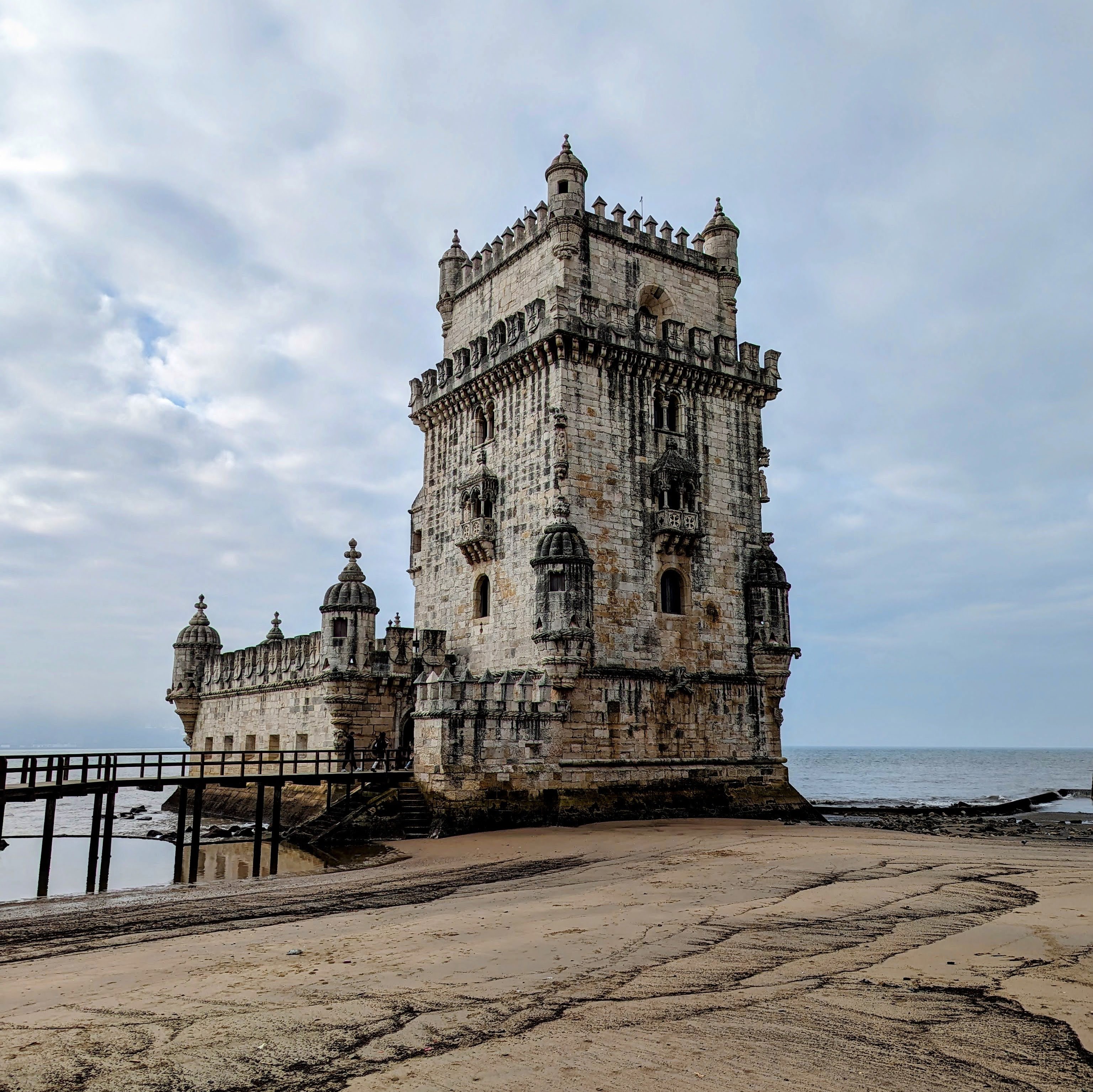
This is not a traditional travel guide. It pairs personal observations with practical advice for travelers who would rather see Portugal as it is, with rough edges, loose ends, and all. Despite the tone, this guide contains practical planning advice, safety context, and logistical realities intended to help travelers decide whether Portugal is right for them.
If you are a person of good sense, you will be well aware that the world is a series of disappointments and that traveling is merely an opportunity to encounter these events in a different location. Based on a popular the travel guide available at the bookshops, one might be tempted to believe that a journey to Portugal would be a simple and pleasant affair, a chance to escape the familiar miseries of one’s own life in favor of a sun-drenched, leisurely existence. This is a common and, as is often the case with common beliefs, entirely mistaken notion.
I know this because my husband, for reasons that don’t concern you, found himself dispatched for a week of work in Lisbon, where his company maintains a small office. I, too, brought along a certain amount of work – because very few things in life allow you to escape your duties entirely – but it must be confessed that the majority of my time was devoted to other, far more diverting matters. Chief among these was the delightful and rather fruitless pursuit of exploration, along with the rather frustrating, but ultimately harmless, endeavor of attempting and failing to understand the local language. I am certain that the Portuguese people were perfectly capable of understanding each other, but, alas, that was of little comfort to me.
You see, Portugal is a country that presents a peculiar brand of beautiful misery. You may arrive with a head full of romantic notions about cobblestone streets and quaint, hand-painted tiles. And it is true, you will find these things. But you will also find that the cobblestones, while charming to look at, are a treacherous menace to anyone foolish enough to wear a shoe with even the slightest heel, and that the beautiful tiles are frequently found on buildings that are in a state of advanced and rather disheartening disrepair.
The history of Portugal, like the country itself, is a matter of considerable distress. It is a story of great discoveries and even greater losses, of a time when the Portuguese sailed to the far corners of the world, only to return to a rather small and, it must be said, somewhat melancholic corner of Europe. You will find yourself surrounded by the remnants of this lost grandeur, from the imposing monasteries to the grand, but now slightly faded, palaces. These places are not a cause for celebration, but for contemplation – a reminder that all great things, like all good things, inevitably come to an end.
The food, too, is a source of both delight and a certain degree of anxiety. You may be presented with a codfish dish that, while delicious, is one of a thousand different variations, each more perplexing than the last. And then there are the pastries, a matter of particular peril. The pastel de nata, a small custard tart, is a treat so delightful it is almost suspicious, a moment of pure and unadulterated pleasure that seems entirely out of place in a world of such perpetual disappointment. One is tempted to believe that something so delicious must be hiding a terrible secret.
The Fado music, which you will inevitably hear echoing through the narrow streets of Lisbon, is perhaps the most accurate description of Portugal. It is a mournful, melancholic sound, a song of sorrow and a feeling of being lost. It is a beautiful sound, to be sure, but it is a beauty born of sadness, a fact that will make you feel a bit more melancholic than you were to begin with.
Portugal at a Glance
Best Time to Visit
May, June, and September are the prime windows to visit, offering a climate that is warm and breezy rather than melting-on-the-sidewalk hot.
If you venture there in July and August, prepare for the agosto madness: a time when the entire population of Europe seemingly descends upon the Algarve’s beaches, turning every sandy cove into a giant game of human Tetris. Conversely, visiting in winter (November to February) is a gamble; while the southern coast remains mild and sunny, the north – particularly Porto – can feel like living inside a very beautiful, very wet cloud for weeks at a time.
Currency
The Euro (€). While cards are widely accepted in trendy Lisbon boutiques and upscale Porto restaurants, it is very common to find a minimum spend for cards (often €5 or €10). And you will inevitably find yourself in a charming, blue-tiled tasca (tavern) where the owner only accepts cash and a smile.
A crucial warning: Portuguese ATMs (the Multibanco system) are legendary for their efficiency, but always keep a few coins on hand for the covert bread and olives that magically appear on your table. It’s not a gift; it’s an edible tax on your hunger, and you will be charged for every olive you contemplate.
Language
The official language is Portuguese, a beautiful, sibilant tongue that sounds like Spanish if it were filtered through a thick layer of velvet and a slight Russian accent.
To the locals’ immense pride, English proficiency in Portugal is significantly higher than in neighboring Spain or France. However, a word of etiquette: do not try to get by using Spanish. While the two languages are cousins, the Portuguese have spent centuries maintaining their distinct identity, and speaking Spanish to a local is a bit like speaking to a Canadian in a thick Texan accent – they’ll understand you, but they might not be thrilled about it.
Cost Level
Affordable (the bargain of Western Europe). Portugal is famously kind to your wallet. You can enjoy a three-course prato do dia (lunch special), including wine and coffee, for less than the price of a fancy latte in London.
Even in the heart of Lisbon, a glass of excellent regional wine often costs less than a bottle of sparkling water. The only exception is the housing market in the capital, which has been driven into the stratosphere by digital nomads, but for a visitor, the cost of living remains low enough that you might actually consider accidentally missing your flight home.
More Dire Travel Warnings About Portugal
If my descriptions were not enough to dissuade you, a series of solemn warnings issued by the governments of the United States, the United Kingdom, and Canada describe countless hidden dangers one should consider.
- Petty Crime: As a tourist, you may find yourself in the sort of crowds that flock to ancient trams or lovely seaside towns. In such a crowd, a person with a particular lack of manners may help themselves to your wallet, your mobile phone, or your bag. It is a sad fact that some people consider your belongings to be their business, and these advisories warn that you must become as suspicious as a worried chaperone at a crowded party.
- Scams and Deception: One must be wary of strangers offering a friendly gesture that is, in fact, a trap. The advisories, in a manner that is both gloomy and practical, speak of individuals who might try to sell you illegal substances, only to rob you the moment you are distracted. Or, perhaps, a taxi driver might, with a great sigh and a shrug of his shoulders, insist that his meter is broken, a sure sign that your wallet is about to become a great deal lighter.
- Traffic and Pedestrian Safety: Even the most pleasant of journeys must contend with the unpleasantries of traffic, which, as you know, can be rather frustrating. While the streets of Portugal may seem charming, the advisories suggest that they are not always a safe place for a pedestrian. A person should not, on a whim, step out into a street, as the drivers of automobiles and motorbikes do not always share the same notions of order and safety as you or I.
- Health and Natural Disasters: The governments’ warnings speak of wildfires, particularly in the warmer months, which can turn a perfectly good forest into a landscape of smoke and cinders. And should you require medical assistance, you may find that you need more than a kind word and a bandage; you would need a great deal of money and the proper insurance, lest a minor ailment become a financial catastrophe.
These are just some of the misfortunes that await you in Portugal. And although current as I write this, these travel advisories are ever-shifting documents, meaning that you, as a traveler, are in a constant state of uncertainty. You must check these advisories again and again, like a sailor scanning the horizon for storms. But even then, you will not have peace of mind, for a disaster can strike at any time, in any place, and in any form. To travel is to accept that you are living in a state of suspended dread.
Here are links to the most current travel advisories from these governments.
- Government of Canada Travel Advice and Advisories for Portugal
- U.S. Department of State Travel Advisory for Portugal
- United Kingdom Foreign Travel Advice about Portugal
So, as you can see, even the most sober and formal of sources agree that Portugal is not a place for the faint of heart. It is a country of layered sorrows, each one more complex and bewildering than the last. Do not say you were not warned, for the warnings are, I am afraid, everywhere.
Practical Realities
Public Transport
In Lisbon, the iconic yellow Remodelado trams (like the #28) screech and rattle through the Alfama district with a defiance that suggests they invented the hills themselves. They are charming, packed with tourists, and a pickpocket’s favorite theater. For a more serene experience, the modern metro systems in Lisbon and Porto are clean and efficient. The Intercidades and Alfa Pendular trains are the backbone of the country, connecting the north to the south with reliable speed. However, if you venture into the Alentejo or the Douro Valley, the bus (the Rede Expressos) is your only hope. The bus stations are often located in seemingly random gravel lots, and the drivers treat the mountain curves like they’re qualifying for a Grand Prix.
Rental Car Reality
Renting a car is the only way to reach the hidden Praias (beaches) of the Algarve or the schist villages of the interior.
- You must respect the Via Verde (Green Way). Portugal’s highway tolls are entirely electronic and remarkably complex. If you drive through a green lane without a transponder, you aren’t getting a free ride; you are getting a massive fine mailed to your home three months later.
- Parking is a test of your handbrake and your soul. Portuguese drivers are masters of the illegal but acceptable park – leaving their cars on sidewalks, in front of garages, or in the middle of a square with the hazard lights on, which acts as a magical “I’ll be back in five minutes” cloak of invisibility.
Restaurant Timing
The service is unhurried and traditional. In Portugal, a meal is a social contract, not a transaction.
- Beware the couvert trap. As soon as you sit down, the waiter will bring bread, olives, cheese, and perhaps some ham. These are not free gifts from the house. If you eat them, you pay for them. If you don’t want them, simply say “Não, obrigado” and they will whisk them away.
- Lunch happens strictly between 12:30 PM and 3:00 PM; try to find a hot meal at 4:00 PM and you’ll be met with a kitchen that is closed for rest.
- When you want the bill, you must ask for “A conta, por favor,” or you will still be sitting there when the next sardine season begins.
Bureaucracy
Digital life is a strange blend of high-tech banking and ancient paperwork. Portugal’s Multibanco ATM system is one of the most advanced in the world – you can pay your taxes, buy concert tickets, and top up your phone at any street corner machine.
- Cash is the king of the Pastelaria. While major shops take cards, many small cafes have a sign saying “Não aceitamos cartões” (we don’t accept cards). Always carry a few Euro coins; without them, you cannot buy your morning Bica (espresso) or your afternoon custard tart.
Pace of Life
The local philosophy is one of “Saudade” and “Desrascanço.” Saudade is a deep, melancholic longing for something lost, often heard in the haunting notes of a Fado singer. Desrascanço, however, is the more practical side of the Portuguese soul: the ability to improvise a solution at the very last minute with whatever tools are at hand. Do not mistake the quiet, unassuming nature of the locals for a lack of pride. They are deeply attached to their history and their land. Life is measured in long dinners, the quality of the olive oil, and the belief that no matter how chaotic the world gets, everything can be solved with a glass of Port and a bit of patience.
Popular Destinations (and Why They May Disappoint)
Having reviewed the advisories, a visit to Portugal might still seem like a harmless, even pleasant, undertaking. It is, after all, a country renowned for its sun-drenched coastlines and its charming, ancient cities. But an individual of a more sensible understanding of the world’s cruel and unrelenting nature knows that this is merely a prelude to a profound and baffling disappointment, a sprawling and peculiar collection of equally unsettling locales.
For those who are, for reasons that can only be described as ill-advised, intent on traveling to Portugal, I have compiled a list of particularly distressing destinations:
- Lisbon is a city of such bewildering and relentless ascents and descents that one might suspect it is not so much a place as a permanent and ongoing state of being out of breath. Its famous trams, which clatter and groan up the impossibly steep hills, are nothing more than a rickety and crowded conveyance that serves as a constant and nagging reminder of the fact that all of life’s journeys are, in all likelihood, an uphill struggle. The air is thick with the mournful wail of fado music, a sound so profoundly melancholic it is as if the city itself is sighing with a deep and existential sadness, a mournful lament that reminds one that a life of tragedy is a life not worth living.
Read more about Lisbon in this Unique Exploration Guide, or read this Foodie’s Survival Guide to Lisbon.

- Porto, a city known for its decadent and alcoholic beverages, presents itself as a charming and historic destination. But a person of discernment will recognize that the city’s true purpose is to lead one on a long, winding, and particularly steep walk down to the river, a descent that is only made more dreadful by the knowledge that the inevitable return journey will be a tedious and exhausting climb back up. The famous bridges, great and imposing structures, serve as a constant and nagging reminder that a person is trapped between a series of hills and a great, cold river, with very few options for escape. The famous wine cellars are merely a dark and musty collection of large wooden barrels that contain a liquid so sweet and so strong that it can only be described as a public display of chemical confusion.
Read: Exploring Porto: A Guide to Unforgettable Experiences and Ultimate Dining Guide to Porto’s Restaurants.

- Coimbra is a city that, much like an aging scholar who refuses to change out of his threadbare robes, is steeped in a history so profound it feels slightly heavy. It is home to one of the oldest universities in the world, a place where students still wander the steep, narrow streets wearing long black capes, a fashion choice that makes the entire city look like a gathering of very studious and somewhat gloomy magicians. One might visit the Joanina Library, a room of such breathtaking baroque opulence that it seems designed specifically to make the reader feel small and insignificant, housing thousands of ancient books that are guarded by a colony of bats – a detail that is both practical for pest control and deeply unnerving. Below the hilltop university lies a labyrinth of medieval alleys that lead down to the Mondego River, a body of water that has witnessed a great deal of historical drama and a fair amount of flooding. It is a place where the past is not merely remembered but is actively leaning against the present, creating an atmosphere that is as beautiful as it is wearying.
Read: Coimbra: A Journey Through Historical and Humorous Landmarks and Where to Find the Best Eats in Coimbra.

- The Algarve is a coastal region that has, through some unfortunate turn of events, become a fashionable destination for a particular and most odious kind of person. Here, the sun shines with a relentless cheerfulness that only a fool could find appealing, and the air is thick with the clamor of vacationers. The beaches, while undeniably sandy, are merely a great, sun-baked expanse of tiny, innumerable rocks, and the dramatic cliffs that overlook the sea are a constant and nagging reminder of how precarious and fragile a person’s existence truly is.
- Sintra is a destination that feels less like a city and more like a permanent and unsettling fever dream. Here, the castles and palaces, painted in bizarre and unnatural colours and adorned with peculiar, gothic decorations, are a monument to the very idea of things not fitting in, which, as a person of discernment, you will find a most familiar and unpleasant concept. The very air is thick with a persistent and confusing mist, as if the landscape itself has secrets that it wishes to keep from you. To visit is to be a part of a vast, slow-moving procession of tourists, all shuffling dutifully from one ancient, unsettling room to the next, much like a line of particularly listless sheep.

- And then there is the Douro Valley, a place of such improbable and ostentatious beauty that it seems to have been constructed solely to make the rest of the world feel inadequate. The famous terraced vineyards, which curve up the hills like a series of great, earthen staircases, are a testament to a long and tedious history of back-breaking labor. To visit is to be a part of a particularly slow and quiet procession, all the while knowing that the very nature of the place is a long and tragic story of hard work, isolation, and a great deal of grapes, which is, as a rule, not a very cheerful sort of story at all. The river that winds through the valley, while beautiful, is simply a great, indifferent body of water that offers little in the way of comfort and a great deal in the way of a terrifying and wet end.
Who Portugal Is (and Isn’t) For
✔️ Good for:
- The Budget-Conscious: It is the bargain of Western Europe where a three-course lunch costs less than a London latte and wine is cheaper than sparkling water.
- History and Contemplation: Those who appreciate lost grandeur, melancholic music (Fado), and ancient, slightly faded palaces and monasteries.
- Fans of High English Proficiency: Travelers who want to visit a country where English is widely understood (significantly more than in Spain or France).
- Flexible Explorers: People who enjoy Desrascanço (improvising solutions) and unhurried meals that are treated as social contracts rather than transactions.
- Off-Season Adventurers: Those visiting in May, June, or September to avoid the agosto madness and extreme heat.
- The Digitally Savvy (mostly): People who can appreciate one of the world’s most advanced ATM systems (Multibanco) for everything from taxes to phone top-ups.
❌ Not ideal for:
- The Physically Fragile or High-Heel Wearers: The steep hills and treacherous cobblestones are a menace to anyone without sturdy, flat footwear.
- Spanish-Speakers (as a shortcut): Those who expect to get by using Spanish; locals find it offensive to their distinct national identity.
- The Impatient: Anyone who wants a quick meal (kitchens close strictly between 3:00 PM and 7:00 PM) or fast service.
- Crowd-Haters: People who would be bothered by the human Tetris of the Algarve in summer or the listless sheep lines of tourists in Sintra.
- Cash-Free Purists: Travelers who refuse to carry coins; many small tascas and cafes do not accept cards for small purchases.
- Unwary Drivers: People who might struggle with complex electronic tolls (Via Verde), vertical parking challenges, or Grand Prix-style bus drivers.
- The Highly Sensitive: Those who might find the pervasive sense of Saudade (melancholy) and the mournful wail of Fado music to be a bit too depressing.
So, as you can see, Portugal offers a vast and varied landscape of despair. You are free to embark on this journey if you must, but do not expect a happy ending. The hills will be too steep, the crowds will be too large, and the very best parts of Portugal are, in all likelihood, precisely the parts you will never find. A much more sensible course of action would be to stay home, light a candle, and read a particularly long book about something that is not nearly so fraught with disappointment.
Here’s more dismal content you might enjoy:


Something went wrong. Please refresh the page and/or try again.