Dear fellow traveler, if you’re looking for yet another delightful “Top 10 Things to do in Porto list,” you have opened the wrong page. For starters, you will notice – if you have any talent for counting at all – that this list does not contain ten items. A list of ten would suggest a sense of completeness and order that simply does not exist in this wretched world. These recommendations are culled from my own harrowing experiences, though I have included a few locations I have not yet visited, solely because I have heard whispers of their greatness and feel a desperate, perhaps foolish, urge to see them for myself before something goes horribly wrong.
I must caution you: while the tone of this guide is somewhat grim, the logistical information contained within is – most distressingly – entirely accurate. I have meticulously recorded prices and logistical advice with a level of accuracy that is frankly exhausting. Every detail was correct at the time this document was published, though in a world as unstable as ours, accurate is a word that should always be whispered with a note of caution. You may use this information to plan your journey with terrifying efficiency, though why you would want to arrive at your destination any sooner is a mystery that I have no desire to solve.
Porto is a city that clings to the hillsides of the Douro River with the desperate tenacity of a barnacle on a shipwreck. It is a place of dramatic verticality, where every charming stroll inevitably transforms into a grueling mountaineering expedition over jagged cobblestones that have been polished to a treacherous sheen by centuries of Atlantic mist.
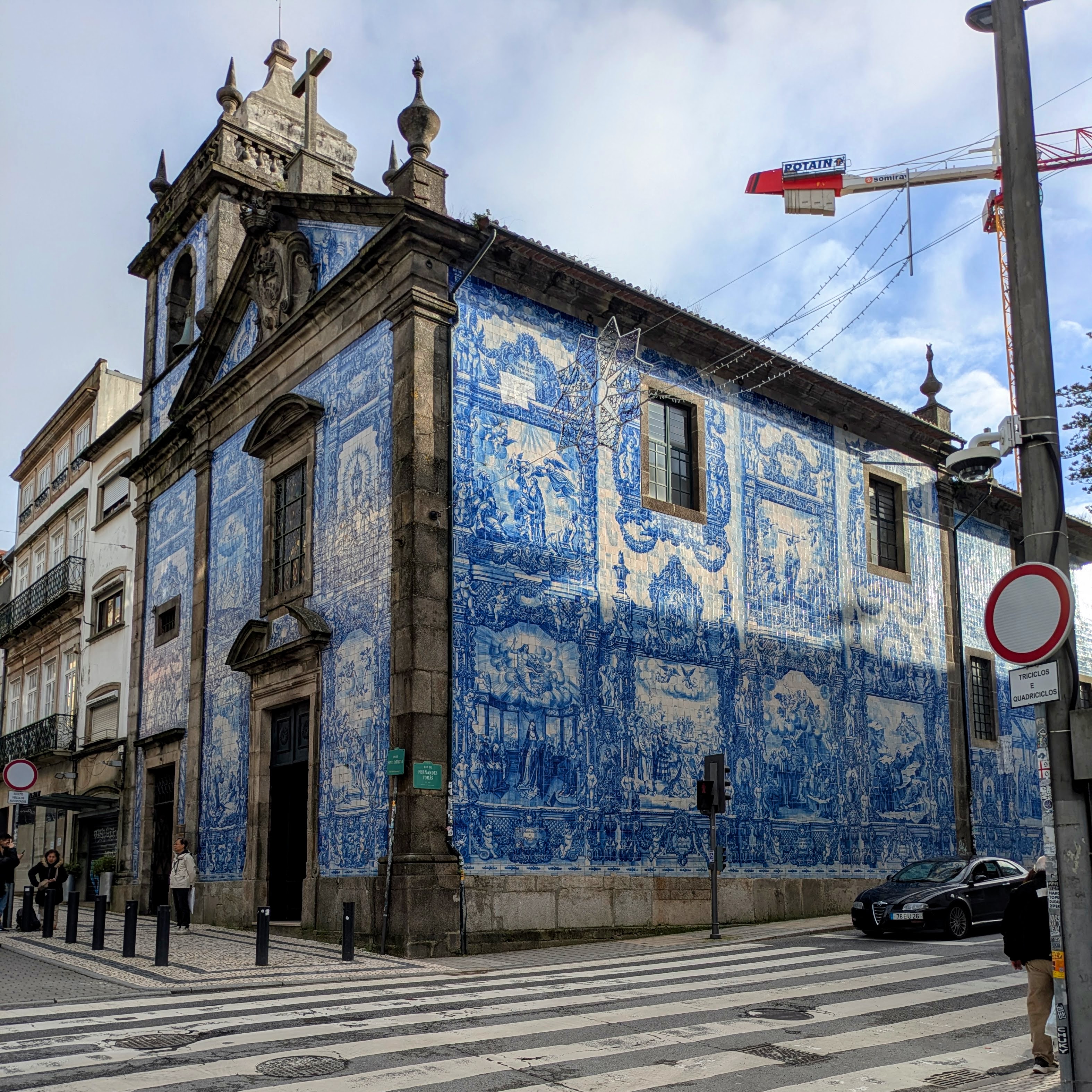
To visit Porto is to engage in a constant battle with gravity while being surrounded by the faded glory of granite facades and blue-tiled churches that look like they’re judging your lack of cardiovascular endurance. It is a city that smells of salt, woodsmoke, and the syrupy breath of a thousand wine cellars – a sensory reminder that here, the primary methods of coping with the terrain are sugar and high-proof alcohol. Whether you are queueing for three hours to see a staircase that allegedly inspired a wizard or staring at a bridge designed by an apprentice who clearly had a verticality complex, Porto offers a rugged, damp, and vertical sort of beauty that will leave your heart full and your knees utterly destroyed.
If this is your first stop in Portugal, read this cautionary travel guide.
Best Things to See and Do in Porto (And Why They Might Disappoint You)
In any given metropolis, there is a list of Best Things to See and Do, an optimistic and misleading phrase that suggests these activities will be entirely delightful and without peril. Such a list, however, is merely a catalog of places where one can witness something curious, or perhaps even perform a curious deed oneself. One should approach this list with caution and a healthy dose of suspicion, as no one can truly promise that what you see and do will be anything but an experience of dreadful consequence.
While I endeavor to furnish you with the costs of regular adult admission for the various locales of interest, you must understand that the proprietors of these places will almost certainly offer lesser prices for children, students, the elderly, and other groups in order to make a simple transaction more complicated. You should also be aware of the Porto.CARD, which offers unlimited public transportation and free or discounted access to a great many sites, essentially pre-paying for your own exhaustion.
Vertical Vexations & Panoramic Perils
These entries focus on locations that require significant cardiovascular strain or precarious height to reach a perspective that ultimately serves to emphasize the visitor’s physical frailty and the terrifying proximity of the ground.
Ascend the Torre dos Clérigos (Clérigos Tower)
- What the guides say: This is a tall, 18th-century Baroque structure that stands precisely 75 meters above the city of Porto. This granite edifice was designed by an Italian architect named Nicolau Nasoni, a man whose occupation involved drawing very specific lines on paper so that other men could stack very heavy stones on top of one another. For a significant duration of its history, this tower held the distinction of being the tallest building in the entire country of Portugal, a superlative that made it the official symbol of the country.
- What they don’t tell you: You will pay a fee to enter a claustrophobic stone corkscrew, spiraling upward alongside panting strangers in a space barely wide enough for a modest ego. Upon reaching the top, you will be buffeted by Atlantic winds and forced to look down upon the city, realizing that you are now further away from the exits than when you started. The view is, unfortunately, spectacular, which only serves to distract you from the fact that you eventually have to go back down the same cramped stairs.
- Go for: 360° panoramic views and Baroque architecture.
- Cost: You must surrender €10 to climb this monument to vanity – book your timed-entry ticket on the website.
- Before you go: Be ready to climb over 200 very narrow steps to the top.
- Daily Concert: A pipe organ performance occurs daily at 12:00 pm, which you may or may not want to subject yourself to.
- Verdict: Go, but don’t eat first. It’s the ultimate Porto rite of passage, but the stairs are a legitimate physical and psychological test.

Scale the Sé do Porto (Porto Cathedral)
- What the guides say: This is a cathedral situated on the Pena Ventosa hill, the highest point in the city. Founded in the 12th century, this fortress-like monument features a Romanesque body, a Gothic cloister, and a Baroque facade. It remains one of the oldest and most significant landmarks in Porto.
- What they don’t tell you: This fortress-like structure sits atop a hill, seemingly designed to intimidate the heavens. You will hike up steep, narrow streets only to find a cold, granite interior that offers little warmth for the weary soul. For a fee, you can access the cloisters – decorated with tiles that mock your lack of religious devotion – and climb to the towers, where you can stare out at the terracotta rooftops and contemplate how many of them have better insulation than this 12th-century bunker.
- Go for: Gothic cloisters featuring stunning 18th-century azulejos (blue and white hand-painted tiles) that depict scenes from the “Song of Solomon” and the life of the Virgin Mary; a silver altarpiece that was once behind a wall of plaster to save it from Napoleon’s looting troops; sweeping, dramatic views of the old city’s rooftops from the upper floors.
- Cost: Approximately €4 for admission to the church, cloister, museum, and tower.
- Camino de Santiago: This is the traditional starting point for many pilgrims walking the Camino de Santiago, so you can buy a Credencial (pilgrim passport) here.
- Pillory of Porto: Look towards the Terreiro da Sé, where you’ll see a Rococo-style column that is actually a pillory, marking this as a historic site of public punishment.
- Dress code: Show respect by ensuring your shoulders and knees are covered when entering.
- Verdict: Essential for the tiles. The cathedral itself is a bit of a cold fortress, but the cloisters are a 10/10 for your Instagram feed.


Cross the Ponte Luís I (Luís I Bridge) – Upper Level
- What the guides say: This is a double-deck metal arch bridge that allows people and trains to cross the Douro River without getting their feet wet. Completed in 1886 by Théophile Seyrig – who was a disciple of Gustave Eiffel, a man famous for a different, pointier tower – this structure connects the city of Porto to Vila Nova de Gaia. At the time of its completion, it held the record for the longest span of its type in the world.
- What they don’t tell you: This massive iron structure, designed by a disciple of Eiffel, requires you to walk hundreds of feet above the Douro River on a narrow path shared with a speeding metro train. You will find yourself gripping the railing with white-knuckled intensity, staring into the dark, churning water below, and contemplating the fragility of 19th-century engineering.
- Go for: Spectacular, vertigo-inducing views of the Ribeira district and the Port wine cellars.
- Cost: It is free to walk across, though the psychological toll is immense.
- Sunset: One may argue that this is the best sunset spot in Porto.
- Safety: The upper deck is shared with the Metro do Porto, so stay off and away from the tracks. Do not jump off the bridge.
- Photography: For a view of the bridge itself, go to Mosteiro Santo Agostinho da Serra do Pilar (Map).
- Verdict: It’s free, terrifying, and beautiful. If you don’t feel a slight sense of peril, were you even in Porto?


Ride the Teleférico de Gaia (Gaia Cable Car)
- What the guides say: This is a modern cable car system that moves people through the air. This device glides along the riverfront of Vila Nova de Gaia, connecting the Jardim do Morro, a high-altitude garden located near the upper deck of the Dom Luís I Bridge, and descends to the Cais de Gaia, which is the lower quayside where various Port wine cellars are situated for the storage of fortified wine.
- What they don’t tell you: You will be suspended in a small metal bubble, dangling by a cable over the port wine cellars of Gaia. This brief, swaying journey offers a view of the Ribeira district that is so picturesque it feels fundamentally dishonest. It is simply a mechanical shortcut for those who have already been defeated by the city’s hills.
- Go for: Sweeping views and sparing your legs a steep 15 – 20 minute hike.
- Cost: A one-way ticket costs €7, or €10 if you wish to be hauled back to where you started. You may buy a ticket on the website or at the ticket office, but it must be validated before boarding.
- Weather: The cable car can close or become quite unpleasant during high winds.
- Crowds: Board at the bottom (Cais de Gaia) and head up for fewer crowds.
- Verdict: For the weary. It’s a lazy tax. Pay it if your knees are screaming; skip it if you still have your dignity and some stamina.

Tiled Torture & Commercialized Calamity
This category is for the essential, unavoidable areas of the city that force the tourist into physically uncomfortable or spiritually hollow experiences disguised as culture.
Queue for the Livraria Lello
- What the guides say: This is a bookstore that opened in 1906 and is frequently described as one of the most beautiful bookstores in the world, so it is also a place where many people stand in line to look at shelves. This building is a combination of Neo-Gothic and Art Nouveau architecture, featuring a stained-glass ceiling and a crimson floating staircase. While the interior appears to be made of intricately carved wood, it is actually painted plaster.
- What they don’t tell you: This bookstore is famous for its Neo-Gothic interior and a rumored connection to a famous series of wizarding books. You will pay for the privilege of standing in a line that stretches down the street, only to be funneled into a room so crowded with people taking selfies that it is impossible to actually reach, let alone read, a book. It is a temple of literature where the only thing being read is the Exit sign.
- Go for: The floating, double-spiral red staircase and the stained glass ceiling.
- Cost: Admission is €12, which can supposedly be deducted from a book purchase, provided you can find a book that hasn’t been used as a tripod. €15.95 will also get you “skip-the-line” privileges. Buy your timed-entry ticket online.
- Harry Potter: J.K. Rowling claims to have never actually visited this bookstore.
- Best time to visit: Expect crowds. Lunch time and late afternoon are the least busy times.
- Photography: The best times for pictures are the first and last time slots of the day, although getting pictures without other tourists posing may prove impossible.
- Don’t miss the facade: The exterior features beautiful paintings representing science and art.
- Who should skip Livraria Lello? Anyone who dislikes crowds, queues, or paying to stand still while other people take photos.
- Verdict: Skip unless you’re a devotee. It is a bookstore where the primary activity is not reading. Buy a beautiful book at a local shop instead.


Brave the Ribeira District
- What the guides say: This is the city’s ancient riverside quarter, a very old place where the land meets the water. It is a UNESCO World Heritage site consisting of a labyrinth of narrow, winding medieval alleys that are difficult to navigate without a map. The area features multi-story houses painted in various colors and plazas paved with cobblestones. While it was once a center for maritime trade, it is now the most photographed neighborhood in Portugal.
- What they don’t tell you: The riverfront is a postcard-perfect row of colorful houses that conceals a chaotic gauntlet of overpriced restaurants and aggressive promoters brandishing laminated menus. You will walk on uneven cobblestones designed specifically to twist ankles, while the smell of salt water and fried cod reminds you of the many creatures that had to die for your lunch.
- Go for: The quintessential Porto vibe – street musicians playing Fado or acoustic guitar, the smell of grilled sardines, and the constant movement of the Rabelo boats.
- Cost: It is free to explore.
- Tourist traps: Enjoy a riverside glass of Vinho Verde, but then head one or two streets back into the narrow alleys to find more authentic, family-run tascas with lower prices.
- Dress code: Wear sensible shoes or risk breaking an ankle.
- Nighttime: Keep your wits about you, but you should absolutely explore the district at night.
- Verdict: Soak in the vibe, take the photos, then flee three streets uphill to find a meal that doesn’t include a tourist tax.


Stare at the Porto São Bento (São Bento Station) Tiles
- What the guides say: This twentieth-century transport hub was constructed on the exact site of a former Benedictine convent, a building where monks used to live before trains were invented. Although its primary function is the movement of passengers, its main atrium serves as an open-air gallery. This room contains a vast quantity of blue and white tiles that illustrate the history of Portugal.
- What they don’t tell you: You will enter a grand railway station to admire the 20,000 blue-and-white tiles depicting Portugal’s bloody and complex history. However, you will be doing so while being buffeted by commuters who are actually going somewhere, reminding you that while you are standing still staring at a wall, life is passing you by at a high rate of speed.
- Go for: The 20,000 azulejos designed by Jorge Colaço.
- Cost: Free.
- Photography: To photograph the tiles without billions of commuters in your shot, visit very early in the morning or late in the evening.
- Look for: The colourful frieze at the top of the walls, which depicts the history of transport in Portugal, from ox carts to the introduction of steam engines.
- Verdict: The best 10 minutes of your trip. It’s free, spectacular, and requires zero climbing. Just watch your backpack.


Wander the Mercado do Bolhão (Bolhão Market)
- What the guides say: This is a bi-level municipal market that has functioned since 1839. It has recently undergone a renovation to restore its neoclassical architecture, a term for a style that looks very organized and dignified. It is a location where residents purchase fresh produce, meat, and fish. The market is a sensory experience, which is a polite way of saying it contains a significant variety of smells and noises related to the sale of food.
- What they don’t tell you: After years of renovation, this historic market is now suspiciously clean and organized. You will see neatly stacked olives and polished fish, a sanitized version of commerce that lacks the gritty reality of the past.
- Go for: Purchase fresh olives, local cheeses, chouriço, and Port for a picnic, or enjoy fresh oysters, gourmet canned fish, or a glass of wine right on the spot.
- Cost: You will likely buy a small tin of sardines for the price of a small house, only to realize you don’t actually like sardines.
- The Pregão: This is the name for the centuries-old market custom of traditional, loud, rhythmic shouting of the vendors.
- Photography: Entering from the Rua de Fernandes Tomás allows you to see the grand scale of the interior from the upper balcony.
- Souvenirs: This is an excellent place to buy high-quality Portuguese gifts.
- Best time to visit: The market is at its most vibrant on weekday mornings. It is closed Saturday afternoon and Sunday.
- Verdict: It’s lost its grit but kept its flavor. Go for the samples, stay for the rhythmic shouting of the vendors.
For more tips about what and where to eat in Porto, read: Ultimate Dining Guide to Porto’s Restaurants.


Squint at the Igreja e Museu de São Francisco (Church of Saint Francis)
- What the guides say: This fourteenth-century Gothic church is frequently called The Golden Church. The interior contains more than 300 kilograms of gold leaf, making it look like a very expensive jewelry box. This gold is applied to intricate wood carvings known as talha dourada. This creates a stark contrast to the outside that looks like a place for humble monks.
- What they don’t tell you: Inside this church, you will find an interior so aggressively gilded with Brazilian gold that it feels like a personal insult to the concept of Franciscan poverty. You will walk through a forest of carved wood and gold leaf, wondering how much of the sacred atmosphere is actually just the light reflecting off the sheer excess of wealth. You can also visit the catacombs below, where the bones of the dead provide a much-needed, somber contrast to the blinding extravagance above.
- Go for: The Tree of Jesse – a famous wooden sculpture depicting the genealogy of Jesus; the catacombs – seek out the glass floor section to view the bones below; general Baroque extravagance.
- Cost: An admission ticket is approximately €9 and grants you access to the church, catacombs, and museum. Don’t skip the museum.
- Photography: Photography is strictly forbidden inside the church.
- Best time to visit: Visit on a bright day for maximal shimmering gold.
- Verdict: It is the most expensive-looking humble church you will ever see. The catacombs are a nice palate cleanser.


Liquid Limbo & Damp Despair
These locations offer a supposed respite or a sensory experience, but ultimately confront the visitor with the realities of fermentation, fog, and the passage of time.
Endure a Port Wine Cellar Tour
- What the guides say: This is an exploration of fortified wine within the city of Vila Nova de Gaia. Although the grapes are grown in the Douro Valley, the wine is stored in granite warehouses, which are massive, cool buildings designed to keep liquids from spoiling. Port cellars have occupied this riverfront for centuries – long enough to accumulate a great deal of dust and millions of liters of aging nectar.
- What they don’t tell you: You will descend into the cool, dark vaults of Gaia, where you will be lectured on the noble rot and the tedious process of aging wine in oak barrels. You will be told that wine is the most civilized thing in the world, a sentiment that becomes increasingly hard to believe as you watch a tour group of thirty people try to civilize themselves on four ounces of Tawny in a damp basement. You will realize that the wine is having a more peaceful, sedentary life than you are. At the end, you will be given a few small glasses of syrupy liquid that will make your head ache and your wallet feel significantly lighter.
- Go for: Atmospheric caves filled with giant oak vats and smaller barrels; expert tastings; historic wine education.
- Cost: Most tours begin at €15 to €20, and should usually be booked ahead of time.
- Dress code: Bring a sweater or risk freezing to death.
- There are over a dozen to try, but here’s a small selection to consider:
- Verdict: Mandatory education. You’ll leave slightly buzzed, significantly poorer, and capable of lying about notes of plum and oak.


Take a Six Bridges Cruise
- What the guides say: This is a 50-minute excursion aboard a Rabelo, a flat-bottomed boat that was originally used to move barrels of wine before trucks were invented. The vessel departs from the riverside and travels toward the Atlantic Ocean, passing underneath six different bridges. These bridges are architectural feats – very large piles of metal and stone that do not fall into the water.
- What they don’t tell you: You will board a rabelo (a flat-bottomed boat) and be ferried along the river like a piece of cargo. The damp river air will ruin your hair, and the repetitive drone of the audio guide will lull you into a state of catatonic boredom. You will see all six bridges, which is five more bridges than any reasonable person needs to see in 50 minutes.
- Go for: Perspective of the Dom Luís I and Maria Pia bridges from directly underneath, and skyline views.
- Cost: This aquatic ordeal costs roughly €18.
- Choose carefully: Boats depart from both sides of the river, but the queues on the Gaia side (near the cable car) are often slightly shorter than the ones in the Ribeira.
- Best time to go: It has been said that the Golden Hour light hitting the granite cliffs and city walls is breathtaking.
- Verdict: Great for people-watching from the water, but ultimately just a way to see a lot of concrete from a low angle.
Visit the Palácio da Bolsa (Stock Exchange Palace)
- What the guides say: This opulent 19th-century building serves as the headquarters of Porto’s Commercial Association. It was constructed on the ruins of a Franciscan convent, proving that history is often just one building sitting on top of another. The interior contains several decadent rooms, which are decorated with a level of detail that would take a very long time to dust.
- What they don’t tell you: You will be led through the Arabian Room, a gilded chamber so unnecessarily shiny it will make your eyes ache. It is a monument to the accumulation of wealth – a process in which you are currently participating as the one providing the wealth to the tour guide.
- Go for: The Arabian Hall is an exotic explosion of Moorish Revival style, inspired by the Alhambra, covered in intricate gilded stucco that took 18 years to complete.
- Stay for: The Nations’ Courtyard is a grand, glass-domed central courtyard where the city’s stock exchange once operated, surrounded by the coats of arms of the countries Portugal traded with. The Jury’s Room is a masterpiece of French Renaissance style featuring exquisite wood carvings.
- Cost: Admission is €14 and includes a mandatory 30-minute guided tour, the start time of which will be determined only after you arrive.
- Best time to visit: Especially in peak season, English tours fill up hours in advance. Buy your ticket in the morning (or online) and return at your scheduled time.
- Verdict: If you like shiny things and mandatory tours, this is your peak. The Arabian Room is undeniably impressive.


Walk the Foz do Douro
- What the guides say: This is a seaside district situated at the exact point where the Douro River meets the Atlantic Ocean. It is characterized by wide promenades and historic lighthouses. Expect a different vibe, with fewer narrow alleys and significantly more crashing waves and upscale mansions than in the city center.
- What they don’t tell you: You will take a vintage tram – a rattling, wooden box that smells of ozone and disappointment – to the point where the river meets the Atlantic. Here, the waves crash against the stone piers with a violence that suggests the ocean is trying to reclaim the city. You will stand in the cold spray, staring at the gray horizon, and realize that there is nothing between you and New York but a vast, wet emptiness.
- Go for: The romantic Pergola da Foz, the Felgueiras Lighthouse built in 1886, and oceanfront dining.
- How to get there: Take Tram 1 from the Infante station (near the Palácio da Bolsa).
- Rent a bike: There is a flat and scenic bike path that takes about 25 minutes to explore.
- Verdict: Go here when the city feels too small. The Atlantic wind will blow the smell of grilled sardines right out of your hair.
Botanical Bewilderment & Modernist Malaise
These sprawling green spaces offer a deceptive promise of tranquility, only to confront the visitor with aggressive peacocks, confusing contemporary art, and the realization that nature is just another uphill climb designed to leave you physically exhausted and intellectually adrift.
Get Lost in the Jardins do Palácio de Cristal
- What the guides say: This is a 19th-century botanical park that contains various themed gardens. In the 1950s, the original glass and iron Crystal Palace was replaced by a domed sports arena, which is a large, rounded building where people exert themselves for various trophies. Despite the absence of an actual palace made of crystal, the park remains a significant green space.
- What they don’t tell you: Despite the name, there is no crystal palace here – it was demolished in the 1950s and replaced by a concrete dome that looks like a stranded UFO. You will wander through manicured gardens filled with peacocks that scream at you for no discernible reason. The gardens offer breathtaking views of the river, which serve only to remind you that you are currently on the wrong side of it.
- Go for: Peacocks, themed terraces, and views over the Douro.
- Cost: Unlike many of Porto’s landmarks, entry to these gardens is completely free.
- Picnic: This is the best place in Porto for a picnic. Pick up some supplies at Mercado do Bolhão and head here.
- Super Bock Arena: This peculiar dome is a striking example of mid-century modernist architecture.
- Verdict: It’s free, the views are top-tier, and the peacocks provide free (if aggressive) entertainment.
Contemplate the Parque e Jardim da Fundação Serralves
- What the guides say: This cultural institution occupies eighteen hectares of land. It features a Museum of Contemporary Art designed by Álvaro Siza Vieira, an Art Deco Villa from the 1930s, and a park. It is described as a unique intersection – a place where you can look at minimalist concrete, old-fashioned glamour, and many trees all in the same afternoon.
- What they don’t tell you: This is a vast expanse of greenery housing a Museum of Contemporary Art. You will walk through minimalist gardens and a Treetop Walk that allows you to be slightly higher than the bushes. You will eventually find yourself staring at a giant red sculpture of a garden trowel, questioning the life choices that led you here.
- Go for: An elevated walkway that allows you to walk among the canopy of the park’s ancient trees.
- Stay for: Giant sculptures and the Pink Villa, which is one of the finest examples of Art Deco architecture in Europe.
- Cost: €24 grants you access to the park and all areas within the park.
- Best time to visit: The park is enormous, so allow for at least 3-4 hours to explore everything. There is free entry on the first Sunday of each month.
- Souvenirs: The Museum Shop is arguably the best gift shop in Porto for high-end Portuguese design, books, and unique jewelry.
- Verdict: Go on the first Sunday of the month for free; otherwise, it’s a very expensive walk to look at a giant shovel.
As you prepare to leave Porto, likely nursing a mild headache and a significant blister on your heel, take a moment to look back at the skyline – a jagged silhouette of bell towers and rusted roofs huddled against the gray Atlantic sky. You will leave with a suitcase full of cork coasters you’ll never use and a bottle of Port wine that will sit in your cabinet until your next existential crisis.
The city will continue as it always has: the fog will roll in, the gulls will scream over the Ribeira, and tourists will continue to pay for the privilege of climbing seven hundred stairs just to see a view of more stairs. You have survived the granite labyrinth, and though you may be leaving with less money and significantly more joint pain, you can at least say you’ve stared into the soul of Portugal and found it to be sweet, fortified, and slightly damp.
Further Reading
If one is in search of a less dreadful and more pleasant perspective on Porto, a number of additional resources exist. These are, of course, presented with the understanding that such information is often a mere sugarcoating on a very bitter pill, and should be consumed with a healthy dose of suspicion.
- Visit Porto
- “36 Hours in Porto, Portugal: Things to Do and See” from The New York Times (paywall)
- “Are Amazing Cities Being Overrun By Tourism? Porto As Cautionary Tale” from City Nerd on YouTube