Dear fellow traveler, this is not your typical Rio de Janeiro restaurant guide. The recommendations contained herein are born of my own experiences, though on certain miserable occasions where I could not visit a restaurant myself, I have relied on the accounts of experts – people whose professional lives are spent in the pursuit of a decent crust of bread.
I must warn you: despite the sometimes gloomy tone of my writing, the dishes and establishments mentioned are, regrettably, quite real and currently serving the public. So if you have landed on this page in the hope of finding a simple, cheerful guide to Rio de Janeiro food and restaurants, I must, with a grim sigh and the sound of distant samba music, inform you that you have made a terrible miscalculation.
Hope, as any experienced traveler knows, is a flimsy currency in the face of true Brazilian gastronomy. To eat here is not a casual indulgence; it is a dizzying, relentless ordeal of texture, flavor, and sheer, catastrophic volume. This guide is not a menu of delights, but a warning – a long list of the inevitable dangers that await a delicate palate.
The very air is saturated with the promise of churrasco (a meat ordeal that only ends when you give up). The ubiquitous coxinha looks innocent enough, but it is a vehicle for immediate, regrettable bliss. And then there is the Sunday tradition of Feijoada: a meal that demands an entire afternoon for digestion, effectively robbing you of precious daylight.
Do not, under any circumstances, allow the intoxicating aroma of pão de queijo to lure you down a path of no return. You have been warned.
- Best Restaurants in Rio de Janeiro
- Local Specialties
- Traditional Restaurants in Rio de Janeiro
- Good Spots for Drinks in Rio de Janeiro
- Good Spots for Sweets in Rio de Janeiro
- Non-Traditional Restaurants
- Markets and Foodie Neighborhoods
- Food Tours
Best Restaurants in Rio de Janeiro
To prevent the predictable calamity of leaving Rio de Janeiro without having tasted its most exquisite delicacies, I must reluctantly insist you dine at Galeto Sat’s and Adega Pérola.
And if you’re looking for things to do in Rio other than eat, read Unmasking Rio: Must-See Spots with a Twist.
Local Specialties
These are the bewildering traditional and local dishes that you should look forward to eating – or at least seek out for the purposes of historical documentation – during your ill-advised visit to Rio de Janeiro.
The Precursory Problems of Preliminary Plates
This category encompasses the small bites, snacks, and appetizers – the deceptively simple items consumed before the main horror begins.
- Pão de Queijo: A small, unassuming baked ball made of tapioca flour and cheese. They possess a deceptive, elastic quality, being simultaneously fluffy and chewy, like a secret that refuses to be fully divulged. One pops them into one’s mouth with a sense of simple contentment, only to realize, too late, that they are highly addictive appetizers.

- Bolinho de Bacalhau: Small, golden-fried fritters made from salted codfish and potato. They are a salty echo of Portugal, a briny and deceptive ball that one consumes in alarming quantities at a boteco (bar).

- Queijo Coalho: A firm, mild cheese, grilled on a stick over hot coals, often right on the beach. It is squeaky against the teeth, a cheesy stick of suspicion, as one wonders exactly how it manages to melt yet retain its form.
The Deep-Fried Dilemmas and Doughy Disguises
This section is dedicated to the savory street foods and pastries – items characterized by their fried crusts, mysterious fillings, and quick consumption.
- Coxinha: A street snack shaped with alarming specificity to resemble a teardrop or, more ominously, a large chicken drumstick. This fried dough encases a shredded chicken filling, often mixed with Catupiry (a creamy Brazilian cheese). It is a case of a deeply unsatisfying disguise, as one knows it is only fried dough, yet one is compelled to believe the comforting shape.


- Pastel: A thin, delicate fried pastry, like a whispered rumor of a turnover. They are stuffed with various matters – cheese, seasoned meat, or shrimp – and arrive alarmingly crispy and greasy, requiring many napkins and a quick disposal of the evidence.

The Substantial Sorrows of Saturated Suppers
These are the truly heavy, complex, or large main courses – the centerpiece tragedies of the meal.
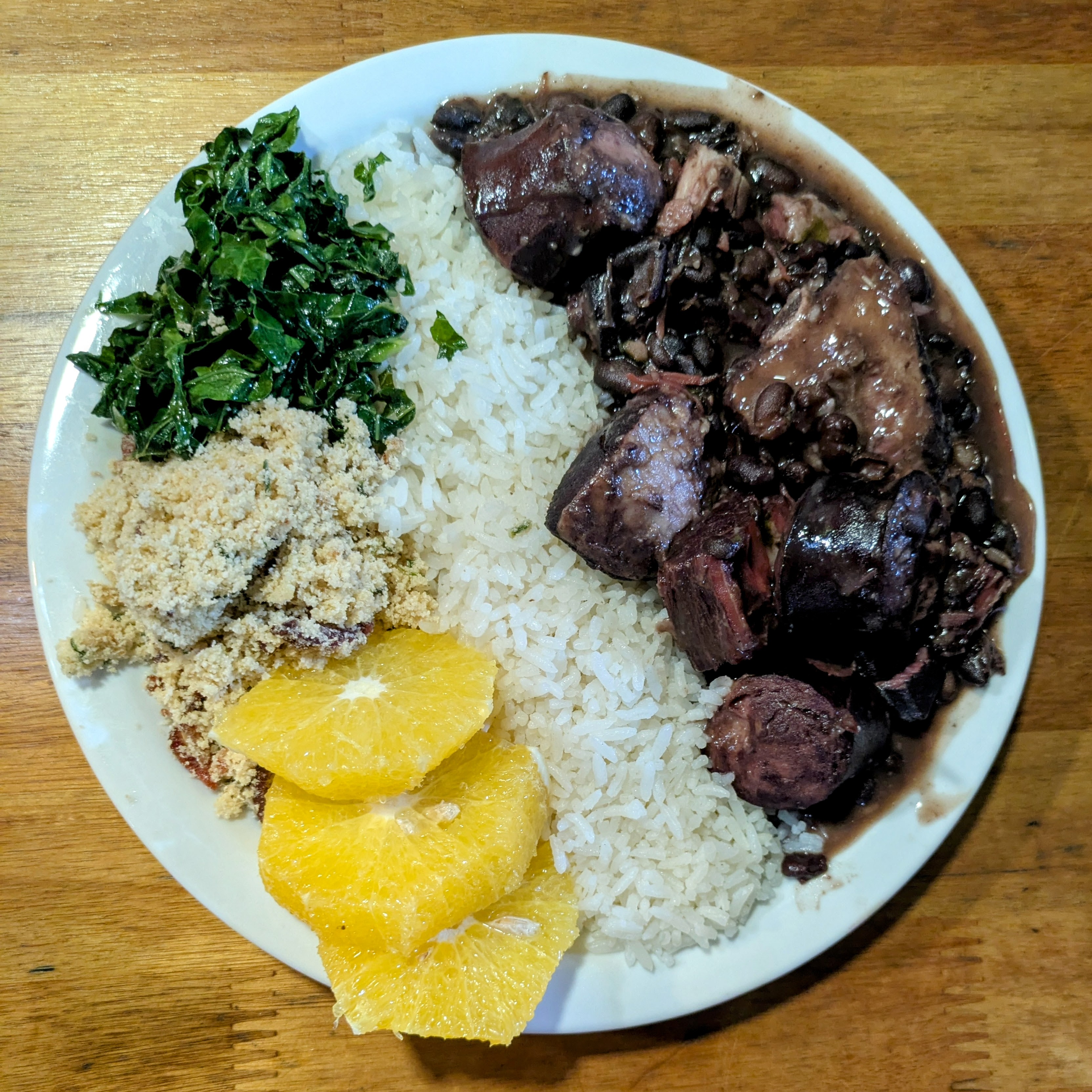
- Feijoada Completa: The national dish, a veritable cauldron of black beans simmered with so many miscellaneous pieces of pig – trotters, ears, various unidentifiable smoked bits, and sausage – that it becomes a very frightening entree. It is traditionally served on Saturday, perhaps because one requires a full day of rest to recover from the rich, dark gravity of this particular stew. It is often accompanied by rice, farofa (toasted cassava flour), and a slice of orange, the citrus being a futile, desperate attempt at brightness.

- Picanha: A prized cut of beef, known for its cap of fat. It is served hot from the churrasco (barbecue) on a skewer and sliced tableside. This is a serious butchers’ business, an excessive and dramatic display of carnivorous consumption.
- Cachorro Quente (Brazilian Hot Dog): The North American hot dog, but with a disconcerting multitude of toppings, which can include mashed potatoes, vinaigrette, quail eggs, and potato sticks. It is a sausage-based chaos, a culinary disaster-in-a-bun that is best observed from a safe distance.
The Saccharine Scourges and Spurious Sustenance
This final, unavoidable category covers drinks and desserts – the intensely sweet, final blows to one’s well-being.
- Brigadeiro: Brazil’s most popular candy. A truffle-like ball made from condensed milk, cocoa powder, and butter, cooked until thick, then rolled in chocolate sprinkles. A glob of saccharine sorrow, so intensely sweet it suggests a deep national sadness that requires immediate, caloric remedy.

- Açaí na Tigela: A thick, purplish puree of the Amazonian açaí berry, served frozen in a tigela (bowl), often sweetened and topped with granola or banana. It is a fleeting, icy pleasure, a brief moment of false health that will vanish as quickly as the ice cream man on a cloudy day.


Traditional Restaurants in Rio de Janeiro
Brazilian Fare That Feigns Familiarity
Here lie the establishments that trade in the particular, often heavy, sometimes confusing comfort of local Brazilian dishes. Approach these with the wary eye one reserves for a distant cousin who arrives with a large, suspiciously stained suitcase.
Aconchego Carioca
Instagram | Map | Reservations
Much like a warm blanket draped over a pile of sorrowful financial documents, this establishment offers dishes that are supposedly comforting. One finds the ubiquitous bolinho de feijoada, a black bean stew cruelly compacted into a fried ball. It is the sort of food that suggests a temporary truce with misfortune, a truce that will surely be broken by the digestive system later in the evening.
- Go anyway because: It is the birthplace of the bolinho de feijoada; if you must negotiate a truce with misfortune, you should do so at the original negotiating table.
- Good for: When you want your spirits weighed down by a creative menu of fritters and an impressive selection of Brazilian craft beers.
- Order: The Bolinhos de Feijoada or the Camarão na Moranga (shrimp in a pumpkin).
- Price: $$ – $$$ (Moderate to Upper-Moderate). Approximately R$60 – R$110.
- Additional tips: The decor is filled with colorful Brazilian hammocks and folk art; use the comforting environment to distract yourself from the sorrowful documents of your bank statement.
- Also recommended by: Eater, Phil Rosenthal, Lonely Planet, and those who find that cruelly compacted beans are the only honest way to consume a legacy.

Bar e Restaurante Urca
Website | Map | Reservations
Perched precariously on the edge of the water, a location that offers a deceptive sense of tranquility. It is the sort of bar where one consumes fried fish and cold beer while gazing at a view so lovely it only serves to heighten the tragic brevity of human happiness. The bar’s age suggests resilience, or perhaps merely stubbornness, in the face of so many passing tides and so many ill-advised orders of shrimp pastries.
- Go anyway because: The tradition is to buy your food and beer at the counter and sit on the mureta (the sea wall) across the street; it is the most democratic and stubborn way to enjoy the sunset.
- Good for: A deceptive afternoon where the Guanabara Bay looks so peaceful you almost forget the passing tides of your own life.
- Order: Empadinhas (mini savory pies) and a Garrafa de Cerveja (600ml beer bottle).
- Price: $$ (Moderate). Approximately R$40 – R$70.
- Additional tips: It is near the base of Sugarloaf Mountain; use the literal shadow of the mountain to cool your tragic thoughts.
- Also recommended by: Eater, Anthony Bourdain, Lonely Planet, and seagulls who find that shrimp pastries are the only thing worth fighting for.

Tacacá do Norte
Facebook | Map | No Reservations
A specialized operation, dealing in the Amazonian concoction known as tacacá. This is a yellowish, often alarming, soup, served with the peculiarly stinging jambu leaf that makes the consumer’s mouth feel as though it is contemplating a mild, tingly surrender. It is exotic, which, in the lexicon of misfortune, is merely a synonym for unfamiliar peril.
- Go anyway because: It offers a rare, high-quality portal to the Amazon in the middle of Rio; the tingly surrender of the jambu leaf is a physical sensation unlike any other culinary misfortune.
- Good for: When you want to experience unfamiliar peril in the form of a hot bowl of soup on a humid Rio day.
- Order: The Tacacá or the Açaí (which is served the northern way: savory or with tapioca pearls).
- Price: $ – $$ (Economical to Moderate). Approximately R$30 – R$50.
- Additional tips: The space is small and functional; don’t expect comforting decor, only the alarming reality of the jungle.
- Also recommended by: Lonely Planet, and survivors of the rainforest who find that a numb tongue is the best way to quiet the mind.
Bar do David
Instagram | Copacabana | Chapéu Mangueira
The original location can be found in a favela, so this establishment is often heralded as a hidden gem, a phrase that usually precedes a rather public and uncomfortable incident. The food is authentically local, which means it is prepared with a certain, bracing disregard for both minimalism and the latest dietary fads. One goes here not for elegance, but for a vigorous, often greasy, collision with local reality.
- Go anyway because: David is a local legend who has won the Comida di Buteco competition multiple times; the collision with reality is actually an award-winning culinary achievement.
- Good for: When you want to see the favela chic movement first-hand and eat seafood that is far more elegant than the hidden gem label implies.
- Order: The Resurgente (seafood salad) or the Croquete de Frutos do Mar.
- Price: $$ (Moderate). Approximately R$50 – R$90.
- Additional tips: Take a taxi or ride-share directly to the Chapéu Mangueira location; the uncomfortable incident of getting lost in the winding streets is easily avoided with modern technology.
- Also recommended by: Lonely Planet, Phil Rosenthal, and those who realize that greasy reality is often just another word for flavor.


Bar da Gema
Instagram | Map | +55 21 98148-4081 for Reservations
Another purveyor of the local, hearty fare, where the atmosphere is as boisterous as a poorly rehearsed samba school. Expect generous portions of robust, straightforward food, the kind that temporarily convinces the diner that simple pleasures exist, a lie that is only maintained until the moment the check arrives.
- Go anyway because: It is a bastion of North Zone culture, offering comida de boteco (bar food) that is genuinely soulful and robust enough to feed a small army of disillusioned diners.
- Good for: A boisterous evening where the noise of the crowd prevents you from hearing the simple lie your heart is telling you.
- Order: The Coxinha de Frango (chicken croquette) or the Atoleiro (shrimp or meat stew).
- Price: $$ (Moderate). Approximately R$45 – R$85.
- Additional tips: It is located in Tijuca; the travel time from the beaches will give you plenty of opportunity to rehearse your own samba performance for the evening.
- Also recommended by: Eater, and anyone who knows that straightforward food is the best remedy for a complex life.
The Inevitable Carnivorous Catastrophe
Rio, perhaps more than any city, understands the solemn, almost sacrificial ritual of the consumption of large, often terrifyingly large, quantities of scorched animal flesh. These establishments are temples to this peculiar Brazilian rite.
Satyricon
Website | Map | +55 21 2521-0627 for Reservations
This is a restaurant of notorious reputation, known for its seafood, which is often displayed as ostentatiously as a museum robber’s ill-gotten jewels. The atmosphere is one of excessive luxury, the sort of place where fortunes are made and then, just as quickly, discussed and deplored over an expensive, freshly-caught lobster.
- Go anyway because: It is a high-society landmark where the Mediterranean-style preparation of Brazilian seafood is, despite the excessive luxury, technically exquisite.
- Good for: When you want to feel like a character in a notorious drama while sitting in the heart of Ipanema.
- Order: The Salt-Crusted Fish or the Seafood Platter.
- Price: $$$$ (Very Expensive). Approximately R$150 – R$300 per person.
- Additional tips: Madonna and Sting have dined here; use the museum-like displays to practice your own look of bored, wealthy indifference.
- Also recommended by: Eater, Madonna, and international jewel thieves who find that lobster is the only proper way to celebrate a heist.
Galeto Sat’s
Here, the fowl is roasted and served in a manner that suggests urgency and a complete lack of ceremony. It is the sort of place that is loud, smoky, and perpetually open, much like an anxiety one can never quite shake. The galeto (grilled chicken) is a simple, if rather stark, testament to the human need for protein, served with a side of bustling, late-night despair.
- Go anyway because: It is the legendary end-point for every night out in Copacabana; the smoky aroma of the charcoal grill is the only honest perfume for the early hours of the morning.
- Good for: When your bustling despair requires the immediate comfort of perfectly charred poultry and a cold draft beer.
- Order: The Galeto ao Molho Sat’s (with their secret garlic/lemon sauce) and the Pão de Alho (garlic bread).
- Price: $$ (Moderate). Approximately R$45 – R$80.
- Additional tips: Look for the wall of cachaça bottles; it represents a liquid library of ways to shake the anxiety of the coming day.
- Also recommended by: Anthony Bourdain, Eater, Lonely Planet, and night owls who believe that lack of ceremony is the highest form of hospitality.


Majórica Steakhouse
Website | Map | Reservations
This is a classic, perhaps even antiquated, establishment, serving monumental slabs of beef. The wood paneling and the hushed, almost funereal lighting suggest a certain gravity, the sort of solemnity one reserves for a very large inheritance or a very large steak. One leaves feeling heavier, in both body and spirit.
- Go anyway because: Located in Flamengo, it is a time capsule of 1960s Rio; the monumental slabs are cooked over a traditional charcoal pit that has been seasoned by decades of carnivorous gravity.
- Good for: A solemn family dinner where the history of the room is as thick and substantial as the Picanha.
- Order: The Picanha Especial or the Lamb Chops, served with their famous puffed potatoes (batatas portuguesas).
- Price: $$$ (Upper-Moderate). Approximately R$90 – R$160.
- Additional tips: The service is professional and antiquated; enjoy the fact that for the duration of the meal, the modern world and its lightweight concerns do not exist.
- Also recommended by: Eater, and estate lawyers who find that funereal lighting provides the perfect ambiance for discussing a will.
Assador
Website | Map | Reservations
The very name means roaster, a declaration of intent as blunt as a poorly written ransom note. This is a refined version of the traditional Brazilian barbecue, or churrasco. The meat arrives with alarming regularity, a continuous, glistening parade of carnivorous temptation. The experience is one of overwhelming consumption, a perfect metaphor for so many of life’s more regrettable pursuits.
- Go anyway because: Situated in Aterro do Flamengo, it offers a view of the Christ the Redeemer statue and the Sugarloaf Mountain that is almost as alarming as the amount of meat on your plate.
- Good for: When you want to surrender to regrettable pursuits while looking at the most beautiful landscape in the world.
- Order: The Rodízio, ensuring you don’t miss the Shoulder Steak or the Grilled Cheese with Honey.
- Price: $$$$ (Expensive). Approximately R$262 (fixed price).
- Additional tips: Pace yourself; the glistening parade is a marathon, not a sprint, and the ransom note of the bill is easier to swallow if you’ve actually eaten your weight in beef.
- Also recommended by: Lonely Planet, and those who believe that overwhelming consumption is the only true way to appreciate the bounty of the earth.
Giuseppe Grill
Website | Map | Reservations
At Giuseppe Grill, you’ll find a sophisticated setting for the consumption of grilled things, often frequented by those who wish to discuss matters of importance while delicately carving an expensive piece of fish or beef. The grill here is elevated to an art form, which, as we know, is often a more complicated and less satisfying pursuit than mere craftsmanship.
- Go anyway because: They take their art form seriously, dry-aging their own meat and sourcing the freshest catch from the Rio coast; the sophisticated setting is actually one of the best-run dining rooms in the city.
- Good for: A delicate business meeting where the quality of the Prime Rib is the only thing everyone can agree on.
- Order: The Dry-Aged Steak or the Grilled Octopus.
- Price: $$$ (Upper-Moderate to Expensive). Approximately R$120 – R$220.
- Additional tips: The wine cellar is award-winning; use it to make those matters of importance feel significantly more manageable.
- Also recommended by: The Michelin Guide (Recommended 2025) and craftsmen who have realized that art is just a more expensive way to do a job right.
Churrascaria Palace
Website | Map | Reservations
This is a grand, perhaps even excessive, purveyor of the rodízio system, where endless amounts of meat are brought, relentlessly, to your table. The atmosphere is one of manic, cheerful overindulgence, a perfect snapshot of the momentary, ill-fated belief that one can, in fact, eat all the things.
- Go anyway because: It is a Copacabana institution since 1951, featuring Bossa Nova history on the walls and a relentless dedication to traditional service.
- Good for: When you want to embrace manic overindulgence in a setting that feels like a glamorous, albeit gluttonous, 1950s ballroom.
- Order: The Rodízio, specifically the Picanha Butterfly and the Amazonian Fish from the buffet.
- Price: $$$ (Upper-Moderate). Approximately R$160 – R$200.
- Additional tips: Check out the Bossa Nova mural; it is a reminder that while your appetite is temporary, the music of Rio is as endless as the meat skewers.
- Also recommended by: Those who find that ill-fated beliefs are best tested at an all-you-can-eat steakhouse.
The Curious Case of the Classic and the Continental
These are the establishments that aspire to a certain old-world charm or a refined, international air. They are often steeped in history, which, of course, means they have had more time to accumulate unfortunate incidents.
Lilia
Instagram | Map | Reservations
Lilia is a more contemporary establishment that suggests a more thoughtful, perhaps even intellectual, approach to cuisine. However, a thoughtful meal is often merely a prelude to a thoughtful realization of one’s own melancholy, and the food, while artfully arranged, is ultimately temporary.
- Go anyway because: Located in a beautiful colonial building in the historic center (Lapa), it offers high-concept, vegetable-forward dining at a price that won’t contribute to your financial melancholy.
- Good for: A thoughtful lunch where the artful arrangement of the plate provides a brief, visual reprieve from the weight of existence.
- Order: The Fixed-Price Menu, which changes daily based on what the earth has decided to provide.
- Price: $$ (Moderate). Approximately R$80 – R$120 for a three-course lunch.
- Additional tips: It is only open for lunch during the week; ensure you schedule your realization of melancholy before the sun goes down.
- Also recommended by: The Michelin Guide (Recommended 2025), The World’s 50 Best Discovery, Eater, Lonely Planet, and intellectuals who find that a well-plated beet is the best response to the void.


Maria e o Boi
Website | Map | Reservations
This is a contemporary restaurant offering a modern, perhaps slightly confusing, interpretation of Brazilian flavors. It is the sort of place that leaves one contemplating the ingredients, which is rarely a good sign for a truly satisfying, brutish meal.
- Go anyway because: It reinvents the traditional steakhouse (the Boi) with a feminine, modern touch (Maria), resulting in side dishes and appetizers that are far more creative than the brutish standard.
- Good for: An intellectual dinner in Ipanema where the meat is high-quality, but the conversation is centered on the confusing complexity of the sides.
- Order: The Picanha for two, accompanied by the Eggplant with Miso or the Pumpkin with Blue Cheese.
- Price: $$$ (Upper-Moderate). Approximately R$100 – R$180.
- Additional tips: The decor is airy and fashionable; use the modern interpretation of the room to convince yourself that you are also a contemporary, well-adjusted human being.
- Also recommended by: The Michelin Guide (Bib Gourmand 2025), and diners who believe that contemplating ingredients is a valid form of entertainment.
Café Lamas
Website | Map | +55 21 99612-6489 for Reservations
Lamas is a truly old establishment, the sort of place that has seen countless political arguments, doomed romances, and late-night, regrettable decisions. It serves simple, heavy dishes, often late into the night. It is a monument to the endurance of both hunger and the human capacity for seeking and finding a momentary, greasy solace.
- Go anyway because: Founded in 1874, it is one of the oldest restaurants in Brazil; the solace it provides has been tested by empires, republics, and dictatorships alike.
- Good for: A regrettable late-night feast where the ghosts of Rio’s past politicians provide the only company you need.
- Order: The Filé à Oswaldo Aranha (steak topped with fried garlic, served with rice, farofa, and potatoes).
- Price: $$$ (Upper-Moderate). Approximately R$80 – R$140.
- Additional tips: The waiters are career professionals who have seen it all; their indifferent efficiency is the monument we all deserve.
- Also recommended by: Eater, and those who find that greasy solace is the only thing that ages well.
Restaurante Cervantes
Famed for its enormous, often startlingly sweet, sandwiches, particularly those involving roasted pork and a slice of canned pineapple. It is a classic, busy, and unpretentious place. The sandwich, a bizarre collision of savory and sweet, is a culinary metaphor for life itself: an attempt at balance that only results in an unsettling juxtaposition of contrasting, often confusing, elements.
- Go anyway because: It is a Copacabana rite of passage; the bizarre collision of flavors has a way of making total sense at 2:00 AM after several chopps (draft beers).
- Good for: When you want your existential confusion to be shaped like a sandwich and delivered with a side of extra-cold beer.
- Order: The Pernil com Abacaxi (Roasted Pork with Pineapple) on French bread.
- Price: $$ (Moderate). Approximately R$40 – R$70.
- Additional tips: Stand at the counter for the most unpretentious experience; the unsettling juxtaposition is easier to handle while upright.
- Also recommended by: Lonely Planet, Phil Rosenthal, and poets who find that a slice of canned pineapple is the ultimate metaphor for human artifice.

Salomé Bistrô
Instagram | Map | Reservations
The name of this seaside restaurant suggests something French, something delicate, something perhaps slightly tragic, much like the Biblical figure it evokes. It is a smaller, more intimate setting, where the very act of refined conversation only highlights the profound isolation of each diner, all attempting to mask their internal anguish with a perfectly seared scallop.
- Go anyway because: This Leme beachfront spot offers a sophisticated, European-inflected menu that provides a delicate alternative to the nearby heavy steakhouse options.
- Good for: A tragic date or a solo dinner where the sound of the waves reinforces your profound isolation in the most romantic way possible.
- Order: The Seared Scallops or the Fish of the Day with Mediterranean Vegetables.
- Price: $$$ (Upper-Moderate). Approximately R$90 – R$150.
- Additional tips: Sit outside to ensure the sea salt air can mingle with your internal anguish for a truly authentic coastal experience.
- Also recommended by: Those who realize that seared scallops are the most elegant mask one can wear.
Quitéria
Website | Map | Reservations
Found in a fashionable, highly-trafficked neighborhood, this restaurant offers modern Brazilian cuisine with a focus on fresh, local ingredients. This attention to detail, however, often leads to excessive contemplation of the meal, a distraction from the more pressing existential dread that one should always be focusing on. The beauty of the presentation is merely a thin, edible veneer over the bitter truth of existence.
- Go anyway because: It is located inside the Ipanema Inn and offers a bright, modern space where the thin, edible veneer is actually composed of the finest artisanal products from the state of Rio.
- Good for: A fashionable breakfast or lunch where the beauty of the presentation is sufficient to keep the existential dread at bay for at least forty-five minutes.
- Order: The Cachaça-Cured Salmon or the Local Cheese Platter.
- Price: $$$ (Upper-Moderate). Approximately R$70 – R$130.
- Additional tips: The restaurant is named after a legendary Brazilian female soldier; use her bravery as inspiration to face the bitter truth of your next credit card statement.
- Also recommended by: Soldiers of fortune who prefer their distractions to be locally sourced.
The Clinical Cult of the Singular Ingredient
Establishments that treat a solitary radish or a lonely scallop with the obsessive, terrifying devotion usually reserved for a cursed diamond. These are high-altitude laboratories where the chef’s vision is a mandatory religion and each course is a beautiful, expensive riddle served in a room so tasteful it feels like a very polite interrogation.
Lasai
Website | Map | Reservations
A minimalist laboratory of culinary restraint tucked inside a restored house that feels suspiciously like the lair of a very tasteful villain. Here, the vegetables are treated with more reverence than most world leaders, and the portions are so precisely curated they might vanish if you blink at them too forcefully.
- Go anyway because: Chef Rafa Costa e Silva’s obsession with his own gardens results in flavors so startlingly fresh they will make every salad you’ve ever eaten feel like a personal insult.
- Good for: People who enjoy quiet, intellectual contemplation over a single, exquisite carrot and those who find large crowds to be a sensory disaster.
- Order: The Tasting Menu; you have no choice in the matter, as the kitchen has already decided your destiny for the evening.
- Price: $$$$ (Very Expensive). Approximately R$950+ per person.
- Additional tips: Reservations are harder to secure than a sincere apology; book weeks in advance or prepare to eat your sorrows elsewhere.
- Also recommended by: The Michelin Guide (Two Stars 2025), World’s 50 Best Restaurants (2025), Eater, Phil Rosenthal, and people who believe that farm-to-table is a sacred vow rather than a marketing slogan.
Oro
Website | Map | Reservations
A high-energy theater of combustion where Chef Felipe Bronze uses fire and nitrogen to manipulate your dinner into shapes nature never intended. It is a loud, shimmering spectacle that suggests that if food isn’t being smoked, charred, or frozen into a cloud, it isn’t trying hard enough.
- Go anyway because: The snacks (eaten with your hands) arrive in a rapid-fire sequence that is as thrilling as a narrow escape from a collapsing clock tower.
- Good for: A celebratory evening where you want the food to do backflips and the wine pairing to distract you from the fleeting nature of time.
- Order: The Creativity Menu, which allows the kitchen to unleash its full, fiery arsenal upon your palate.
- Price: $$$$ (Very Expensive). Approximately R$700 – R$1,000+.
- Additional tips: The atmosphere is Rio-Chic, so dress as if you might be photographed by a socialite or a private investigator.
- Also recommended by: The Michelin Guide (Two Stars 2025), World’s 50 Best Discovery, Lonely Planet, Eater, and enthusiasts of edible pyrotechnics.
Oteque
Website | Map | Reservation
A moody, industrial temple of seafood where the kitchen is open, the lighting is dim, and the precision is terrifying. Chef Alberto Landgraf operates with the cold, calculated efficiency of a master locksmith, except instead of opening safes, he is unlocking the profound secrets of a raw scallop.
- Go anyway because: The purity of the ingredients is so intense it borders on the supernatural; it is quite possibly the only place where a piece of fish will understand you better than your own family does.
- Good for: Serious gastronomes who prefer the sound of a sharp knife hitting a cutting board over the sound of human conversation.
- Order: The 8-course Tasting Menu, with a focus on whatever aquatic creature has been sacrificed to the kitchen that morning.
- Price: $$$$ (Very Expensive). Approximately R$800 – R$1,100.
- Additional tips: Do not arrive expecting a lively carnival atmosphere; this is a place for hushed tones and the solemn worship of acidity and temperature.
- Also recommended by: The Michelin Guide (One Star 2025), World’s 50 Best Restaurants (2024), Latin America’s 50 Best Restaurants (2025), and anyone who finds perfection to be a reasonable minimum requirement.
Good Spots for Drinks in Rio de Janeiro
Bibi Sucos
The very name, Bibi Juices, suggests a youthful, almost naive optimism, which is perhaps the most dangerous form of delusion. This establishment deals in the consumption of liquids and fruits, things that are meant to imply vitality and well-being. But a juice bar, you see, is merely a temporary fortress against the onslaught of reality. One sips a mixture of papaya and mint, momentarily convinced that one can escape the inevitable, only to realize that the fundamental, sticky truth of human misery remains, even if one’s digestion is temporarily improved.
- Go anyway because: With dozens of tropical fruits on display, it is a technicolor shrine to biodiversity; if one must be delusional, it is best to do so while significantly hydrated.
- Good for: A momentary escape from the heat of the sidewalk into a world where everything can be blended with açaí and guarana syrup.
- Order: The Açaí Bowl or a Suco de Tangerina (tangerine juice), paired with a Tapioca or a Joelho (ham and cheese pastry).
- Price: $ – $$ (Economical to Moderate). Approximately R$25 – R$45.
- Additional tips: It is a late-night staple; use the naive optimism of a vitamin-packed juice to survive the sunrise.
- Also recommended by: Eater, Lonely Planet, and those who find that well-being is a luxury they can only afford in ten-minute increments.
Rainha
Website | Map | Reservations
The name means Queen, a title far too dignified for a simple bar and restaurant. It is a local fixture, serving straightforward, unpretentious food. A popular local spot is merely a collection of people trying, in unison, to achieve a state of contentment that will certainly evade them. The food is robust, and the conversation loud, a cacophony of temporary forgetfulness.
- Go anyway because: It is a classic boteca (neighborhood bar) in Leblon, where the cold chopp and the salted snacks are handled with a royal efficiency that defies the city’s usual chaos.
- Good for: When you want to disappear into a cacophony of local voices and pretend that the simple food in front of you is a grand feast.
- Order: The Empada de Camarão (shrimp pie) or the Frango a Passarinho (fried chicken pieces with garlic).
- Price: $$ (Moderate). Approximately R$40 – R$75.
- Additional tips: Stand at the counter for the most authentic experience of temporary forgetfulness; the stools are only for those who have given up on the day entirely.
- Also recommended by: Eater, and neighborhood residents who find that a local bar is the only kingdom worth ruling.


Adega Pérola
Instagram | Map | No Reservations
An Adega, or wine cellar, that also serves food, suggesting an attempt to drown one’s sorrows and simultaneously fill one’s stomach. This is the sort of humble establishment that deals in simple tapas or Portuguese-style fare. The appeal lies in its no-nonsense atmosphere, but the fact remains that a meal, no matter how honest, is only a pause in the general parade of unfortunate incidents that make up a life.
- Go anyway because: The massive glass counter holds over 70 different types of appetizers (petiscos), from octopus to pickled garlic; the sheer variety is a no-nonsense marvel of preserved seafood.
- Good for: An honest pause in Copacabana, where the communal atmosphere and the Portuguese heritage provide a sturdy, vinegar-soaked anchor.
- Order: The Polvo ao Azeite (octopus in olive oil) and a cold Chopp.
- Price: $$ (Moderate). Approximately R$50 – R$90.
- Additional tips: It is a place for standing and sharing; use the proximity of other diners to realize that everyone is marching in the same unfortunate parade.
- Also recommended by: Eater, Lonely Planet, and survivors of the Atlantic crossing who find that a marinated sardine is the only true constant in an unstable world.


Good Spots for Sweets in Rio de Janeiro
MIL FRUTAS
A place that boasts of a thousand fruits, an unnecessarily hyperbolic claim that, much like a minion’s over-complicated scheme, suggests a certain, predictable lack of modesty. This is a purveyor of frozen, sweet concoctions – ice creams and sorbets – an attempt to distract the consumer from the world’s unrelenting heat and relentless cruelty with a chill of artificial flavor. One must be wary of anything that promises so much variety; it usually means that none of the options will truly satisfy the profound, existential hunger one carries.
- Go anyway because: The flavors are genuinely inventive, using rare fruits from the Amazon and the Cerrado; if you must fail to satisfy your existential hunger, you might as well do so with Cupuaçu or Jabuticaba sorbet.
- Good for: A temporary distraction from the tropical sun in an environment that is as colorful as it is modesty-free.
- Order: The Mango with Ginger or any of the Seasonal Amazonian Sorbets.
- Price: $$ (Moderate). Approximately R$20 – R$35 per scoop.
- Additional tips: It is widely considered the best artisanal ice cream in the city; use the hyperbolic quality of the flavors to drown out the noise of your own unrelenting thoughts.
- Also recommended by: Eater, and minions who realize that an over-complicated scheme is best planned over a scoop of artisanal guava.
Confeitaria Colombo
Website | Map | Reservations
Colombo is a grand, almost ridiculously ornate pastry shop and cafe, dripping with stained-glass, enormous mirrors, and a sense of historical gravitas. It is the sort of place where politicians plotted and fortunes were squandered, all over a cup of strong coffee and a tray of meticulously decorated, yet ultimately temporary, sweets. It suggests a time when elegance was paramount, a time that, in retrospect, was just as filled with heartbreak and disappointment as our own, only with more decorative tiling. One goes here to witness the grandeur and to mourn the loss of one’s own, simple appetite in the face of such baroque excess.
- Go anyway because: Founded in 1894, it is one of the most beautiful cafes in the world; the baroque excess of the Belgian mirrors and rosewood furniture provides a stage for your own personal drama.
- Good for: Witnessing the grandeur of a bygone era while consuming a cup of coffee that is as strong as the historical gravitas of the room.
- Order: The Coxinha (chicken croquette) and a Pastel de Nata (custard tart).
- Price: $$ – $$$ (Moderate to Upper-Moderate). Approximately R$45 – R$85.
- Additional tips: Avoid the peak weekend hours if you wish to avoid the heartbreak of a long line; the decorative tiling is best appreciated in relative silence.
- Also recommended by: Anthony Bourdain, Phil Rosenthal, Eater, Lonely Planet, and squandered fortunes that find that a mirrored ceiling makes a loss feel significantly more regal.

Casa Cavé
This is another ancient confectionery, slightly smaller, perhaps, and therefore possessing a more focused sense of historical gloom. It is here that one finds the classic, perhaps slightly dry, Brazilian pastries. An old establishment is like a dusty book; it offers an undeniable sense of weight and importance, but often the story within is merely a tired recounting of familiar, disappointing events – in this case, the recurring tragedy of a forgotten sweet treat.
- Go anyway because: Founded in 1860, it is the oldest confectionery in Rio; its historical gloom is authentic, providing a quieter, more somber alternative to the ridiculous grandeur of Colombo.
- Good for: A tired recounting of a traditional afternoon tea in a space that feels like it has forgotten the 20th century entirely.
- Order: The Portuguese Pastries or a simple Torrada Petrópolis (thick buttered toast).
- Price: $$ (Moderate). Approximately R$30 – R$60.
- Additional tips: It is located in the Centro; use the dusty book atmosphere to hide from the modern, glass-and-steel reality of the nearby business district.
- Also recommended by: People who find that dry pastries are the only honest accompaniment to a long, disappointing afternoon.

Vero
Vero means true, a word that should immediately set off alarm bells in the discerning, yet inevitably unfortunate, mind. This establishment is known for its Italian-style ice cream, or gelato. It is cold, it is sweet, and it is meticulously crafted, suggesting a control over one’s circumstances that is entirely illusory. The truth, as any seasoned observer of reality knows, is that the most perfect pleasures are the most fleeting, melting away into a sad, sticky puddle of regret the moment one ceases to pay attention.
- Go anyway because: The owner is a master gelato maker who uses fresh, seasonal Brazilian ingredients; the illusory control results in a texture so smooth it almost makes the sticky puddle of regret worth it.
- Good for: When you want to pay attention to a fleeting pleasure in the middle of Ipanema, surrounded by people who are also desperately seeking truth.
- Order: The Pistachio (often considered the best in the city) or the Tapioca with Coconut.
- Price: $$ (Moderate). Approximately R$18 – R$32.
- Additional tips: Take your cup to the nearby Ipanema beach; the sight of the waves will reinforce the fleeting nature of your gelato as it melts in the salt air.
- Also recommended by: Seasoned observers of reality who know that the truth is best consumed before it liquefies.

Non-Traditional Restaurants
Haru Sushi Bar
Website | Map | Reservations
Haru, which means spring in Japanese, is a cruel joke, for the cuisine here requires the consumption of raw fish, a thing of cold, slick indifference. The Omakase menu, a phrase that means “I leave it up to you,” is the very definition of a gamble – trusting one’s fate, and one’s digestive system, to the capricious whim of a chef. It is minimalist, which simply means there is very little to distract you from the unsettling silence of your own thoughts.
- Go anyway because: It is widely considered the best sushi in Rio; if you must face the unsettling silence, you should do so while consuming fish so fresh it almost makes the capricious whim of the chef seem like divine providence.
- Good for: When you want to gamble with your digestive system in a setting that is as sharp and precise as a scalpel.
- Order: The Omakase, and pray the chef’s whims are merciful.
- Price: $$$ – $$$$ (Expensive). Approximately R$180 – R$350.
- Additional tips: It is a tiny, 10-seat counter; the unsettling silence is intimate and mandatory.
- Also recommended by: The Michelin Guide (Bib Gourmand), The World’s 50 Best Discovery, and gamblers who find that raw protein is the only honest way to face the spring.
Pabu Izakaya
Facebook | Map | Reservations
An Izakaya is a Japanese bar, a place for small plates and copious drinks. It is the culinary equivalent of a minor, boisterous distraction. One consumes delicate, unusual morsels and beverages made with sake, all in an attempt to foster a fleeting, artificial sense of conviviality. The smallness of the plates only serves to remind the perpetually hungry diner of the ultimate smallness of their own significance in the vast, uncaring universe.
- Go anyway because: It captures the frantic, high-energy spirit of a Tokyo alleyway in the middle of Leblon; the artificial conviviality is actually quite infectious after the third glass of sake.
- Good for: Drowning the realization of your ultimate smallness in a sea of high-quality small bites.
- Order: The Okonomiyaki or the Salmon Belly Sashimi.
- Price: $$ – $$$ (Moderate to Upper-Moderate). Approximately R$70 – R$130.
- Additional tips: It is often packed and loud; use the boisterous distraction to avoid thinking about the universe entirely.
- Also recommended by: Eater, and astronomers who need a break from the vastness of their work.
Massa + Ella
Website | Map | Reservations
The name is simply Dough + Her, an unnecessarily romantic designation for an establishment specializing in Italian pasta and Neapolitan-style pizza. They boast of thin crust and high edges, a technical detail that does little to soothe the existential dread that accompanies a large meal. The massa (dough) is merely the vessel for one’s over-reliance on carbohydrates to solve problems that are fundamentally philosophical.
- Go anyway because: The pizza is cooked in a high-temperature oven that produces a perfectly charred crust; if carbohydrates are your vessel, you might as well choose a vessel that is technically superior.
- Good for: When your philosophical problems can only be addressed by a romantic amount of melted cheese and fermented dough.
- Order: The Margherita or the Carbonara Pasta.
- Price: $$ – $$$ (Moderate to Upper-Moderate). Approximately R$60 – R$110.
- Additional tips: It is located in the lively Jardim Botânico neighborhood; use the surrounding greenery to distract yourself from the high edges of your caloric intake.
- Also recommended by: Eater, and those who realize that Dough + Her is a more stable relationship than most human ones.
Ristorante Hotel Cipriani Bar
Website | Map | Reservations
Found within the grand, oppressive luxury of a world-famous hotel, this establishment serves Italian food with a terrifying price tag. To dine here is to partake in the conspicuous consumption that usually precedes an inevitable financial disaster. One gazes at the splendid swimming pool, which is merely a large, shimmering basin of chlorinated water, and pretends that wealth offers a shield from sorrow. It does not. It merely offers more expensive sorrow, served on a Michelin-starred plate.
- Go anyway because: It is the pinnacle of Rio’s high-society glamour; if you are destined to experience expensive sorrow, there is no more iconic place to do it than beside that legendary pool.
- Good for: A financial disaster that tastes of white truffles and artisanal pasta.
- Order: The Tasting Menu by Chef Nello Cassese.
- Price: $$$$ (Extremely Expensive). Approximately R$450 – R$700+.
- Additional tips: Dress with the sophistication required to hide your internal anguish; the hotel’s dress code is as rigid as the shield from sorrow is thin.
- Also recommended by: The Michelin Guide (1 Star), Eater, The World’s 50 Best Discovery, and the 1% who find that sorrow is more manageable when it’s gold-leafed.
Ferro e Farinha
Instagram | Map | Reservations
Iron and Flour is a name that sounds like the title of a particularly grim romantasy novel, or perhaps a warning about industrial food production. But it is a pizzeria that focuses on artisanal methods, cooking in a wood-fired oven. This emphasis on authenticity is merely a way of charging a higher price for simple ingredients, reminding us that even the most rustic pleasures are now subject to the relentless machinations of commerce. The advice to “eat with your hands” is merely an attempt to make a messy, regrettable situation feel bohemian.
- Go anyway because: Chef Sei Shiroma’s sourdough crust is a masterwork of iron and flour; the charred, bubbly edges are the only bohemian rebellion worth joining.
- Good for: When you want to pay a premium to prove that you are authentic enough to get flour on your fingers.
- Order: The Adobo Pie or the Domenica.
- Price: $$ – $$$ (Moderate to Upper-Moderate). Approximately R$60 – R$110.
- Additional tips: The oven is the heart of the room; sit near it to feel the heat of the relentless machinations of commerce.
- Also recommended by: Lonely Planet, and novelists who find that messy situations are the best source of inspiration.
Cais do Oriente
Instagram | Map | Reservations
This restaurant is housed in an old, grand warehouse in the city center, which means it carries the historical stench of maritime trade, forgotten cargo, and countless regrettable business dealings. The name, Oriental Dock, suggests an exotic fusion of flavors, a blend of worlds that rarely ends in anything but confusion and a slightly alarming mix of spices. But it is not that. It is a simple mix of Brazilian and Mediterranean cuisines. It is a cavernous space for dining and events, where the high ceilings only emphasize the solitary nature of the individual diner beneath them.
- Go anyway because: The brick-and-stone architecture is genuinely breathtaking; the solitary nature of the diner is momentarily elevated by the sheer scale of the historical surroundings.
- Good for: A confusing business lunch in the city center where the height of the ceiling matches the depth of your maritime-themed ennui.
- Order: The Risotto or the Fresh Fish with Herb Crust.
- Price: $$$ (Upper-Moderate). Approximately R$85 – R$150.
- Additional tips: The courtyard is an oasis of forgotten cargo and greenery; use it to pretend you are waiting for a ship that will never arrive.
- Also recommended by: Sailors who have finally traded the sea for a decent wine list.


Govardhana Harí
This is an oasis of tranquility in the busy city center, specializing in lacto-vegetarian Indian-Brazilian fusion, served in a Hare Krishna setting. The attempt to find peace through abstinence and unfamiliar spices is a noble one, but ultimately doomed. One leaves feeling spiritually uplifted, perhaps, but with the undeniable, sinking realization that one must eventually return to the cacophony of the real world outside the fragrant, flower-adorned walls.
- Go anyway because: It is one of the most serene and affordable lunch spots in the frantic city center; the noble doom is accompanied by a truly generous and flavorful buffet.
- Good for: A spiritually uplifted lunch where the absence of meat allows you to focus entirely on the cacophony of your own internal dialogue.
- Order: The Daily Fixed Menu, which typically includes a soup, a main plate of varied grains and legumes, and a nectar-like juice.
- Price: $ (Economical). Approximately R$35 – R$55.
- Additional tips: Be sure to check their opening hours, as they cater primarily to the lunch crowd; the fragrant walls close early to prepare for the evening’s reality.
- Also recommended by: Weary office workers who find that unfamiliar spices are the only thing keeping them from a complete breakdown.
Zazá Bistro Tropical
Instagram | Map | Reservations
Located in a colourful, kitschy house, this is a tropical bistro that attempts to blend elegance with the slightly alarming cheerfulness of a South American climate. The decor includes chabudai-style short tables upstairs – a clear and uncomfortable fusion of Japanese and Brazilian ideas – which means the diner is forced to sit in an unusual position while contemplating a menu of creative drinks. It is the perfect place to witness the temporary, ill-advised nature of happiness, served alongside a creative, but ultimately regrettable, cocktail.
- Go anyway because: It is one of Ipanema’s most beloved institutions for creative fusion; the alarming cheerfulness is actually a masterful blend of global flavors and local charm.
- Good for: An ill-advised evening of sitting on floor cushions and drinking cocktails that are far too pretty to be regrettable.
- Order: The Tapioca-Crusted Fish or the Lamb Tagine.
- Price: $$$ (Upper-Moderate). Approximately R$90 – R$160.
- Additional tips: Arrive for sunset; the temporary nature of happiness is best viewed through the prism of a well-mixed hibiscus martini.
- Also recommended by: Optimists who haven’t yet realized that kitsch is just a colorful mask for tragedy.
Markets and Foodie Neighborhoods
Junta Local
Instagram | Check Instagram for dates and locations
This is a gathering of small-scale producers – a sort of curated, artisanal market for food. While the intention may be admirable (supporting local farmers, a noble but ultimately futile gesture against the crushing realities of global economics), a marketplace is merely a collection of people hoping to sell, and others hoping to acquire, things they inevitably do not truly need. It is a temporary, bustling illusion of community, where the greatest peril is the sudden, dizzying sense of too many choices.
- Go anyway because: It is a carefully curated performance of sustainability where the sourdough is fermented with high ideals and the heirloom tomatoes are treated with more reverence than most historical monuments.
- Order: A bottle of kombucha from a small-batch producer and a slow-roasted pork sandwich (or the seasonal vegan equivalent) that tastes like someone spent forty-eight hours worrying about your palate.
- Price: $$ (Moderate). Expect to spend between R$40 – R$90 depending on how many artisanal jars of chili oil or honey you accidentally buy for your pantry.
- Additional tips: Bring a reusable tote bag to signal your virtue, and arrive early; the illusion of community is much easier to maintain before the most coveted cheeses are sold out and the lines begin to test your patience.
- Also recommended by: Eater, and urbanites who believe that paying a premium for a misshapen carrot is the only meaningful way to fight the industrial food complex.
Food Tours
If you haven’t the faintest wretched idea where to begin, a Rio de Janeiro food tour is a particularly efficient reprieve from the agony of choice, allowing you to sample a disheartening variety of morsels over the course of a few fleeting hours. Here are a handful of options that are, by general consensus, well-regarded.
- Food Tour Rio de Janeiro – The Best Typical Brazilian Dishes
- Inside Rio’s Botecos: A Food Lover’s Tour
- Rio Tropical Fruit Tour: Market Walk + Guided Tasting
- African Heritage: Gastronomy and Musicality Experience
- Brazilian Meats and Snacks + South American Wines Guided Dinner
- Master Brazilian Cocktails & cheers in Sunset on Ipanema Beach
Saúde!
And so, we arrive at the finale of this Rio de Janeiro food and restaurants guide. You are sitting, slightly sticky from an açaí na tigela, and foolishly satisfied. You have survived the steak onslaught and the heavy, bean-laden gravity of the feijoada.
But here is the most unfortunate realization: the food here is too good.
The tragic flaw of the Carioca kitchen is its excellence. You are forever ruined for simpler sustenance. How, I ask you, can you ever again eat a mere chicken nugget when you have experienced the comforting perfection of a coxinha?
You will leave this city with a stomach full of memories and a heart full of yearning. You have traded your innocence for a lifetime of comparison – a perpetual state of being slightly disappointed by every meal that is not Brazilian. This is the true, lingering aftertaste.
Here’s more dismal content you might enjoy:


Something went wrong. Please refresh the page and/or try again.