This is not a traditional travel guide, but it is a practical one. It pairs personal observation with clear planning information, safety context, and logistical realities to help travelers decide whether Australia is actually the right destination for them. Despite the tone, the goal is not to discourage travel outright, but to replace brochure-level optimism with a more accurate picture of what visitors should expect once they arrive.
If you are reading this, it means you have made a travel decision that a person of good sense would likely have avoided. You may have perused glossy travel guide or consulted a website filled with images of people who, for reasons I can scarcely fathom, appear to be smiling. These brochures, which I myself have been forced to examine for research purposes, refer to Australia as a paradise of natural wonders and a vibrant destination, phrases which are merely fancy ways of saying that it is a vast, arid landscape filled with things that will either bite, sting, or burn you, and a few cities that are not much better.
It was during the summer break between my first two semesters of graduate school that the opportunity arose to visit Australia for a few weeks. The timing, I must admit, was a rare moment of fortuitousness, for I had the temporary good fortune of having a few friends living there at the time. This allowed me the small convenience of being able to meet up and travel with two of them as I went about exploring. My journey encompassed the city of Sydney and, rather ambitiously, continued along the eastern coast, moving from Brisbane all the way up to the very edge of the map, near the town of Cairns. It was a stretch of the country filled with sunshine and long bus rides, which, while not a terrible disaster, certainly involved an alarming amount of sand.
Australia is, for all intents and purposes, a continent-sized cul-de-sac of misfortune. A cul-de-sac, in case you are unfamiliar with the term, is a street with only one way in or out, and once you have arrived, you will find it difficult to leave. Australia is much the same, in that once you have flown to this distant land, you are a very long way from anywhere else, and a terrible sense of dread will begin to creep in around the edges of your holiday plans, much like a poisonous spider creeping in around the edges of your suitcase.
You may have heard of the Great Barrier Reef, a place which tourism officials describe as a magical underwater world. A more accurate description would be a large collection of marine life that is either trying to eat you, or has been so terribly bleached by human carelessness that it resembles a graveyard of forgotten hopes. The so-called vibrant colours are merely the last, desperate gasp of a dying ecosystem, a sad testament to the folly of human ambition.
Then there is the outback, a place where the sun is always attempting to make you into a well-done steak. You will be encouraged to visit a large, red rock, a landmark known as Uluru. While this rock is indeed quite large and quite red, it is surrounded by nothing but more of the same, and the sheer emptiness of the landscape will remind you that your own life is but a fleeting moment of insignificance, which is not a comforting thought for a vacation.
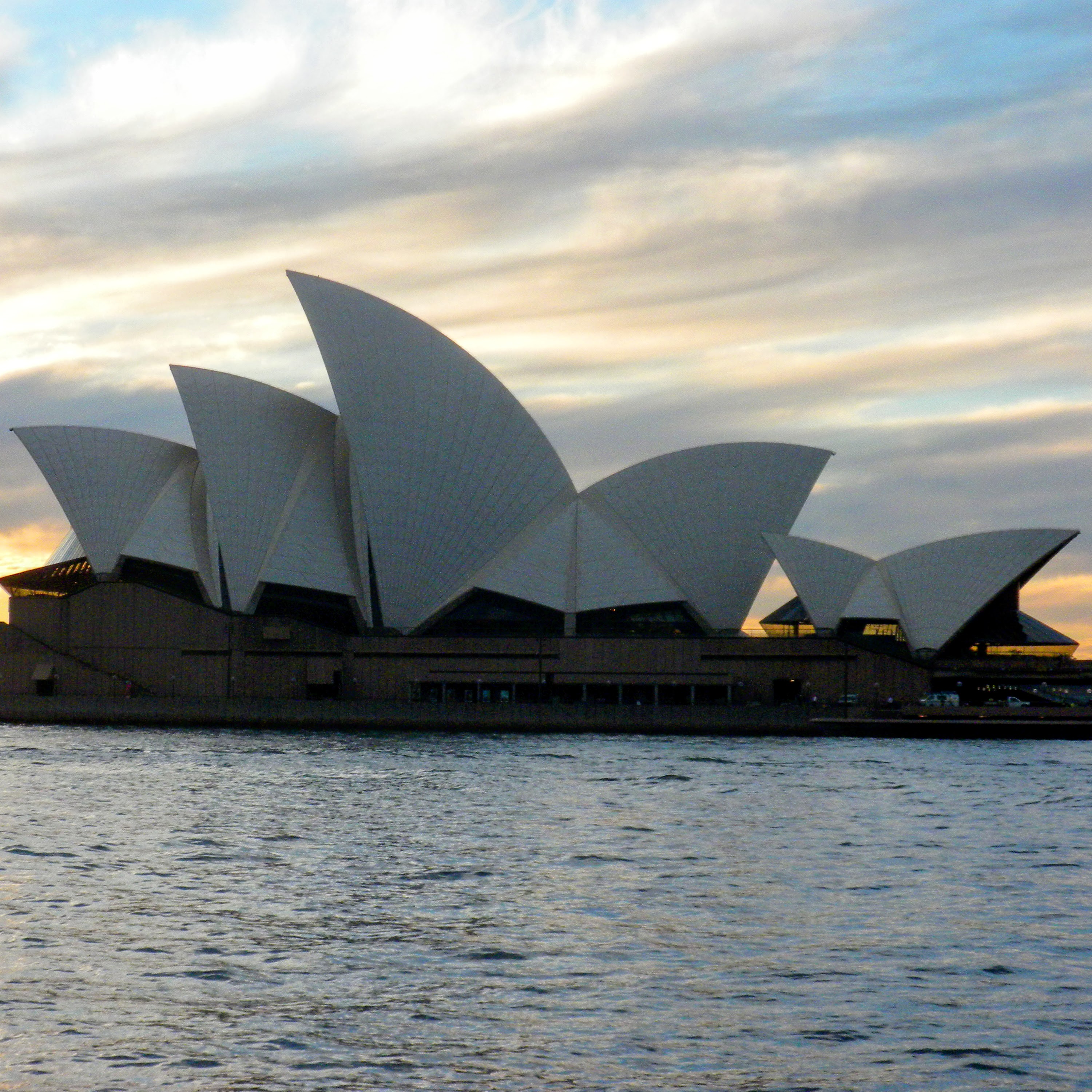
The cities are perhaps the most misleading part of this whole unfortunate affair. Sydney, for instance, has a large, oddly-shaped building known as the Opera House, and a bridge that people are inexplicably encouraged to climb. Climbing a bridge is, of course, a very dangerous activity, and the fact that it is a popular tourist attraction should be a clue that the people of this country have a somewhat relaxed view of personal safety. I myself would no more climb a bridge than I would willingly share a cup of lukewarm coffee with a venomous snake.
Australia at a Glance
Best Time to Visit
September to November and March to May are the sweet spots. These shoulder seasons allow you to enjoy the outdoors without either shivering in a Melbourne laneway or being flash-fried by the outback sun.
If you visit in December or January, prepare for a summer of sweat. The heat is intense, the bushfire risk is real, and the flies are so ambitious they’ll try to walk into your mouth while you’re talking. Conversely, June to August is winter; while the north (Cairns and Darwin) is glorious and dry, the southern cities turn into a moody, rain-soaked version of London, and the locals begin dressing like they’re embarking on an Antarctic expedition.
Currency
The Australian Dollar ($). Australia is effectively a cashless society. You can tap-and-go for everything from a $500 hotel bill to a single mango at a weekend market. If you try to pay with a physical $50 note, the barista might look at you as if you’ve handed them a piece of ancient parchment.
A word on tipping: It is not required, nor is it expected. Australian hospitality workers are paid a living wage, so you don’t need to perform a mental math ritual at the end of a meal. If the service was truly legendary, you can round up or leave a small tip, but nobody will chase you down the street if you don’t. The price on the menu is the price you pay – GST (tax) is already included, which is a mercy for your brain.
Language
The official language is English, but it has been heavily modified into Aussie. This involves a linguistic philosophy of shortening every possible word and adding an “o” or an “ie” to the end. A service station becomes a servo, afternoon becomes arvo, and breakfast becomes brekkie.
While the accent is charming, the slang is a minefield. If someone invites you to a barbie, bring beer, not a doll. If they say “no worries”, it could mean anything from you’re welcome to I’ve just accidentally set your car on fire, but let’s not stress about it. English speakers will manage fine, but you may occasionally need a moment to translate the local shorthand.
Cost Level
High. Australia is an expensive island at the bottom of the world. Because of the vast distances, getting from Sydney to Perth is often more expensive than flying from London to New York.
Expect to pay a premium for alcohol (taxed heavily enough to make you consider sobriety) and dining out. However, the standard of living trade-off is high: the public parks are pristine, the beaches are free and world-class, and even a basic flat white coffee from a literal hole-in-the-wall will probably be the best you’ve ever had.
More Dire Travel Warnings About Australia
It is a most perplexing and indeed, a rather miserable task to discuss the various travel advisories for the land of Australia. Unlike so many other countries, the documents from the United States, Canada, and the United Kingdom do not speak of pickpockets or scoundrels, which is a most unusual omission. Instead, they speak of a land where the greatest foes are not people at all, but the very earth, sun, and creatures themselves.
- Extreme Weather and Natural Disasters: The advisories are clear on this point: the country is prone to the most unfortunate natural disasters. A person might find themselves surrounded by a most furious and destructive occurrence known as a bushfire, or be beset by the furious and unmerciful forces of floods and cyclones. It is a place where a pleasant day can turn into a disaster of the most immediate and unpleasant kind.
- Dangerous Wildlife: One must be on a constant and weary lookout for a multitude of slithering and scurrying dangers. The land is home to a rather impressive collection of creatures of a most venomous disposition. There are the great, scaled dudes known as saltwater crocodiles, the translucent terror of jellyfish, and a great many snakes and spiders whose bite can lead to a most unfortunate demise. One is advised to be as wary in this country as one would be in a courtroom where all twelve jurors are one’s exes.
- Extreme Climate: The warnings are quite explicit in their despair: the sun in this part of the world is not a gentle source of warmth, but a harsh and relentless enemy that can cause a person to suffer from a most debilitating and unpleasant condition known as heatstroke. The advisories, in a final act of gloom, even speak of a particularly strong and invisible peril known as the UV index, which can, over time, lead to a variety of wretched ailments.
These are just some of the misfortunes that await you in Australia. And although current as I write this, these travel advisories are ever-shifting documents, meaning that you, as a traveler, are in a constant state of uncertainty. You must check these advisories again and again, like a detective returning to the scene of the crime. But even then, you will not have peace of mind, for a disaster can strike at any time, in any place, and in any form. To travel is to accept that you are living in a state of suspended dread.
Here are links to the most current travel advisories from these governments.
- Government of Canada Travel Advice and Advisories for Australia
- U.S. Department of State Travel Advisory for Australia
- United Kingdom Foreign Travel Advice about Australia
So, as you can see, even the most sober and formal of sources agree that Australia is not a place for the faint of heart. It is a country of layered sorrows, each one more complex and bewildering than the last. Do not say you were not warned, for the warnings are, I am afraid, everywhere.
Practical Realities
Public Transport
In the major cities, trains and trams function with a rhythmic, predictable hum. However, the moment you step beyond the suburban fringe, the safety net vanishes. Australia is a vast, unforgiving expanse where the outback isn’t just a metaphor – it’s a place where public transport goes to die. If you aren’t in a city center, you are either behind the wheel of a 4WD or at the mercy of a long-distance coach that smells faintly of meat pies and determination.
Rental Car Reality
Renting a car is an exercise in vigilance against the local wildlife. Standard insurance feels woefully inadequate when you realize “Kangaroo Strike” is a legitimate line item on your risk assessment. You must avoid driving at dusk or dawn. If you do, you are essentially playing a high-speed game of chicken with a 90kg marsupial that has zero survival instinct and the bone density of a brick wall.
Restaurant Timing
The service is “matey,” which means the staff will treat you like a long-lost cousin while simultaneously forgetting your water order. In regional towns, the pub kitchen is the keeper of your destiny, and it shuts its doors at 8:30 PM with zero exceptions. If you miss that window, your dinner options shift exclusively to a meat pie from a 24-hour petrol station. Also, do not wait for table service at a pub; if you don’t stand in line at the bar to order, you will simply wither away in your booth.
Bureaucracy
The country has embraced a digital-first lifestyle that borders on the obsessive; you can pay for a coffee with a tap of your phone, but heaven help you if you lose your physical ID. While the paperwork for tourists is generally streamlined, the sun is the one authority you cannot negotiate with. Forget your SPF 50+ or a wide-brimmed hat, and the bureaucracy of the ozone layer will issue you a painful, blistering fine within fifteen minutes of exposure.
Pace of Life
The local philosophy is “No worries, mate,” a phrase that covers everything from a minor spill to a total engine failure in the desert. This mindset results in a casual approach to time that can baffle the uninitiated. Do not mistake this laid-back energy for laziness; it is a calculated survival mechanism. In a country where everything from the heat to the spiders is trying to kill you, there is simply no point in rushing.
Popular Destinations (and Why They May Disappoint)
To travel to the continent of Australia is to embark upon a journey fraught with peculiar dangers and confounding delights. The country is so vast that one could wander for days, or even weeks, and find themselves no closer to an understanding of its inhabitants or its bizarre landscape. One must prepare for the unexpected, from encounters with creatures of a most venomous nature to the peculiar and often baffling local vernacular.
For the purpose of providing a rudimentary, and therefore most likely insufficient, guide for the curious traveler, I have compiled a list of destinations, each one a potential source of both wonder and despair:
- Sydney, a city of such gleaming, unnatural beauty that it seems to be actively trying to deceive you. Its most famous landmarks are a great white building that resembles a ship’s sails caught in a permanent gust and a large, unyielding bridge. The former, known as the Sydney Opera House, often hosts musical and theatrical performances that, while perhaps not as calamitous as a fire, an explosion, or a parade of biting insects, can still be quite an ordeal. The latter is a great steel structure that one can climb for a spectacular view, which is a cheerful way of saying a dizzying, exposed, and precarious height.

- Melbourne, the rival city to Sydney, which prides itself on its coffee, its gloomy weather, and its bewildering labyrinth of alleyways, or laneways. A person could, and often does, find themselves utterly lost in this maze of artistic graffiti and tiny, bustling cafes, which is a mild inconvenience for a tourist but a dire and dreadful situation for a person with an urgent appointment.
- The Great Barrier Reef, which is neither great nor a barrier in the sense of a useful wall. It is, in fact, an underwater collection of corals and fish, which are brightly colored to lull you into a false sense of security. Beneath this rainbow-hued deception, however, lurks all manner of peculiar and potentially dangerous sea creatures, a situation that no sensible person would consider a vacation.
- Uluru, a large rock in the middle of a vast, desolate plain of red dust. The locals claim it changes color with the light, which is an absurd and unscientific notion, much like believing that a smile can truly hide the sorrows within. It is a lonely, imposing place, surrounded by an emptiness that would be more suited to a person who wishes to be left entirely alone, but is instead frequented by a great many people with cameras.
- Cairns, a city that acts as the gateway to two very different and very dangerous natural phenomena: the aforementioned Great Barrier Reef and a verdant, insect-filled jungle known as the Daintree Rainforest. One must choose between the perils of the deep or the terrors of the thicket, a choice that is, in a way, no choice at all.

- Hobart, a city on a separate island state named Tasmania, is a place that promises a certain amount of fresh air and peacefulness. But a keen observer would note that the city’s history is inextricably linked with a grim past involving convicts, which is a subject one would be wise to avoid in casual conversation.
Who Australia Is (and Isn’t) For
✔️ Good for:
- Adventurers with a sense of humor: Those who can appreciate rough edges and loose ends and don’t mind a bit of sand or “matey” service.
- Coffee enthusiasts: People looking for world-class flat whites from even the smallest hole-in-the-wall cafes.
- Digital-savvy travelers: Those who prefer a cashless society where they can tap-and-go for almost everything.
- Lovers of the outdoors: Travelers who enjoy pristine public parks and world-class beaches (which are free).
- Flexible planners: Those who can handle a “no worries” attitude toward time and logistics.
❌ Not ideal for:
- The safety-conscious or faint of heart: Anyone terrified of poisonous spiders, saltwater crocodiles, or climbing high steel bridges.
- Budget travelers on a strict limit: People who aren’t prepared for high costs, especially regarding alcohol and domestic travel.
- Late-night diners: Specifically in regional towns where pub kitchens shut at 8:30 PM with zero exceptions.
- Those sensitive to extreme weather: People who cannot handle intense heat, a harsh and relentless sun, or moody, rain-soaked winters.
- Insecure drivers: Anyone uncomfortable sharing the road with 90kg kangaroos or navigating vast, unforgiving outback expanses.
I’ve shared just a few of the situations one might, by a terrible stroke of bad luck, find themselves in. In Australia, you will encounter creatures you thought existed only in cautionary tales, and you will be forced to use words like g’day, which is a terrible phrase that sounds like a person choking on a dog biscuit. I implore you, if you have not yet booked your ticket, to reconsider. A much more sensible course of action would be to clean your kitchen like it’s an act of quiet rebellion.