Dear fellow traveler, this is not your typical Tokyo restaurant guide. The recommendations contained herein are born of my own experiences, though on certain miserable occasions where I could not visit a restaurant myself, I have relied on the accounts of experts – people whose professional lives are spent in the pursuit of a decent crust of bread.\
I must warn you: despite the sometimes gloomy tone of my writing, the dishes and establishments mentioned are, regrettably, quite real and currently serving the public.
So if you have bookmarked this page, mistaking its dull title for something harmless, you have made a most unfortunate error. This is a guide to Tokyo, a city that promises culinary perfection and delivers instead an agonizing study in precision and disappointment.
The food here is prepared with a criminal meticulousness, a veritable fixation on finesse, meaning every ingredient is so perfectly arranged that its beauty is merely a cruel metaphor for the ephemeral nature of joy. You are faced with the terrible dilemma of consuming something flawless, knowing that the moment you do so, it will cease to be perfect.
So do not allow the Michelin stars to fool you. To eat here is to be constantly aware of the rigid etiquette, the unforgiving silence, and the dreadful certainty that you have used the wrong chopstick. I advise you to close this page, for to avoid the highest peaks of pleasure is the only way to escape the lowest troughs of sorrow.
- Best Restaurants in Tokyo
- Local Specialties
- Traditional Restaurants in Tokyo
- Good Spots for Drinks in Tokyo
- Good Spots for Sweets in Tokyo
- Non-Traditional Restaurants
- Markets and Foodie Neighborhoods
- Food Tours
Best Restaurants in Tokyo
To prevent the predictable calamity of leaving Tokyo without having tasted its most exquisite delicacies, I must reluctantly insist you dine at HARU CHAN Ramen, Iruca Tokyo Roppongi, Onigiri Manma, and Den. A food tour would not be the worst idea either.
And if you’re looking for things to do in Tokyo other than eat, read The Truth About Tokyo’s Crowded Attractions.
Local Specialties
These are the bewildering traditional and local dishes that you should look forward to eating – or at least seek out for the purposes of historical documentation – during your ill-advised visit to Tokyo.
- Sushi/Sashimi (Edomae Style): Slices of raw, glistening fish and precisely molded rice. This is where the simplicity of the ingredients is a terrifying illusion. The perfection of the cut and the temperature of the rice are matters of intense, almost fanatical ritual, making one feel intensely judged with every mouthful.
- Yakitori: Skewers of grilled chicken parts, seasoned with a tare (sweet soy sauce) or salt. These are where parts of the chicken one rarely considers (like skin or cartilage) are threaded onto a stick and subjected to a fierce heat, resulting in a brief, charred intensity.
- Ramen (Tokyo Style): Noodles served in a dark, soy-sauce-based broth with toppings. This is a bowl of intense, savory umami that is meant to be consumed at a near-scalding temperature, requiring a loud, unfortunate slurping noise that one hopes will distract from the unnecessary richness of the pork fat.
- Tempura: Seafood and vegetables encased in an unbelievably light, delicate batter and flash-fried. It appears light as air, but ultimately betrays one with the hidden weight of oil and batter, often demanding an immediate dip into a complex, warm broth.
- Tonkatsu: A thick, breaded, and deep-fried pork cutlet. This is served with a dark, aggressively savory sauce and a towering pile of shredded cabbage, the sheer crunchiness of which threatens to disturb one’s fragile peace.
- Monjayaki: A runnier, more liquid version of Okonomiyaki.
- Okonomiyaki: A savory pancake, or as some call it, a kitchen-sink creation, cooked on a griddle with various ingredients, and eaten directly with a tiny spatula. It is topped with a confounding combination of sweet sauce, mayonnaise, seaweed, and dancing, shivering bonito flakes that appear to possess a troubling, independent life. It is a dish that requires an alarming level of participation and inevitably ends with some form of unseemly burnt residue stuck to the communal griddle.
- Terimayo Dog: A hot dog served in a bun, topped with Teriyaki sauce, mayonnaise, and sometimes seaweed flakes. It takes the simple, predictable nature of the frankfurter and adds a layer of unnecessary complexity, drowning the poor meat in a conflicting mix of sweet glaze and oily cream, making a tidy consumption utterly impossible.
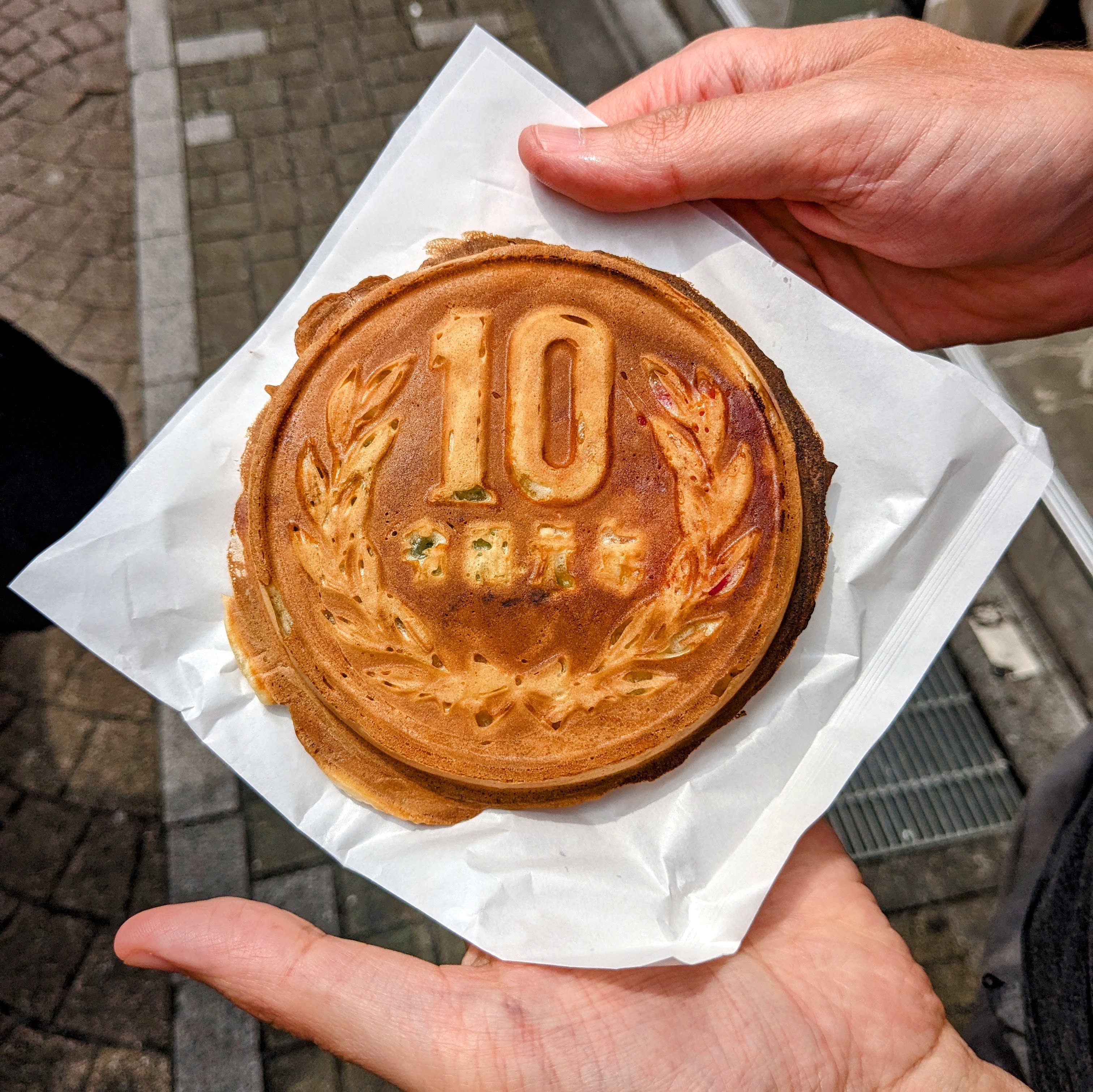
- Taiyaki: A fish-shaped cake, typically filled with red bean paste. It is a warm, comforting exterior that houses a granular, overwhelmingly sweet interior of mashed beans, proving that even adorable forms can conceal a profound tragedy.
Traditional Restaurants in Tokyo
The Raw and The Refined: Sushi and Sashimi
The misery of freshly deceased flesh, consumed either in a frantic rush amidst chaos or with tedious exclusivity, ensuring that the brief pleasure is outweighed by the profound regret of time and cost.
Daiwa Sushi
Website | Map | Reservations
Found within a famously chaotic fish market, this location forces one to eat fish raw, quickly, and surrounded by the frantic, early morning commotion of commerce. The fish is fresh, which only means its demise was more recent, a grim reminder of life’s brevity.
- Go anyway because: Now located in Toyosu, it offers the quintessential market sushi experience, providing a level of buttery freshness that is physically impossible to find further inland.
- Good for: Those who find that the commotion of commerce provides the necessary adrenaline to enjoy raw fish at 6:00 AM.
- Order: The Omakase set; let the chef navigate the morning’s grim reminders for you.
- Price: ¥¥¥ (Upper-Moderate). Approx. ¥5,500–¥8,000.
- Additional tips: The queue is a test of stamina; if you aren’t prepared to wait for an hour, your brief life is better spent elsewhere.
- Also recommended by: Lonely Planet, Just One Cookbook, and early-rising masochists who believe that the only way to truly wake up is through the sensory assault of a forklift horn and a piece of fatty tuna.

Sushi Yuu
Website | Map | Reservations
This establishment offers the simple, yet ultimately regrettable, pleasure of raw fish in a slightly more refined setting. One is seated before a chef who performs his task with intimidating precision, suggesting that the seriousness of the presentation outweighs the actual joy of the meal.
- Go anyway because: Chef Daisuke Shimazaki is a master of sushi entertainment, blending intimidating precision with a surprising amount of charisma (and the occasional gold-leaf-topped nigiri).
- Good for: A refined, English-friendly introduction to the serious side of Nishi-Azabu’s sushi scene.
- Order: The full Omakase, and don’t be afraid to engage with the chef – he’s less regrettable than he looks.
- Price: ¥¥¥¥ (Premium). Approx. ¥20,000–¥30,000.
- Additional tips: The wall is covered in photos of famous visitors; use them as a distraction if the seriousness becomes too much to bear.
- Also recommended by: Eater, and expats who find that a chef’s charisma is the only thing capable of filling the void left by a dangerously high credit card balance.
SUSHI KOURIN
Website | Map | Reservations
Here, the rolls of seasoned rice and raw seafood are presented with a glossy, almost alarming perfection. The aesthetic suggests a high price for a small portion, which is a common formula for temporary satisfaction followed by immediate financial regret. A truly polished piece of woe.
- Go anyway because: It offers a modern-traditional balance, providing the glossy perfection of a high-end Ginza house but in the slightly more approachable (and only slightly less expensive) neighborhood of Shibuya.
- Good for: Those who want to experience the polished piece of woe that is high-end Edomae sushi without a three-month waiting list.
- Order: The dinner Omakase, focusing on their Shiromi (seasonally aged white fish).
- Price: ¥¥¥ (Upper-Moderate). Approx. ¥12,000–¥18,000.
- Additional tips: The financial regret is mitigated by the quality of the sake pairings; it’s easier to pay the bill when the world is slightly blurred.
- Also recommended by: Aesthetic-driven mourners who prefer their financial ruin to be served on a piece of polished lacquerware in a trendy neighborhood.
Tachigui Sushi Tonari
This place demands one stand to eat, a cruel stipulation for a meal, forcing the diner to rush through the consumption of raw fish. The swiftness of the experience only heightens the sense of dissatisfaction, as one cannot even properly sit down to consider one’s misfortune.
- Go anyway because: As a standing-only (Tachigui) sister shop to the famous Sushi Tokyo Ten, it offers high-grade nigiri at a fraction of the usual price, provided you have the leg strength to endure it.
- Good for: Efficiency seekers who want the quality of a sit-down omakase without the two-hour commitment to considering one’s misfortune.
- Order: The Tonari Course or à la carte pieces of O-toro (fatty tuna).
- Price: ¥¥ (Moderate). Approx. ¥3,000–¥6,000.
- Additional tips: Standing while eating is said to aid digestion, which is helpful when you are rushing toward your next disappointment.
- Also recommended by: Restless souls who find that sitting down only gives the existential dread a chance to catch up with them.
Sugita
Website | Map | Reservations
Known for its exquisitely prepared slices of raw fish, this establishment demands reservations be made months in advance – a cruel joke played by time itself. One must wait an agonizing period for a few brief, fleeting moments of fish served over rice. A short-lived, deeply exclusive sorrow.
- Go anyway because: Takaaki Sugita is widely considered the greatest living practitioner of Edomae sushi; his vinegared rice (shari) and precise cuts are a fleeting moment of absolute culinary perfection.
- Good for: The 0.01% of humanity that enjoys the thrill of the chase and the status of a seat that is harder to get than a private audience with a deity.
- Order: Whatever Sugita-san places before you. You have waited months; do not begin to question him now.
- Price: ¥¥¥¥ (Premium). Approx. ¥35,000–¥50,000.
- Additional tips: If you cannot get a reservation, don’t worry – the agonizing period of waiting is a universal experience that costs nothing at all.
- Also recommended by: The Michelin Guide (Bib Gourmand 2025), and the fortunate few who find that waiting six months for a single bite is the only way to make the passage of time feel remotely justified.
The Stringy and The Soupy: Noodles
Simple flour and water, elevated by either unsettling solemnity or confusing complexity. A dreary reminder that human labor yields only stringy, fleeting rewards, often served cold to reflect the universe’s indifference.
Tamawarai
Here, one finds a bowl of carefully crafted noodles, served in a setting so serene it is actively disturbing. The solemn quiet suggests a reverence for the food that borders on the religious, a distressing observation considering it is merely ground grain in a broth. The focus on simplicity only emphasizes life’s general lack of flavor.
- Go anyway because: The chef grows and mills his own buckwheat on-site, resulting in a texture and nutty fragrance that is objectively superior to almost any other soba in Japan.
- Good for: Purists who wish to experience the absolute peak of grain-focused craftsmanship in a space of monastic architectural beauty.
- Order: Aramaki Soba (coarse-ground) or the Sobagaki (soba dough mash).
- Price: ¥¥¥ (Upper-Moderate). Approx. ¥3,000–¥5,000.
- Additional tips: The queue is legendary and moves at a glacial, disturbing pace; arrive well before opening or prepare for a long session of silent meditation on the pavement.
- Also recommended by: The Michelin Guide (Recommended 2025), and Eater.
Teuchisoba Narutomi
This place prides itself on the handmade nature of its thin, delicate noodles. This obsessive dedication to manual labor is a reminder that even in modern life, one must work tirelessly for meager, fleeting rewards. The texture is precise, the flavor subtle, and the whole experience profoundly unsatisfying.
- Go anyway because: The handmade dedication results in a noodle of such delicate thinness that it absorbs the dipping sauce with mathematical precision.
- Good for: A refined, quiet lunch near Ginza for those who appreciate the subtle interplay of buckwheat and high-quality dashi.
- Order: Seiro (cold) soba with a side of their exceptionally light seasonal tempura.
- Price: ¥¥ (Moderate). Approx. ¥2,000–¥4,000.
- Additional tips: The meager rewards are heightened by the exquisite ceramic ware; it is a meal for the eyes as much as the stomach.
- Also recommended by: Perfectionists who find that the only way to endure a Tuesday is through the mathematical certainty of a perfectly cut noodle.
Hamacho Kaneko
A traditional, quietly located establishment serving buckwheat in a dark, umami-rich broth. One is forced to sit in a refined, old-fashioned setting, making it difficult to complain loudly about the tiny portions. It is an exercise in quiet, expensive disappointment, seasoned with a hint of sorrow.
- Go anyway because: The umami-rich broth is a deeply guarded family secret, and the buckwheat is stone-milled daily to ensure maximum fragrance.
- Good for: A quiet, expensive disappointment that is actually a masterclass in the subtle, earthy elegance of old Tokyo.
- Order: Kakesoba (hot) to fully appreciate the depth of the dark broth.
- Price: ¥¥¥ (Upper-Moderate). Approx. ¥3,000–¥5,000.
- Additional tips: The portions are indeed tiny in the traditional sense; consider it a lesson in the Buddhist virtue of restraint.
- Also recommended by: The Michelin Guide (Bib Gourmand 2025), and stoics who believe that the soul is best nourished by a broth as dark and complex as their own internal monologues.
Asakusa Hirayama
Found in an older, more charming district, this noodle shop draws a crowd, proving that misery loves company and that many people are easily fooled by historical architecture. The noodles are served cold, a chilling metaphor for the indifference of the universe to your dining preferences.
- Go anyway because: The chilling metaphor of their cold soba is balanced by some of the most refined tempura in the district, served in a space that feels like a quiet, wooden time capsule.
- Good for: Escaping the neon glare of modern Asakusa for a meal that prioritizes ancient texture over modern speed.
- Order: Seiro (cold) soba with seasonal vegetable tempura.
- Price: ¥¥ (Moderate). Approx. ¥2,500–¥4,500.
- Additional tips: Don’t be fooled by the charming architecture; the noodles are the real attraction here, even if the universe remains indifferent.
- Also recommended by: The Michelin Guide (Bib Gourmand 2025), and historical romanticists who find that the indifference of the universe is much easier to swallow when surrounded by well-preserved Edo-period joinery.
Osobano Kouga
This restaurant’s atmosphere is one of humble dedication to the art of the noodle. Such commitment is depressing, as it suggests the peak of human achievement is merely boiling flour and water. The plain taste offers no distraction from the truth of one’s predicament.
- Go anyway because: The humble dedication results in a unique Uni (sea urchin) soba that is anything but plain, blending the sea’s richness with the grain’s earthiness.
- Good for: Realizing that merely boiling flour and water can, in fact, be a peak of human achievement when done with this much focus.
- Order: Uni Soba (Sea Urchin Soba) – the ultimate distraction from your predicament.
- Price: ¥¥¥ (Upper-Moderate). Approx. ¥4,000–¥7,000.
- Additional tips: Located in Nishi-Azabu, it’s a sophisticated spot where the truth is served on very beautiful plates.
- Also recommended by: The Michelin Guide (Bib Gourmand 2025), and hedonists who believe that if life has no meaning, it should at least taste like sea urchin.
Edosoba Hosokawa
Specializing in the Edo-style preparation, which means a dark, intensely flavored dipping sauce, this establishment forces one to dip the meager bundle of noodles into the concentrated liquid. It is a fussy, specific ritual that highlights the unnecessary complication of everyday life.
- Go anyway because: The shop uses 100% domestic buckwheat (Ju-wari) and the intense Edo-style dipping sauce is a masterclass in umami balance.
- Good for: Traditionalists who find comfort in fussy, specific rituals and the highest standards of noodle integrity.
- Order: The Seiro soba or the Anago (sea eel) tempura.
- Price: ¥¥¥ (Upper-Moderate). Approx. ¥4,000–¥6,000.
- Additional tips: Located near the Hokusai Museum, it is the perfect place to eat after viewing art that is equally intensely flavored.
- Also recommended by: The Michelin Guide (Bib Gourmand 2025), and ritualists who find that the more fussy the meal, the less time there is to think about the void.
Soba Tajima
A simple, unpretentious location serving the ubiquitous buckwheat noodle. The lack of fanfare suggests an acceptance of one’s gloomy fate. One consumes the slippery strands quickly, realizing that this meal, like all meals, is merely a brief pause before one must continue one’s wretched journey.
- Go anyway because: Its unpretentious nature is exactly why it is a neighborhood favorite; it serves honest, high-quality soba without the performative vanity of the Ginza houses.
- Good for: A reliable pause in your journey where the quality of the buckwheat is allowed to speak for itself.
- Order: Natto Soba or the Tempura Seiro.
- Price: ¥¥ (Moderate). Approx. ¥1,500–¥3,000.
- Additional tips: It is an acceptance of one’s fate that tastes remarkably fresh.
- Also recommended by: The Michelin Guide (Bib Gourmand 2025), and weary salarymen who accept that a reliable noodle is the only honest companion on a wretched journey.
Kagari Ramen/Soba
Website | Ginza Location | Roppongi Location
Found in both a chic district and a flashy one, this noodle shop focuses on an intensely creamy, unnervingly white broth. The elegant setting belies the slurping sounds, proving that no amount of sophistication can truly mask the simple, watery sorrow of soup.
- Go anyway because: Their signature Tori Paitan (chicken cream broth) is so rich and velvety, it feels more like a savory French velouté than a watery sorrow.
- Good for: Those who want a decadent, luxurious soup that coats the palate in a layer of creamy, poultry-based denial.
- Order: Tori Paitan Ramen with seasonal vegetable toppings.
- Price: ¥¥ (Moderate). Approx. ¥1,500–¥2,500.
- Additional tips: The Ginza location is tucked down a tiny alley; the Roppongi one is more accessible but lacks the chic mystery of the original.
- Also recommended by: Eater, ms travel solo, Just One Cookbook, and lovers of artifice who find that enough creamy chicken fat can coat even the jagged edges of reality.
HARU CHAN Ramen
Named after a cheerful person – an immediate warning sign – this spot serves a bowl of steaming noodles in a seemingly simple broth. Yet, beneath the surface lies a complex array of fats and flavors designed to cling to the palate, ensuring one remembers their brief moment of indigestion.
- Go anyway because: The complex array of fats is actually a masterfully balanced niboshi (dried sardine) and pork broth that provides a punchy, savory depth typical of Shinjuku’s best back-alley bowls.
- Good for: Those who find that a brief moment of indigestion is a small price to pay for a broth with this much character.
- Order: The signature Chukasoba with extra pork.
- Price: ¥ (Economical). Approx. ¥1,000–¥1,500.
- Additional tips: Haru Chan may be a warning sign of cheer, but the efficiency of the service ensures you won’t have to endure the happiness for long.
- Also recommended by: The Michelin Guide (Bib Gourmand 2025), and skeptics who are willing to trade a brief moment of indigestion for a bowl that actually feels something.

Iruca Tokyo Roppongi
This establishment presents its noodle soup with an alarming array of meticulously arranged ingredients, suggesting the chef is attempting to distract from the fundamental fact that it is just liquid and stringy dough. The location is fashionable, which means the prices are a further tragedy.
- Go anyway because: The meticulously arranged ingredients (like the four-meat chashu) are sourced from the highest-quality producers in Japan, justifying every fashionable Yen spent.
- Good for: A high-end, visual feast that proves that liquid and stringy dough can be a work of high-modernist art.
- Order: Porcini Shoyu Ramen or the Yuzu Shio Ramen.
- Price: ¥¥¥ (Upper-Moderate). Approx. ¥2,000–¥3,500.
- Additional tips: The truffle and porcini aromas are so potent that they might actually mask the scent of your own traveler’s fatigue.
- Also recommended by: The Michelin Guide (Bib Gourmand 2025), ms travel solo, and high-fashion casualties who believe that if a meal is a tragedy, it should at least be a well-accessorized one.

Soba House Konjiki-Hototogisu
Known for an unusual, triple-broth noodle soup, this location ensures maximum confusion for the tongue. The name refers to a bird of melancholy legend, which is apt, as one leaves with a sinking feeling, having consumed something strangely complex and ultimately dissatisfying.
- Go anyway because: The triple-broth (hamaguri clam, sea bream, and pork) creates a sophisticated, multi-layered profile that has redefined the possibilities of modern ramen.
- Good for: Adventurous eaters who enjoy maximum confusion when it results in a world-class, Michelin-starred flavor profile.
- Order: Shoyu Hamaguri Ramen (soy sauce base with clam).
- Price: ¥¥ (Moderate). Approx. ¥1,200–¥2,000.
- Additional tips: They use a ticket machine system; everyone must pay in advance at the kiosk.
- Also recommended by: Just One Cookbook, and adventurous souls who find that maximum tongue confusion is a suitable substitute for a personality.
Chukasoba Ginza Hachigou
Here, the noodle soup is served in a broth so clear it is unsettling, an unnaturally transparent liquid suggesting a lack of the usual comforting murkiness. It is an extremely refined and quiet affair, forcing one to contemplate the simple, bleak truths of their meal in silence.
- Go anyway because: The unnaturally transparent broth is made without the traditional tare (sauce base), relying instead on a complex infusion of French sea salt and premium ingredients for a startlingly clean finish.
- Good for: Minimalists who find comforting murkiness to be a distraction from the purity of high-end broth engineering.
- Order: Special Chukasoba.
- Price: ¥¥ (Moderate). Approx. ¥1,500–¥3,000.
- Additional tips: With only six seats, the bleak truths are best contemplated alone, as getting a group in is a logistical nightmare.
- Also recommended by: The Michelin Guide (Bib Gourmand 2025), and transparency advocates who find a broth with nothing to hide to be both startling and deeply unsettling.
Godaime Hanayama Udon
Website | Ginza Location | Haneda Location
This noodle shop is inescapable, found in both the bustling city and the dreary place one goes to leave. It specializes in extremely flat, wide noodles – a strange, wide ribbon of chewiness that is an unsettling texture to navigate.
- Go anyway because: The Onihimo-kawa (extra-wide, flat noodles) are a unique regional specialty from Gunma that offer a silky, delightful chew unlike any other pasta on earth.
- Good for: Those who find standard noodles too thin for their wretched journey and prefer a wide ribbon of satisfaction.
- Order: Onihimokawa Udon (cold with dipping sauces or in a hot ginger broth).
- Price: ¥¥ (Moderate). Approx. ¥1,500–¥2,500.
- Additional tips: The Haneda Airport branch is the best way to spend your final Yen before fleeing the country; it is far superior to standard terminal misery.
- Also recommended by: Frequent flyers who find that a wide, silky ribbon of dough is the only thing tethering them to the earth.
The Breaded and The Broiled: Fried Cutlets and Eel
Heavy, oil-soaked acts of culinary self-deception, involving either the cataloging of hog misfortune or the distressful preparation of a slippery aquatic snake. The result is a profound, inevitable heaviness.
Hatsuogawa
A narrow, specialized room where one must endure the sight and smell of freshwater eels, which are prepared over charcoal with a distressing attention to detail. The atmosphere is quiet, a silence broken only by the gnawing realization that your life is being wasted watching someone brush sauce on a slippery creature.
- Go anyway because: It is a third-generation family business that has maintained its secret sauce and traditional steaming methods since 1907, offering a rare taste of true Edo-period soul.
- Good for: Those who find that a quiet, contemplative wait is the only appropriate way to prepare for a meal of such historical weight.
- Order: The Unaju (grilled eel over rice) – it is the only thing they do, and they do it with a terrifying level of mastery.
- Price: ¥¥¥ (Upper-Moderate). Approx. ¥4,000–¥6,000.
- Additional tips: The shop is tiny and the preparation is slow; any attempt to rush the process is considered an affront to the eel’s memory.
- Also recommended by: The Michelin Guide (Bib Gourmand 2025), Just One Cookbook.
Nisshin Tasuke
Another establishment dedicated to the peculiar misery of eel, this time focusing on a particular preparation that requires a helping hand. One can only suspect that help is required to stomach the rich, fatty taste and the slightly alarming texture of the grilled aquatic snake. A profoundly oily endeavor.
- Go anyway because: Located in the heart of the Tsukiji Outer Market, it provides an accessible, high-energy way to experience high-quality eel without the formal silence of a traditional house.
- Good for: A quick, oily endeavor that manages to be both culturally significant and surprisingly efficient.
- Order: Unagi Kushiyaki (grilled eel skewers) or a standard Unadon.
- Price: ¥¥ (Moderate). Approx. ¥2,500–¥4,500.
- Additional tips: Their helping hand often refers to the staff’s speed; eat quickly so the next person in the inevitable queue can begin their own struggle.
- Also recommended by: Market-goers who prefer their aquatic snakes served with enough oil to slide right past their conscience and into their arteries.
Butagumi
A place of solemn reverence for the common hog. Here, the menu is a comprehensive list of pork breeds, a horrifying inventory of the many ways a pig can meet its end to be pressed, breaded, and submerged in hot oil. One is expected to taste and compare their separate, distinct misfortunes.
- Go anyway because: The Tonkatsu Library allows you to choose from over 20 different pork breeds from across the globe, providing a fascinating – if somber – education in fat content and texture.
- Good for: Discerning diners who wish to debate the structural differences between a Berkshire and a Meishan pig while their meal sizzles.
- Order: Choose a rare breed from the Pork Map and pair it with their premium breadcrumbs.
- Price: ¥¥¥ (Upper-Moderate). Approx. ¥4,000–¥8,000.
- Additional tips: The restaurant is located in a charming, converted traditional house in Nishi-Azabu, which makes the inventory feel slightly more like a dinner party.
- Also recommended by: Eater, ms travel solo, Bon Traveler, Just One Cookbook, and porcine genealogists who enjoy the intellectual thrill of knowing exactly which branch of the family tree they are currently chewing on.
Katsuyoshi
The dedication here is to the colossal fried cutlet, served in such alarming thickness that one feels a profound obligation to finish the entire, intimidating slab. The surrounding side dishes – rice and an unsettling amount of shredded cabbage – are merely distractions from the main, weighty burden.
- Go anyway because: The sheer scale of the cutlet is a testament to Japanese hospitality, and the quality of the meat ensures that the weighty burden is actually quite tender.
- Good for: Diners who have abandoned the idea of light lunching and wish to succumb entirely to the breaded slab.
- Order: The Jumbo Tonkatsu set.
- Price: ¥¥ (Moderate). Approx. ¥2,500–¥4,000.
- Additional tips: The shredded cabbage is unlimited; use it as a crisp, green raft to help you navigate the sea of fried pork.
- Also recommended by: The Michelin Guide (Bib Gourmand 2025), and structural engineers who are impressed by any slab of meat capable of supporting its own crushing existential weight.
Marugo
One of the myriad places dedicated to the breaded and fried pork cutlet. The interior is often described as comfortable, which is code for a lack of genuine excitement. The process of deep-frying here is meticulously slow, prolonging the anticipation of a meal that is, ultimately, just fried meat.
- Go anyway because: It is widely considered a Holy Grail of Tonkatsu, where the low-temperature frying method creates a pale, delicate crust that is far superior to any comfortable alternative.
- Good for: Those who find that Akihabara’s neon lights are best escaped through the ritual of waiting for a perfectly rendered piece of fat.
- Order: The Tokuro-Rosu-Katsu (Special Loin Cutlet).
- Price: ¥¥¥ (Upper-Moderate). Approx. ¥3,000–¥5,000.
- Additional tips: The line starts long before the doors open; bring a heavy book to match the weight of the meat.
- Also recommended by: Akihabara refugees who find that a low-temperature fry is the only thing slow enough to stop the world from spinning.
Tonkatsu Nanaido
A small, intimate counter where the breaded and fried pork is served on shockingly fine porcelain. The owners are kind, which is the most unsettling part, as one fears the moment of disappointment will also be a moment of personal rudeness. A polite transaction of culinary gloom.
- Go anyway because: The kindness of the staff and the fine porcelain create a high-end, boutique experience that makes the fried meat feel like a delicate, artistic secret.
- Good for: Those who prefer their culinary gloom to be served with a side of impeccable manners and aesthetic beauty.
- Order: The Hire-Katsu (Fillet) for a leaner, more polite transaction.
- Price: ¥¥¥ (Upper-Moderate). Approx. ¥4,000–¥6,000.
- Additional tips: It is an extremely small counter; booking is a necessity to avoid a very rude disappointment at the door.
- Also recommended by: The Michelin Guide (Bib Gourmand 2025).
Kurobuta Tonkatsu Horiichi
This deep-fried establishment specializes in the dark-fleshed pig, suggesting a sinister origin for the meat. The pork is encased in a brittle, golden shroud and served with a perplexing selection of sauces, each offering a different, temporary distraction from the meal’s inherent heaviness.
- Go anyway because: The dark-fleshed Berkshire pig (Kurobuta) is arguably the finest pork in Japan, offering a richness that standard pigs can only dream of.
- Good for: A decadent, sauce-heavy experience in the bustling Shimbashi district.
- Order: The Kurobuta Rosu-Katsu with a side of their specialty salt.
- Price: ¥¥¥ (Upper-Moderate). Approx. ¥3,500–¥5,500.
- Additional tips: Experiment with the sauces, but the salt often provides the best distraction from the sinister richness of the fat.
- Also recommended by: Detectives of the dark who believe that the most sinister pigs always yield the most decadent, salt-crusted secrets.
Otako
This establishment serves a deep-fried cutlet in a specific, dark sauce, a somber preparation that leaves the breading slightly soggy – a profound culinary failure. The heaviness of the meal is matched only by the sinking feeling of having chosen poorly.
- Go anyway because: This Ginza institution is famous for its Oden, and their soggy cutlet is actually a specialized dish (Tomeshi) served on rice with a rich, dark broth that is a local legend.
- Good for: Those who find that crispness is overrated and wish to experience the somber, deep flavors of a long-simmered dashi.
- Order: The Tomeshi (tofu on rice) and the Oden selection.
- Price: ¥ (Economical). Approx. ¥1,500–¥3,000.
- Additional tips: The sinking feeling is likely just the weight of the broth; it is a beloved comfort food for those who know Ginza’s secrets.
- Also recommended by: Dampness devotees who have finally accepted that life, like a well-simmered piece of tofu, is best served soggy and full of broth.
The Deep-Fried and The Dark: Tempura and Grilled
Good ingredients subjected to dramatic, unnecessary destruction by hot oil or charcoal. The greasy or smoke-filled aftermath serves as a lingering physical reminder of a temporary, charred disappointment.
Tempura Kakiage Yukimura
A small, quiet sanctuary dedicated to the deep-frying of vegetables and seafood. One watches as perfectly good ingredients are plunged into vats of hot oil, a dramatic and unnecessary act of culinary self-destruction. The result is inevitably greasy and crisp, an unsatisfying duality.
- Go anyway because: The Kakiage (a fritter of mixed ingredients) here is considered a technical masterpiece of balance, using high-quality sesame oil to achieve a lightness that defies the unnecessary act of frying.
- Good for: Witnessing the extreme precision required to fry delicate seafood without losing its soul to the grease.
- Order: The signature Kakiage-don or the seasonal vegetable tempura.
- Price: ¥¥ (Moderate). Approx. ¥1,600–¥3,000 for lunch; higher for dinner.
- Additional tips: It is a quiet, contemplative space; any vocalized distress over the oil content should be kept to a respectful whisper.
- Also recommended by: The Michelin Guide (Bib Gourmand 2025), ms travel solo.
Tempura Hisago
Another location specializing in foods deep-fried to a crisp. The shape of the gourd is meant to be charming, but it merely serves as a distraction from the fundamental problem of eating excessively oily things. One leaves with a feeling of heaviness and a profound sense of distress.
- Go anyway because: With a history stretching back to 1918, this establishment has spent over a century refining a batter that is remarkably thin and crisp, minimizing the feeling of heaviness.
- Good for: A reliable, traditional tempura experience in a setting that feels significantly more historic than the surrounding city.
- Order: The Hisago Course, which provides a chronological progression of fried delicacies.
- Price: ¥¥ (Moderate). Approx. ¥3,000–¥6,000.
- Additional tips: Located in Akihabara (within the UDX building), it offers a much-needed, somber reprieve from the neon blinking and electronic noise of the district.
- Also recommended by: Century-old oil enthusiasts who find that a thin, 1918-style batter is the only shroud light enough to cover their dietary sins.


Yakitori Imai
This noisy place specializes in small pieces of fowl skewered and grilled over charcoal. The smoke is relentless, clinging to one’s clothing, a physical reminder of the heat and fleeting nature of the tiny, charred bites. One must work diligently to remove the meat from the bone.
- Go anyway because: Chef Takashi Imai treats each skewer with a level of attention usually reserved for fine art, using specific breeds of chicken (Jidori) to ensure the charred bites are as flavorful as possible.
- Good for: Those who appreciate the sophisticated side of Japanese street food, served in a sleek, counter-service environment.
- Order: The Omakase course, which allows the chef to dictate the sequence of your physical reminders.
- Price: ¥¥¥ (Upper-Moderate). Approx. ¥8,000–¥12,000.
- Additional tips: The smoke is indeed relentless; do not wear your finest wool coat unless you wish for it to smell like grilled leeks and chicken thighs for the remainder of the decade.
- Also recommended by: Eater, and laundry-day gamblers who believe that no amount of dry cleaning can truly wash away the memory of a perfectly charred thigh.
The Oddly Specific and The Miscellaneous Dread
A collection of unique sorrows: deceptive rice balls, sterile commercial food, or brightly dyed lies (pancakes). These experiences prove that even the simplest or most eccentric meals harbor deep disappointment.
Onigiri Manma
This unassuming little place specializes in white rice, compressed into shapes and wrapped in seaweed, containing a small, often pickled, secret. The simplicity of the fare is a cruel metaphor for a life of small, unsatisfying joys wrapped in a dark, chewy casing of inevitability.
- Go anyway because: The rice is cooked in traditional pots and the fillings are prepared with a precision that makes the dark, chewy casing of seaweed taste remarkably fresh and crisp.
- Good for: A quick, honest meal that prioritizes ingredient quality over the frantic pace of Shinjuku.
- Order: The Suji-ko (salted salmon roe) or the grilled Miso.
- Price: ¥ (Economical). Approx. ¥400–¥800.
- Additional tips: It is located near the station, making it a convenient spot to grab a pickled secret before descending back into the subway.
- Also recommended by: Commuters who find that a small, pickled secret is the only thing worth carrying into the dark, subterranean inevitability of the JR line.
Onigiri Asakusa Yadoroku
Another shop dedicated to the triangular rice ball, proving that the world offers countless repetitions of the same, uninspired concept. Found in a crowded area, one must hastily consume the portable starch bomb, rushing through the meal as one rushes through life itself.
- Go anyway because: As the oldest onigiri shop in Tokyo, it offers a level of historical craftsmanship that transforms a simple lunch into a high-definition encounter with tradition.
- Good for: Experiencing the Michelin-standard version of Japan’s most basic comfort food.
- Order: The Ami (small shrimp in soy sauce) or the classic Umeboshi (pickled plum).
- Price: ¥ (Economical). Approx. ¥300–¥600 per onigiri.
- Additional tips: There are only a few seats at the counter; if you arrive late, you will be forced to take your portable starch bomb to the steps of a nearby temple.
- Also recommended by: The Michelin Guide (Bib Gourmand 2025), ms travel solo, Bon Traveler.
Monja Yoshimiya
Located in a historic district of iron cookery, this noisy, humid spot forces diners to scrape their own culinary creation – a thin, watery batter mixed with various unpleasant items – off a hot griddle. The final result is inevitably a shapeless, scorched mess.
- Go anyway because: It is a bastion of Asakusa’s Edo-style charm, where the process of scraping batter off a hot griddle is a loud, communal rite of passage.
- Good for: Embracing the shaping of a mess as a culinary art form in a historic, atmospheric setting.
- Order: The Monjayaki with baby Star noodles or seafood.
- Price: ¥¥ (Moderate). Approx. ¥2,000–¥3,500.
- Additional tips: The humid, noisy environment will ensure that you leave not only full, but wearing the scorched scent of the meal for the rest of the day.
- Also recommended by: Will Fly for Food, and communal masochists who believe that any mess worth making is worth scraping off a hot iron plate in a cloud of savory steam.
Isetan Shinjuku
This is not a single location of misery, but a vast, multi-story emporium of consumer dread where one finds countless places to purchase pre-packaged unhappiness. The food is technically perfect, and therefore utterly without soul – a chilling reminder of life’s sterile, commercial nature.
- Go anyway because: The basement food hall (Depachika) is arguably the greatest collection of high-end culinary craft under one roof, offering a visual and gustatory survey of global excellence.
- Good for: Assembling a world-class picnic of technically perfect items to eat in the safety of a nearby park.
- Order: A selection of seasonal Bentoz or a slice of the impossibly expensive Musk Melon.
- Price: ¥¥–¥¥¥¥ (Variable). You can spend ¥1,000 or ¥50,000.
- Additional tips: Visit about an hour before closing for the Time Sale, where the sterile perfection is sold at a much more human discount.
- Also recommended by: Eater.
Den
Website | Map | Reservations
A famous establishment that attempts to make playful, amusing changes to traditional fare. Such efforts at levity are always ill-advised, as humor rarely translates well to the plate. One is forced to consume something strange and new, which is rarely a pleasant experience.
- Go anyway because: Chef Zaiyu Hasegawa’s playful approach has earned him a place among the world’s elite, blending world-class Kaiseki technique with a genuine warmth that is rare in high-end dining.
- Good for: Those who find traditional Japanese formal dining too stiff and prefer their strange and new experiences with a side of hospitality.
- Order: The Dentucky Fried Chicken (a chicken wing stuffed with seasonal surprises).
- Price: ¥¥¥¥ (Premium). Approx. ¥20,000–¥30,000 for the tasting menu.
- Additional tips: Reservations are a grueling ordeal; you must call exactly when the booking window opens or face a long, humorless wait for a cancellation.
- Also recommended by: The Michelin Guide (Two Stars 2025), Eater, Phil Resenthal, The World’s 50 Best Restaurants 2024, Asia’s 50 Best Restaurants 2025, and jovial masochists who enjoy the grueling ordeal of a booking system almost as much as they enjoy a stuffed chicken wing.
Sougo
A restaurant that attempts to combine several regional styles of cooking, resulting in a confusing, over-complicated menu. One leaves feeling as though they have eaten three mediocre meals instead of one good one, a common tragedy in the culinary world.
- Go anyway because: The restaurant offers a sophisticated, modern take on Shojin Ryori (Buddhist vegetarian cuisine), proving that complex regional styles can result in a meditative and healthful experience.
- Good for: Vegetarians and those seeking a refined variety of textures and flavors in a single sitting.
- Order: The multi-course Shojin tasting menu.
- Price: ¥¥¥ (Upper-Moderate). Approx. ¥8,000–¥12,000.
- Additional tips: Located in the heart of Roppongi, it is a calm, vegetable-forward sanctuary in an area usually known for late-night excesses.
- Also recommended by: Lonely Planet, Eater, Will Fly for Food, and meditative vegetarians who find that a multi-course Buddhist tragedy is the most healthful way to survive the excesses of Roppongi.
Katsuo Shokudo
Website | Map | Reservations
A small, humble canteen focused entirely on dried, smoked skipjack tuna. One is confronted by intense, fishy flavors and a profound dedication to one single, overriding taste. It is an exercise in monotony, a single flavor repeated until one’s tongue grows weary.
- Go anyway because: The chef, known as the Katsuo-chan, treats the skipjack tuna with a level of obsession that results in the most fragrant, freshly shaved Katsuobushi you will ever taste.
- Good for: Purists who want to understand the foundational flavor of Japanese cuisine through a single, overriding ingredient.
- Order: The Katsuo-don (rice topped with a mountain of freshly shaved tuna flakes).
- Price: ¥¥ (Moderate). Approx. ¥1,500–¥2,500.
- Additional tips: The shop is small and the dedication is absolute; be prepared to wait for your turn at the altar of the skipjack.
- Also recommended by: The Michelin Guide (Bib Gourmand 2025); Eater, ms travel solo.
Good Spots for Drinks in Tokyo
Bar Benfiddich
Website | Map | Reservations
A quiet, specialized drinking den where the proprietor mixes strange, herbal concoctions from ingredients grown in a window box, proving that even a tiny patch of dirt can be a source of misery. The drinks are complex, leading to an overthought, pretentious sort of inebriation.
- Go anyway because: Hiroyasu Kayama is a farm-to-bar pioneer who crafts his own elixirs and absinthes, offering a sensory experience that is genuinely peerless in its complexity.
- Good for: Those who wish to see a cocktail made with a mortar and pestle rather than a simple jigger.
- Order: There is no menu; tell the alchemist what you fear (or what flavors you enjoy) and let him distill a remedy.
- Price: ¥¥¥ (Upper-Moderate). Approx. ¥3,000–¥5,000 per drink.
- Additional tips: The bar is tiny and the fame is great; if you don’t make a reservation, you will be left on the landing to contemplate the scent of wormwood from afar.
- Also recommended by: The World’s 50 Best Bars (2025), Lonely Planet.
Eureka!
Website | Map | Reservations
Named after a cry of discovery, one expects some great revelation here, only to find a perfectly ordinary and therefore profoundly disappointing selection of drinks. The name is a cruel joke, suggesting an answer that never materializes. A sobering experience, despite the spirits.
- Go anyway because: This specialized sake bar focuses on the science of pairing, using temperature and glassware to prove that even a perfectly ordinary liquid can be transformative.
- Good for: A modern, sleek introduction to sake that strips away the traditional trappings in favor of clinical excellence.
- Order: The Sake Pairing Flight to see how the revelation changes with each sip.
- Price: ¥¥¥ (Upper-Moderate). Approx. ¥10,000–¥12,500 for dinner pairings.
- Additional tips: It is located in Nishi-Azabu; the walk there is long enough to build up a significant thirst for answers.
- Also recommended by: Condé Nast Traveler; Eater.
Bar Gen Yamamoto
This elegant, minimalist space serves cocktails in a tasting menu format, forcing one to consume several small, precise sips of misery. The severity of the design ensures one is constantly aware of their posture and their temporary, expensive unhappiness.
- Go anyway because: The hyper-seasonal approach – using produce from specific Japanese micro-climates – results in cocktails that are as fleeting and beautiful as a cherry blossom in a gutter.
- Good for: Minimalists who prefer a structured, academic approach to their intoxication.
- Order: The 4-drink or 6-drink tasting menu.
- Price: ¥¥¥¥ (Premium). Approx. ¥10,000–¥15,000 for the set.
- Additional tips: The silence is part of the ingredient list; keep your voice low and your back straight, as if the oak counter is judging your lumbar support.
- Also recommended by: Condé Nast Traveler; Lonely Planet, The World’s 50 Best Discovery.
Zoetrope
This dark, tiny room is dedicated to a specific type of brown liquor and is filled with the flickering images of old films. It is a place for solitary, contemplative drinking, an active effort to escape one’s immediate reality, which is rarely a sign of a cheerful evening.
- Go anyway because: It houses one of the most impressive collections of rare Japanese whiskies in the world, many from distilleries that have long since ceased to exist.
- Good for: Film buffs and solitary drinkers who find the company of a Chichibu malt more comforting than the company of a human.
- Order: A flight of Ichiro’s Malt or a rare bottling from the closed Hanyu distillery.
- Price: ¥¥–¥¥¥¥ (Variable). Standard pours start around ¥1,500; rare ghosts can cost a fortune.
- Additional tips: The silent movies playing on the wall provide the perfect excuse to avoid eye contact with anyone.
- Also recommended by: Condé Nast Traveler; Lonely Planet.

Good Spots for Sweets in Tokyo
Higashiya Ginza
An establishment dedicated to small, precious geometric blocks of Japanese confectionery. The sweets are paired with various teas, forcing one to endure a tedious, silent ceremony of careful sipping and nibbling. The beauty of the presentation only heightens the tragedy of the small portion size.
- Go anyway because: The interior is a masterpiece of modern Japanese design, offering a level of stillness that is increasingly rare in the neon-lit chaos of the city.
- Good for: Those who wish to experience a refined tea ceremony without the physical discomfort of kneeling on a straw mat for three hours.
- Order: The Samon (seasonal wagashi set) paired with a high-grade Gyokuro or roasted Hojicha.
- Price: ¥¥¥ (Upper-Moderate). Approx. ¥3,000–¥5,000 for a tea set.
- Additional tips: The retail section is equally minimalist; it is the ideal place to buy a gift for someone you wish to impress with your impeccable yet somber taste.
- Also recommended by: Aesthetic-driven ascetics who find that a single, geometric block of sugar is the only appropriate response to the vast, messy sprawl of the Ginza district.
Rainbow Pancake
The name itself is a betrayal, suggesting a mythical, cheerful breakfast that cannot possibly exist. The pancakes are stacked high and dyed in garish, unnatural hues, an obvious and frankly alarming attempt to distract from the fundamental blandness of the fluffy starch.
- Go anyway because: The fluffy soufflé-style technique is a marvel of Japanese egg-white engineering, resulting in a texture that defies the laws of physics and common sense.
- Good for: Capturing a photograph that proves you were in Harajuku, even if your expression in the picture suggests a deep, internal conflict.
- Order: The Macadamia Nut Sauce Pancakes – the white sauce is an attempt to hide the betrayal of the rainbow.
- Price: ¥¥ (Moderate). Approx. ¥1,500–¥2,500.
- Additional tips: Despite the name, the pancakes are often actually beige; the rainbow is frequently found in the toppings, the fruit, or the lingering sense of bewilderment.
- Also recommended by: Anyone seeking the pinnacle of Kawaii food culture.

Non-Traditional Restaurants
Pizzeria e Braceria L’INSIEME
A noisy place that attempts to replicate the chaotic cheer of a foreign land, focusing on wood-fired dough and charred meat. The concept of togetherness suggested by the name is a dreadful illusion, as one must still eat alone inside one’s own melancholy.
- Go anyway because: The wood-fired oven produces a crust so blistered and authentic it almost justifies the overwhelming volume of the room.
- Good for: Those who wish to hide their personal sorrows behind the boisterous clamor of a crowded, charcoal-scented dining hall.
- Order: The Margherita STG and the grilled lamb chops from the braceria (grill).
- Price: ¥¥ (Moderate). Approx. ¥3,000–¥5,000.
- Additional tips: The name means Together, but the noise level is such that you won’t actually be able to hear anything your companions say.
- Also recommended by: 50 Top Pizza (Asia – Pacific 2025).
The Pizza Bar on 38th
Website | Map | Reservations
Located disturbingly high up in a towering building, this establishment serves flat, baked dough with toppings. The altitude is meant to be impressive, but only serves as a cold, terrifying reminder of how far one has fallen from any state of grace.
- Go anyway because: The quality of the long-fermented dough and the exclusivity of the eight-seat counter make it one of the most technically perfect pizza experiences in Asia.
- Good for: Witnessing a masterclass in dough hydration while the sprawling city of Tokyo mocks your smallness from below.
- Order: The Pizzino (focaccia with mascarpone and truffle) or the seasonal Bufala.
- Price: ¥¥¥¥ (Premium). Approx. ¥15,000–¥21,000 for a set course.
- Additional tips: Reservations open on the 1st of each month and disappear in seconds; it is a specialized theater for those who enjoy being rejected by a calendar.
- Also recommended by: The Michelin Guide (Recommended 2025), Asia’s 50 Best Restaurants 2023, 50 Top Pizza (World 2025).
Savoy
Website | Multiple Locations | Reservations Recommended
This popular pizzeria offers round, baked dough with toppings. The lack of choice is a cruel reflection of life itself, and one must eat quickly, as the waiting line ensures a sense of rushed, half-enjoyed consumption.
- Go anyway because: The salt-forward, wood-fired crust is a legendary benchmark of the Tokyo-Neapolitan style, proving that sometimes doing only two things is the only way to do them correctly.
- Good for: A quick, high-intensity meal for those who find options to be an unnecessary burden on the human spirit.
- Order: You have two choices: Margherita or Marinara. Choose one and accept your fate.
- Price: ¥¥ (Moderate). Approx. ¥1,500 – ¥2,500 for a pizza.
- Additional tips: The turnover is fast; do not expect to linger over your crust unless you wish to feel the collective glare of the queue outside.
Also recommended by: Will Fly for Food, Ugly Delicious.

Markets and Foodie Neighborhoods
Omoide Yokocho (Memory Lane)
This narrow alleyway is a notorious collection of tiny, smoke-filled stalls. The name means Memory Lane, which is a disturbing suggestion, as the memories one makes here are likely to be hazy, greasy, and filled with the smell of cheap grilled things.
- Go anyway because: It is one of the few remaining fragments of post-war Tokyo, offering a visceral, high-density experience that modern skyscrapers have failed to pave over.
- Good for: Solo travelers and small groups who don’t mind physical contact with strangers while eating skewered meats.
- Order: Anything on the menu.
- Price: ¥–¥¥ (Variable). Approx. ¥2,000–¥4,000. Beware of seating charges.
- Additional tips: The common bathroom is a test of character, but it’s an improvement over the historic solution that gave the area its nickname, Piss Alley.
- Also recommended by: Phil Resenthal, Lonely Planet, and every street photographer seeking “Neo-Noir” lighting.

Yurakucho Gado Shita (Yakitori Alley)
Tucked beneath the elevated train tracks, this series of cramped drinking dens is constantly rattled by passing trains. The noise is a persistent, abrasive reminder that the outside world is constantly rushing past one’s own stationary, gloomy predicament.
- Go anyway because: The constant vibration of the Yamanote Line overhead adds a sense of urgency to your drink, reminding you that time is fleeting and the next train is always coming.
- Good for: Mingle with salarymen in their natural habitat as they attempt to forget their spreadsheets.
- Order: Yakitori skewers at Yakitori Ton Ton or seafood at Shin Hinomoto.
- Price: ¥¥ (Moderate). Approx. ¥3,000–¥5,000.
- Additional tips: It is surprisingly close to the glitzy Ginza district; the transition from luxury to under-the-tracks grit can be quite jarring.
- Also recommended by: Anthony Bourdain.


Hoppy Street
A grim thoroughfare lined with stalls serving a particularly bitter, low-malt beverage. The atmosphere is loud and aggressively casual, a place where one’s small personal miseries are drowned out by the collective, boisterous unhappiness of strangers.
- Go anyway because: It offers a glimpse into the shitamachi (old downtown) culture, where the drinking starts at noon and the seating spills out onto the pavement.
- Good for: People-watching and outdoor drinking in a city that usually keeps its vices hidden behind closed doors.
- Order: A Hoppy (the low-malt beer substitute) with a shot of Shochu, and a bowl of Nikomi (beef tendon stew).
- Price: ¥ (Economical). Approx. ¥1,500–¥3,000.
- Additional tips: It has become quite touristy; if a tout is shouting at you with too much enthusiasm, continue walking toward the temple.
- Also recommended by: Day drinkers who find that a bowl of boiled tendons and a bitter beer substitute are the only honest response to the sun’s refusal to set.

Tsukiji Outer Market
A vast, bustling area of commerce where one finds countless temporary stalls selling all manner of dubious and overly fresh ingredients. The noise, the crowds, and the inescapable scent of the sea combine to create an overwhelming sensory sushi tragedy.
- Go anyway because: Despite the inner wholesale market moving to Toyosu, the outer market remains a chaotic, high-energy temple to the edible treasures of the Pacific.
- Good for: An early morning assault on the senses involving exceptionally fresh seafood and the risk of being clipped by a motorized cart.
- Order: Tamagoyaki (sweet omelet) on a stick and a kaisen-don (seafood bowl) at Sushizunmai.
- Price: ¥¥–¥¥¥ (Moderate to Premium). Snacks are cheap; sit-down sushi is not.
- Additional tips: Wear closed-toe shoes. The floors are wet, the crowds are merciless, and the tuna does not care about your personal space.
- Also recommended by: ms travel solo, Bon Traveler, Just One Cookbook.
Tsukishima Monja Street
A pedestrian street dedicated to a strange, batter-based local specialty that one must cook oneself on a hot griddle. The resulting dish is inevitably a messy, scorched puddle, confirming that even simple meals are destined for chaotic failure.
- Go anyway because: The process of building a bank with cabbage and pouring batter into the center is a collaborative social ritual that distracts from the actual texture of the meal.
- Good for: Groups who enjoy a do-it-yourself challenge and don’t mind their clothes smelling like fried dough for the next three days.
- Order: Mentaiko (spicy cod roe) and Mochi Monjayaki at Monja Kura.
- Price: ¥¥ (Moderate). Approx. ¥2,000–¥3,500 per person.
- Additional tips: If your puddle looks more like a disaster than a dish, the staff will usually intervene with a look of polite concern.
- Also recommended by: Eater, Just One Cookbook.
Food Tours
If you haven’t the faintest wretched idea where to begin, a food tour is a particularly efficient reprieve from the agony of choice, allowing you to sample a disheartening variety of morsels over the course of a few fleeting hours. Here are a handful of options that are, by general consensus, well-regarded.
- Tokyo: Shinjuku Food Tour (13 Dishes at 4 Local Eateries)
- Tokyo: Shibuya Food Tour (13 dishes and 4 Eateries)
- Tokyo: Tsukiji Fish Market Food and Walking Tour
Kanpai!
You have, against my advice, navigated the maze of Tokyo’s eateries. You have learned the difference between ramen and a fleeting moment of happiness, and you have, I hope, survived the common bathroom on Memory Lane.
You have sampled a dish so perfect that you will spend the remainder of your days comparing every future meal to it, finding all of them to be wanting. This is the ultimate terror of Tokyo cuisine: it sets a standard that cannot be maintained, turning every future dinner into a hollow imitation of a memory. The sheer, overwhelming excellence of the food here is merely the highest rung on a ladder that inevitably leads to a much harder fall.
You are now left with an elevated palate, a drastically lowered bank account, and the cold, certain knowledge that the search for true perfection only results in widespread dissatisfaction. Go now.
It appears you have, regrettably, reached the end of this Tokyo food and restaurants guide. If your appetite for misfortune remains unquenched, here’s the full, sorrowful compendium of everything I have written about Tokyo and Japan. Proceed with caution.
Here’s more dismal content you might enjoy:


Something went wrong. Please refresh the page and/or try again.