Dear fellow traveler, if you’re looking for yet another delightful “Top 10 Things to do in Osaka list,” you have opened the wrong page. For starters, you will notice – if you have any talent for counting at all – that this list does not contain ten items. A list of ten would suggest a sense of completeness and order that simply does not exist in this wretched world. These recommendations are culled from my own harrowing experiences, though I have included a few locations I have not yet visited, solely because I have heard whispers of their greatness and feel a desperate, perhaps foolish, urge to see them for myself before something goes horribly wrong.
I must caution you: while the tone of this guide is somewhat grim, the logistical information contained within is – most distressingly – entirely accurate. I have meticulously recorded prices and logistical advice with a level of accuracy that is frankly exhausting. Every detail was correct at the time this document was published, though in a world as unstable as ours, accurate is a word that should always be whispered with a note of caution. You may use this information to plan your journey with terrifying efficiency, though why you would want to arrive at your destination any sooner is a mystery that I have no desire to solve.
And to the reader foolish enough to seek a guide to Osaka, I offer this introduction as a final, earnest plea. You have been told, likely by someone who possesses a truly alarming degree of unwarranted optimism, that this city is a food paradise or a vibrant destination. Let me assure you, such adjectives are merely flimsy curtains drawn across a window with a most unfortunate view.
This article details the alleged best things to occupy your time here, but to spend time in any manner is, when one considers the vast, bleak expanse of eternity, merely a postponement of the inevitable. You will stand in line, you will spend too much currency, and you will eventually return to your lodgings with a feeling of deep, profound exhaustion – which is to say, you will be doing things. If you insist on pursuing these fleeting distractions, proceed with caution, and do not expect a happy ending. No one who truly understands the world ever does.
If this is your first stop in Japan, read this Japan Travel Guide and Reality Check.
Best Things to See and Do in Osaka (And Why They Might Disappoint You)
In any given metropolis, there is a list of Best Things to See and Do, an optimistic and misleading phrase that suggests these activities will be entirely delightful and without peril. Such a list, however, is merely a catalog of places where one can witness something curious, or perhaps even perform a curious deed oneself. One should approach this list with caution and a healthy dose of suspicion, as no one can truly promise that what you see and do will be anything but an experience of dreadful consequence.
While I endeavor to furnish you with the costs of regular adult admission for the various locales of interest, you must understand that the proprietors of these places will almost certainly offer lesser prices for children, students, the elderly, and other groups in order to make a simple transaction more complicated. You should also be aware of the Osaka Amazing Pass, which allows unlimited public transport and free or discounted entry to an alarming number of attractions. The Osaka e-Pass also provides free admission to some attractions as well as some transport discounts.
Edible Distractions & Culinary Calamities
These entries focus on the local cuisine, which, while necessary for survival, are presented as messy, anxious, or unappealing commitments of time and digestion.
Feast upon Takoyaki (octopus balls)
- What the guides say: A word which here means savory, spherical snacks that serve as the culinary soul of Osaka. These items consist of a wheat flour-based batter containing minced octopus, pickled ginger, and green onion, all of which are cooked in specialized molded pans. When served at a high temperature, they are coated in a tangy sauce and mayonnaise, then garnished with dried fish flakes that appear to dance due to the rising heat. It is a fundamental element of the local street food scene.
- What they don’t tell you: These doughy spheres, often served perilously hot, contain pieces of the ocean’s least enthusiastic dancer – the octopus. To consume them is to gamble with the roof of your mouth and to invite a slippery, vaguely unsettling texture into your life. One cannot help but feel that the balls are merely a convenient, rounded vessel for delivering disappointment and minor burns to the unwary traveler.
- Go for: The quintessential Osaka street food experience – crispy on the outside, gooey on the inside.
- Cost: 500 – 800 yen per serving (usually 6 – 8 pieces).
- Kitchen Appliance: Osaka locals often have a takoyaki maker in their homes, much like a toaster.
- Try: Takoyaki Wanaka (multiple locations, Takoyaki Tamaya, or Takoyaki Umaiya.
- Photography: Capture the dance of the bonito flakes as they react to the heat of the fresh balls.
- Verdict: A delicious gamble. They are molten lava spheres of dough and regret. Eat them to say you did, but prepare for a scorched palate.

Peruse the cramped, crowded corridors of Kuromon Ichiba Market
- What the guides say: This covered marketplace has been referred to as Osaka’s Kitchen for more than one hundred years. It extends for a distance of approximately 600 meters and contains roughly 150 establishments specializing in seafood, produce, and confectionery. Observers may walk through the aisles to witness expert vendors preparing grilled scallops, fatty tuna sashimi, and wagyu beef skewers for immediate consumption.
- What they don’t tell you: A place where vendors loudly peddle their wares, which are mostly seafood, and the smell of the sea is so pervasive that it is almost a physical obstacle. You will be pushed, jostled, and perhaps even stepped on by those whose hunger outweighs their manners. It is a prime location for misplacing one’s wallet or one’s resolve. Proceed only if you enjoy feeling like a sardine.
- Go for: Fresh seafood, Wagyu beef skewers, and seasonal fruits in Osaka’s Kitchen.
- Cost: Entry is free; food items range from 500 to 5,000+ yen (for high-end uni or melon).
- Best Time: Go around 10:00 AM to 11:00 AM before the lunch rush hits and items sell out.
- Planning Tip: Many stalls are cash only, so keep yen handy.
- Photography: The giant hanging seafood sculptures (like the pufferfish) make for great colorful wide shots.
- Verdict: Osaka’s kitchen or a sardine simulator? Go for the Wagyu, stay because you are physically wedged between two tourists and a giant crab.

Indulge in Kushikatsu
- What the guides say: The term Kushikatsu refers to a variety of skewered meats, vegetables, and seafood that have been coated in fine breadcrumbs known as panko and deep-fried. This dish originated in the Shinsekai district as an economical meal for laborers. At traditional counters, there is a strict regulation involving shared containers of sauce: one must never dip a single skewer into the liquid more than once.
- What they don’t tell you: Various foods – meat, vegetables, and other unidentifiable pieces – are placed on skewers, dipped in a batter of questionable consistency, and then plunged into hot oil. The crucial, and often repeated, rule is: no double dipping into the communal sauce pot, a prohibition so strict that it causes a mild, but persistent, social anxiety in anyone with even a slight inclination toward germ-spreading.
- Go for: Deep-fried skewers of meat, seafood, and vegetables.
- Cost: 100 – 300 yen per skewer; a full meal is usually 2,000 – 3,000 yen.
- Rules: The “No Double Dipping” rule for the communal sauce is sacred here.
- Best Time: Evening, paired with a cold Japanese lager.
- Try: Kushikatsu Gojoya, Kushikatsu Daruma, Yaekatsu, or Echigen.
- Verdict: Everything tastes better deep-fried and on a stick.

Discover the Cup Noodles Museum
- What the guides say: Located in the district of Ikeda, this institution is dedicated to Momofuku Ando, the man who invented instant ramen. The primary attraction is the My CUPNOODLES Factory, a room where visitors select soup bases and toppings for a container they have designed themselves. It is a colorful examination of how a simple noodle snack achieved global distribution.
- What they don’t tell you: A truly peculiar establishment dedicated to the worship of instant, dehydrated food. You will even be allowed to design your own, which is merely a way of tricking you into assembling a disappointing combination of processed ingredients. It is a testament to the strange things people will devote an entire building to, which, frankly, is a depressing thought.
- Go for: Designing your own custom ramen cup and learning about Momofuku Ando’s invention.
- Cost: Admission is free; the My Cupnoodles Factory workshop is 500 yen.
- Planning Tip: There is no advanced booking. Be sure to obtain a numbered My CUPNOODLES Factory ticket as soon as you arrive. At crowded times, the cup vending machine may stop operating earlier than scheduled.
- The Tunnel: There is an Instant Noodles Tunnel featuring 800 different packages from the past decades.
- Photography: The colorful Noodle Wall provides a perfect symmetrical backdrop for portraits.
- Verdict: You’ll pay to do the factory labor yourself, but the custom cup is a top-tier souvenir for the pantry.


For a more extensive guide to Osaka’s food and restaurants, read: Surrender Your Soul to Osaka’s Best Restaurants.
Monumental Disappointments & Questionable Views
These focus on large, architectural, or manufactured attractions that promise grandeur but deliver only disappointment, physical exhaustion, or a profoundly boring view.
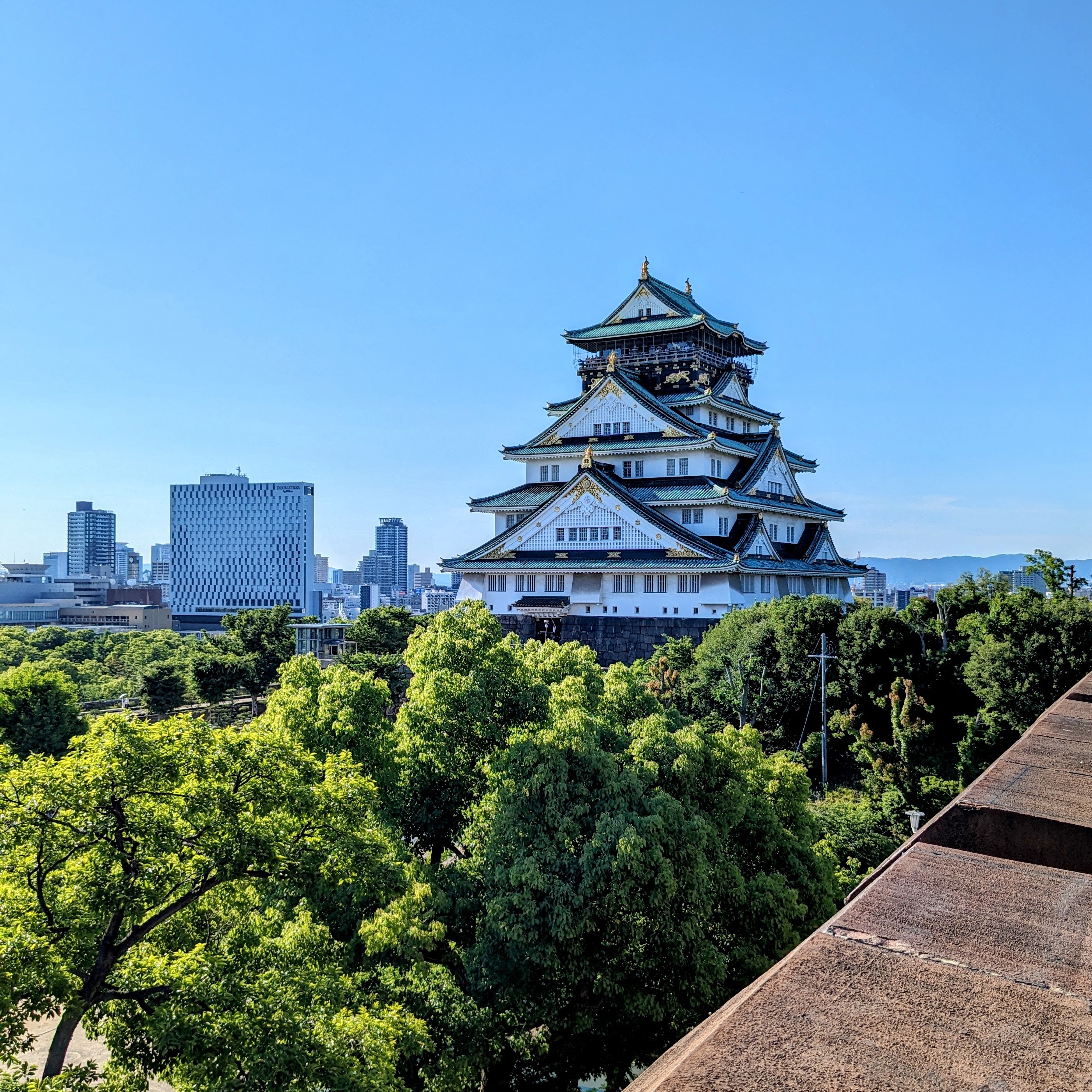
Wander the hallowed, but rather tall, grounds of Osaka Castle
- What the guides say: This structure is a significant historical symbol that played a role in the unification of Japan during the sixteenth century. While the exterior features stone walls and moats of a traditional design, the interior has been converted into a modern museum. From the top floor, one can observe the city, and the surrounding park contains many cherry trees that bloom at a specific time of year.
- What they don’t tell you: A magnificent reconstruction, which is a polite way of saying it is not the original, and thus inherently less authentic and more prone to disappointing those who crave true antiquity. You will climb its many levels, your legs aching with each ascent, only to find a museum of historical facts, a place where knowledge is relentlessly thrust upon you when all you truly desired was a nice, quiet bench to rest upon. The trouble with having an open mind, of course, is that people will insist on coming along and trying to put things in it.
- Go for: A massive dose of samurai history and stunning views from the top observatory.
- Cost: Park grounds are free; Castle Tower museum is 1,200 yen.
- Best Time: Late March to early April for the 3,000+ cherry blossom trees.
- Destruction: The current structure is a 1931 concrete reconstruction; the original was destroyed by fire and war.
- Photography: Shoot from the southwest edge of the moat to get the castle’s reflection in the water.
- Verdict: A beautiful lie. It’s a modern museum wearing a sixteenth-century costume. Your legs will hate the climb; your brain will hate the facts.


Ascend the Umeda Sky Building to the Floating Garden Observatory
- What the guides say: This architectural work consists of two separate towers joined by a bridge on the 39th floor. This Floating Garden provides a 360-degree view of the city and the Yodo River. To reach it, one must ride escalators that appear to be suspended in mid-air, a process that is frequently photographed by visitors.
- What they don’t tell you: The name itself is a deception; nothing truly floats, which is a fact the astute reader knows but is often ignored by hopeful tourists. You will be lifted an unnecessary distance into the sky merely to observe the sprawling, monotonous grid of the city, a view that only serves to emphasize the vast number of people you are failing to avoid. The wind, which is often considerable, will surely try to steal your hat.
- Go for: An open-air 360-degree view of the city from a hole in the sky.
- Cost: 2,000 yen.
- Best Time: 30 minutes before sunset to see the transition from day to night.
- Escalators: The escalators leading to the top are suspended in mid-air and are a highlight in themselves.
- Stars: The rooftop circular walkway glows with stars (UV paint) at night
- Verdict: High-altitude disappointment. You’ll pay ¥2,000 to see a grid of people you were trying to avoid. The escalator is the only part that floats.
Venture into Shinsekai, the “New World”
Website | Map | Tsutenkaku Tower Website and Tickets
- What the guides say: Developed in the early 1910s, this neighborhood possesses an atmosphere that feels remarkably like the past’s version of the future. It was designed to resemble Paris and Coney Island and contains the Tsutenkaku Tower along with many narrow streets. It is a location where one can find neon signs and various eateries that serve food at a very low cost.
- What they don’t tell you: An area whose name is a blatant lie, as it feels suspiciously old and vaguely dilapidated, much like a forgotten carnival tent. Dominated by the questionable presence of the Tsutenkaku Tower, it serves as a stark reminder that some things, like cheap amusements and even cheaper architecture, are perhaps best left in the past. It offers little new and much that is entirely predictable.
- Go for: Retro Shōwa-era vibes and the Tsutenkaku Tower.
- Cost: Free to walk around.
- Tsutenkaku Tower: Visit the observation deck in the tower for 1,200 yen. Purchase your timed-entry tickets online.
- Design: The area was designed in 1912 to look like Paris (north) and New York’s Coney Island (south).
- Best Time: Nighttime, when the neon signs and blowfish lanterns illuminate the streets.
- Kushikatsu: Kushikatsu shops cling to life here solely on the district’s reputation as the birthplace of kushikatsu.
- Verdict: A New World that hasn’t been updated since 1912. It’s gritty, loud, and looks like a carnival that lost its funding. Great for cheap beer.

Seek thrills at Universal Studios Japan
- What the guides say: This is a theme park that receives a very high number of visitors and features areas based on specific films. These include the Wizarding World of Harry Potter and Super Nintendo World. It is an environment where Japanese popular culture and Hollywood productions are combined, often accompanied by organized parades and seasonal activities.
- What they don’t tell you: A large, boisterous theme park designed to separate you from your money and your good disposition. You will stand in long queues, surrounded by overly enthusiastic individuals, only to experience brief, jarring moments of synthetic fun. The entire experience is an exhaustive, manufactured imitation of genuine excitement.
- Go for: Super Nintendo World and The Wizarding World of Harry Potter.
- Cost: Approximately 8,600 – 10,900+ yen (price varies by date).
- App: Download the app to get access to attraction and area timed-entry and standby tickets.
- Super Nintendo World: You usually need a Timed Entry Ticket (via the app) just to enter Super Nintendo World.
- Best Time: Mid-week (Tuesday-Thursday) to avoid the heaviest crowds.
- Photography: In Mario World, hold your phone low to make the life-sized blocks and pipes look even more game-like.
- Verdict: A loud, expensive way to stand in line. Mario World is a fever dream come true, provided you enjoy being jostled by overexcited toddlers.

Sensory Overloads & Existential Woes
These activities are defined by their overwhelming, noisy, or profoundly strange environments, forcing the visitor to confront the chaos and absurdity of human endeavors.
Gaze upon the sheer, regrettable spectacle of the Dotonbori canal
- What the guides say: Dotonbori is a central district famous for its large, motorized advertisements, such as a man running on a blue background and a very large mechanical crab. At night, the area is illuminated by neon lights. It is the primary location for kuidaore, a Japanese term that describes the act of eating until one is physically unable to continue.
- What they don’t tell you: A waterway that reflects the neon signs of an even more garish world above. It is a spectacle, much like a dish prepared by someone who clearly despises your taste, that you will regret having witnessed but will be powerless to unsee. The clamor of the crowds is enough to make a sensitive person wish they had stayed home, perhaps to read a book, preferably one that does not mention canals or large, aggressive advertisements.
- Go for: The heart of Osaka’s nightlife, neon lights, and the Glico Running Man.
- Cost: Free.
- Best Time: After 7:00 PM when the neon is fully lit.
- Photography: Stand on the Ebisubashi Bridge to get the classic shot with the Glico Man sign (Map).
- Celebration: People used to jump into the canal to celebrate sports victories, though it’s highly discouraged (and dirty!).
- Verdict: It is a neon-soaked tourist trap that earns every bit of its hype; just grab your takoyaki and embrace the chaos.


Explore the deep, dark secrets of the Osaka Aquarium Kaiyukan
- What the guides say: This is one of the largest public aquariums currently in existence. The facility is designed around a central tank containing a whale shark, which is the largest species of fish known to science. Visitors move in a spiral direction from the upper levels down to the bottom, observing different types of marine life along the way.
- What they don’t tell you: Here, you will find yourself staring into massive tanks of water, watching fish and other aquatic creatures who seem to be engaged in the tedious business of swimming in circles. The main attraction is a whale shark, which is simply a very large fish, and the general air of dampened lighting and hushed voices only serves to emphasize the futility of staring at things that refuse to interact with you.
- Go for: One of the world’s largest indoor aquariums, featuring a massive Whale Shark.
- Cost: Approximately 2,700 – 3,500 yen, depending on demand.
- Planning Tip: Buy tickets online in advance to skip the massive entry queue.
- Best Time: Late afternoon; after 5:00 PM, the lighting changes to a Night Sea theme.
- Photography Tip: Don’t use flash (it’s banned and hurts the fish); lean your phone/lens directly against the glass to avoid reflections.
- Verdict: The layout is a dizzying spiral of stairs and fish, but seeing a whale shark indoors is a mandatory bucket-list flex.
Visit the Osaka Museum of Housing and Living
- What the guides say: This museum contains a full-scale replica of an Osaka neighborhood as it appeared during the Edo Period. Visitors are permitted to walk through the streets and enter various shops. The museum uses light and sound to simulate the passage of day and night, demonstrating how people lived several centuries ago.
- What they don’t tell you: An entire museum dedicated to the slightly depressing concept of old houses and how people used to live, which is not nearly as exciting as it sounds. You will wander through a highly curated environment, feeling like an unwelcome ghost in a past you were never meant to inhabit. It is more an exercise in historical eavesdropping than entertainment.
- Go for: A life-sized recreation of an Osaka neighborhood during the Edo Period.
- Cost: 600 yen.
- Kimono: They offer Kimono rentals for a small fee so you can walk through the streets in traditional dress.
- Effects: The sky in the museum changes from day to night every few minutes, including sound effects like thunderstorms.
- Best Time: Morning, as Kimono rentals are first-come, first-served.
- Verdict: It’s a bit of a theatrical gimmick, yet walking through a life-sized Edo-period town is the best way to time travel.
Lose a considerable sum of money at a pachinko parlor
- What the guides say: A visit to a pachinko parlor involves a great deal of noise and light. These are rooms filled with machines that resemble vertical pinball games, where a multitude of small metal balls fall constantly. Although it is a very large industry in Japan, it is categorized as entertainment.
- What they don’t tell you: A venue of cacophonous noise, flashing lights, and general desperation, where the objective is to fling tiny metal balls into holes with an almost complete reliance on blind luck. The reward is rarely anything of true value, making the entire, loud process a pointless, financially detrimental venture.
- Go for: A sensory-overload experience of lights, noise, and mechanical gambling.
- Cost: 1,000 yen is enough for a trial round.
- Planning Tip: Bring earplugs; the volume inside is incredibly loud.
- Gambling: Technically, gambling for cash is illegal in Japan, so players trade balls for prizes, which are then traded for cash at a separate window nearby.
- Photography: Most parlors strictly forbid photography of the machines or players. Take photos of the neon exterior instead.
- Verdict: Your ears will never forgive you for the sensory assault, but you haven’t lived until you’ve been baffled by the silver ball.

Wander through Amerikamura (American Village)
- What the guides say: Commonly called Amemura, this area is a center for youth fashion and subculture. It is situated around Triangle Park and is known for shops selling used clothing, various forms of street art, and cafes. While it was originally influenced by American trends from the 1970s, it now features unique items, including exceptionally tall servings of soft-serve ice cream.
- What they don’t tell you: An area attempting to emulate a foreign culture – in this case, one whose own culture is often a puzzling mess of neon signs and contradictory fashion choices. The result is a confusing, slightly off-kilter imitation that leaves one wondering why they didn’t just go to America instead, or perhaps, better yet, why they didn’t simply stay home.
- Go for: Vintage clothing shops, Triangle Park, and Osaka’s youth subculture.
- Cost: Free to window shop.
- Planning Tip: Grab a fried hot dog bun filled with soft serve ice cream while walking around (Map).
- Photography: Look for the small-scale Statue of Liberty on top of one of the buildings.
- Verdict: A bizarre, trendy fever dream of vintage clothes and tall ice cream that proves Japan does Americana better than America.


You have now reviewed the dismal catalog of activities Osaka has to offer. You have learned of the Osaka Castle, where one is reminded of the fragile nature of all things, and the Umeda Sky Building, which merely offers a high vantage point from which to contemplate the labyrinthine complexities of your own personal despair.
Was the food memorable? Perhaps. Was the architecture striking? Doubtless. But these are small, fleeting joys – like a single grain of rice dropped into a bowl of bitter soup. They are insufficient and therefore, entirely unworthy of your misplaced enthusiasm.
You may now close this article and attempt to forget its contents, but unfortunately, the truths revealed here, like a stain from a glass of suspiciously dark liquid, tend to linger. The best thing you can do now is simply to accept that your time in Osaka, like all human endeavors, was simply a temporary and ultimately insufficient distraction.
Further Reading
If one is in search of a less dreadful and more pleasant perspective on Osaka, a number of additional resources exist. These are, of course, presented with the understanding that such information is often a mere sugarcoating on a very bitter pill, and should be consumed with a healthy dose of suspicion.
- Osaka Convention & Tourism Bureau
- Japan National Tourism Organization – Osaka
- “The Essential Guide to Osaka, Japan” from Travel + Leisure
- “A Local’s Guide to Osaka, Japan” from The Blonde Abroad
- “36 Hours in Osaka, Japan” from The New York Times (Paywall)