Dear fellow traveler, if you’re looking for yet another delightful “Top 10 Things to do in Split list,” you have opened the wrong page. For starters, you will notice – if you have any talent for counting at all – that this list does not contain ten items. A list of ten would suggest a sense of completeness and order that simply does not exist in this wretched world. These recommendations are culled from my own harrowing experiences, though I have included a few locations I have not yet visited, solely because I have heard whispers of their greatness and feel a desperate, perhaps foolish, urge to see them for myself before something goes horribly wrong.
I must caution you: while the tone of this guide is somewhat grim, the logistical information contained within is – most distressingly – entirely accurate. I have meticulously recorded prices and logistical advice with a level of accuracy that is frankly exhausting. Every detail was correct at the time this document was published, though in a world as unstable as ours, accurate is a word that should always be whispered with a note of caution. You may use this information to plan your journey with terrifying efficiency, though why you would want to arrive at your destination any sooner is a mystery that I have no desire to solve.
And if you are reading this, it is likely that you have just finished a meal, or perhaps are waiting for an appointment with a dentist, or maybe you simply have a moment of leisure that you wish to fill with something more interesting than staring at a blank wall. In any of these circumstances, I must caution you against proceeding. The city of Split, you see, is not a place for those who seek unadulterated pleasure. If you continue, you will read about the best things to do, a list of activities that will only lead you deeper into a world of bewilderment. These are unavoidable misfortunes for those who are foolish enough to think that a change of scenery can change one’s unchangeable lot in life. It is with a heavy heart and a considerable amount of concern for your well-being that I now proceed with this dreadful account. You have been warned.
If this is your first stop in Croatia, read Exploring Croatia: Beauty and Peril Awaits.
Best Things to See and Do in Split (And Why They Might Disappoint You)
In any given metropolis, there is a list of Best Things to See and Do, an optimistic and misleading phrase that suggests these activities will be entirely delightful and without peril. Such a list, however, is merely a catalog of places where one can witness something curious, or perhaps even perform a curious deed oneself. One should approach this list with caution and a healthy dose of suspicion, as no one can truly promise that what you see and do will be anything but an experience of dreadful consequence.
While I endeavor to furnish you with the costs of regular adult admission for the various locales of interest, you must understand that the proprietors of these places will almost certainly offer lesser prices for children, students, the elderly, and other groups in order to make a simple transaction more complicated. You should also be aware of the FREE SplitCard, which permits free access to a few museums and galleries alongside discounts for yet more sights, activities, shops, and restaurants.
Archaeological Degeneration & Palatial Commerce
These entries focus on the historical core of Diocletian’s Palace, emphasizing its disappointing transformation into a commercialized tourist trap, the futility of its ancient structures, and the absurd juxtaposition of the old and the new.
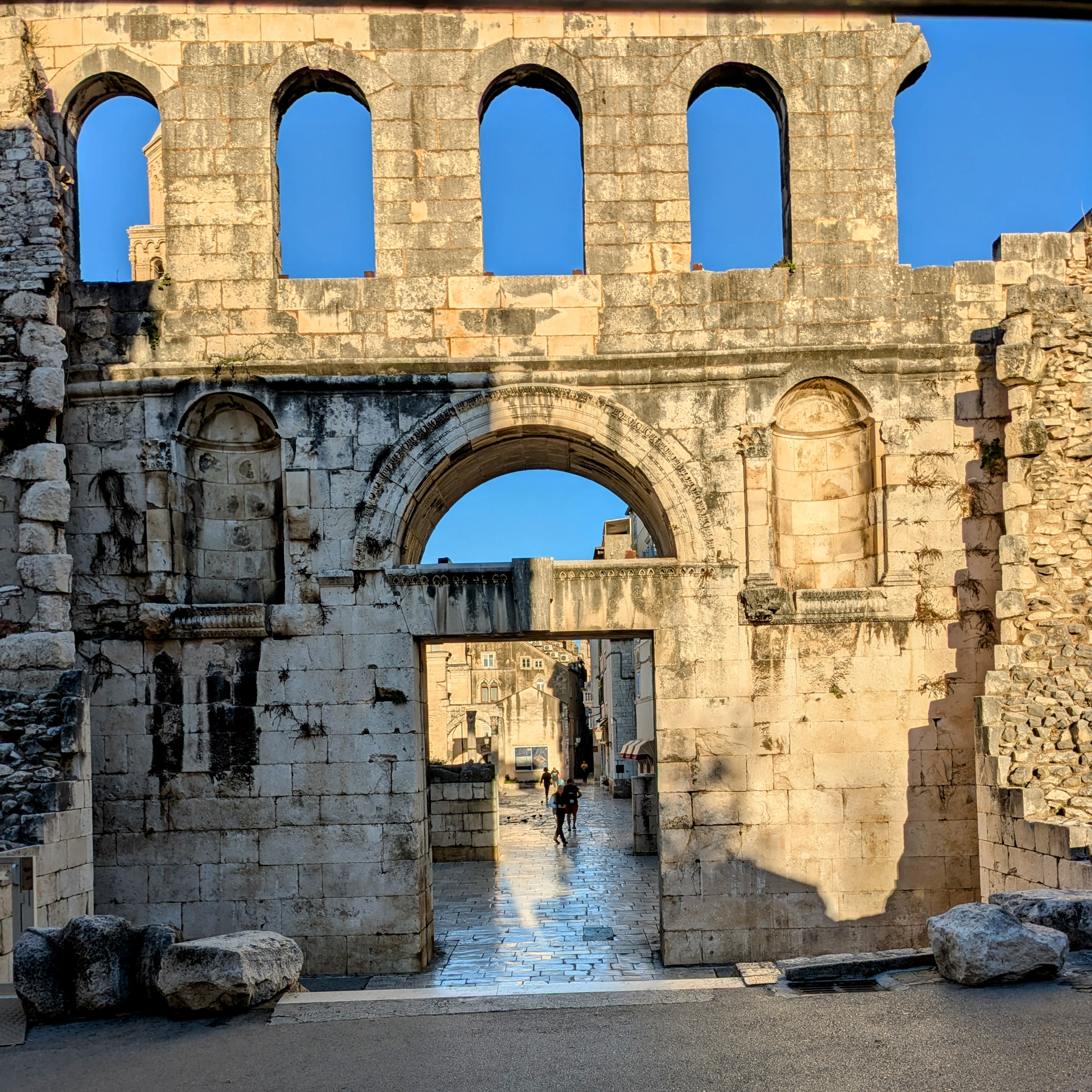
Wander through Diocletian’s Palace
- What the guides say: This is not merely a monument; it is the living heart of the city. Built for a Roman Emperor at the start of the 4th century, its massive walls contain hundreds of homes and shops. It is a living museum, a phrase which here means a place where people hang their laundry on the same stones where emperors once walked.
- What they don’t tell you: It is less a palace and more an entire, crumbling, UNESCO-protected neighborhood where the ancient walls are now souvenir shops and pizza parlours. A truly disappointing transformation, like a promising young inventor becoming a politician.
- Go for: A journey into a living monument; this isn’t just a ruin, but a bustling neighborhood of 3,000 people living within the walls of a Roman Emperor’s 4th-century retirement home.
- Cost: Free to wander the streets; specific sites within have individual fees.
- UNESCO: The palace is a UNESCO World Heritage site and one of the best-preserved monuments of Roman architecture in the world.
- Best Time: Visit at dawn to see the white Brač stone glowing without the crowds, or at night when the narrow limestone alleys echo with the sounds of live music.
- White House: The palace was built using local white stone from the island of Brač – the same stone famously used in the construction of the White House in Washington, D.C.
- Verdict: It is a magnificent, confusing maze where you will inevitably get lost, but since the exit is also a 4th-century gate, it hardly matters.


Descend into the Palace Cellars (Substructures)
- What the guides say: These vast underground substructures are among the best-preserved ancient complexes in existence. Originally used to level the residential floors above, they now serve as a tourist attraction and have served as film sets. Walking through the damp stone halls provides a mirrored sense of the imperial apartments that have long since vanished.
- What they don’t tell you: A network of damp, stony tunnels that once stored Roman sewage, then held tourist stalls selling useless trinkets, and now has no purpose whatsoever. It is a perfectly preserved lesson in how the past eventually becomes a poorly-lit tourist trap.
- Go for: Exploring the eerie, cavernous underground mirror image of the emperor’s residence above, which provides the best layout of how the palace once looked.
- Cost: Approximately €8 for the museum section; the central corridor is free.
- Historical Use: For centuries, these cellars were used as a garbage dump, which ironically preserved them perfectly until they were excavated in the 19th century.
- Game of Thrones: Pop culture fans will recognize these vaulted ceilings as the location where Daenerys Targaryen kept her dragons in Game of Thrones.
- Verdict: A cavernous, damp basement that successfully transitioned from an imperial trash heap to a dragon dungeon and finally a tourist attraction.

Sit on a cushioned step in the Peristyle
- What the guides say: The central square of the palace is an architectural marvel featuring granite columns and Sphinxes imported from Egypt. This was once the ceremonial heart where the Emperor appeared. Today, it is a stage where one can drink espresso on the steps of a cafe, which is a much more relaxing way to spend time in a square.
- What they don’t tell you: Contemplate the irony of drinking an overpriced espresso on the very spot where an emperor once demanded worship. How can a man be an emperor when he is a slave to his pleasures? Do not be surprised if an actor dressed as a Roman legionary solicits you for a photograph.
- Go for: The ceremonial heart of the palace, surrounded by granite columns, where the Emperor once appeared to his subjects as a living deity.
- Cost: Free.
- Evenings: This is the city’s main living room. In the evening, the steps of the Peristyle become the seating for Lvxor Café (Map); grab a cushion, order a glass of Plavac Mali wine, and enjoy live music under the stars.
- Sphinx: Look for the 3,500-year-old black granite sphinx brought from Egypt by Diocletian; it’s one of the few original sphinxes that still has its head intact.
- Verdict: It is the most beautiful place in Split to do absolutely nothing while a man in a fake toga tries to sell you a selfie.
Seek out the Temple of Jupiter
- What the guides say: Originally dedicated to the king of Roman gods, this small temple was later converted into a Christian Baptistery. It features a coffered ceiling and a headless black granite Sphinx. Its small scale and preserved carvings offer a quiet contrast to the louder parts of the palace, as headless statues are famously very quiet.
- What they don’t tell you: You will find only a small, converted baptistry guarded by a headless Egyptian Sphinx, a creature whose current state is a testament to the unfortunate consequences of a change in religious fashion.
- Go for: Viewing one of the best-preserved Roman temples in the world, originally dedicated to the king of the gods and later converted into a Christian baptistery.
- Cost: Approximately €3.
- Architectures: The interior features a stunning coffered barrel vault that influenced Renaissance architects.
- Statue: Look for the modern bronze statue of St. John the Baptist by Ivan Meštrović inside, which creates a striking contrast against the ancient stone.
- Verdict: It is guarded by a headless sphinx that serves as a silent, stony warning against the perils of religious rebranding.
Squeeze through the alarmingly narrow alleyway known by locals as “Pusti me da prođem” (“Let Me Pass Street”)
- What the guides say: Tucked next to the Temple of Jupiter, this is one of the narrowest streets in the world. Its name literally means “Let me pass,” which is a very useful thing to say when two people are trying to squeeze through a space that was clearly designed for one very thin person.
- What they don’t tell you: This will serve as a stark reminder that even in ancient times, personal space was considered an optional luxury.
- Go for: A quick walk through the narrowest street in the city (and arguably the world), located right next to the Temple of Jupiter.
- Cost: Free.
- The Name: The street is so narrow that two people cannot pass each other comfortably – hence the name.
- Photography: It’s a great spot for a quirky photo, but be prepared to wait for your turn.
- Etiquette: If you meet someone in the middle, local etiquette dictates the younger person should step back.
- Verdict: It is a 30-second claustrophobic experience that proves the Romans had no concept of personal bubbles.
Locate the Iron Gate
- What the guides say: Known as the Porta Ferrea, this gate once guarded the western entrance to the palace. It is unique for its Romanesque bell tower and a 24-digit clock. Passing through it connects the Roman era to the medieval expansion at Narodni Trg (People’s Square), marking a transition between two distinct periods of history.
- What they don’t tell you: Observe the strange juxtaposition of a tiny medieval church built directly above a main thoroughfare, perfectly encapsulating Split’s stubborn refusal to separate its history from its daily commute.
- Go for: Observing the layers of history where the Roman gate meets a medieval clock tower and a Renaissance clock face.
- Cost: Free.
- Historical Use: This was the only gate not used for military purposes; it led to the civilian settlements outside the walls.
- Clock: Look up at the clock face – it’s divided into 24 hours rather than 12.
- Verdict: A historical layer cake where a Roman gate, a medieval bell tower, and a 24-hour clock are all squashed together.

Crowded Spectacles & Futile Escapes
This category is defined by the attractions that require great effort or expense for minimal payoff, involve uncomfortable crowds, or offer a temporary “escape” that leads only to renewed disappointment.
Attempt to climb the bell tower of St. Domnius Cathedral
- What the guides say: Originally built as Emperor Diocletian’s mausoleum, this is one of the oldest cathedrals still in use. It is a beautiful irony – a situation where a man who disliked Christians is now buried in a building they use. The bell tower offers panoramic views for those who do not mind steep stairs.
- What they don’t tell you: A shaky, medieval monstrosity that offers sweeping views only after you’ve braved stairs so precarious they qualify as a violation of several international safety codes. You will, of course, have to pay for this mild peril.
- Go for: Climbing the bell tower for the definitive view of Split and visiting the oldest cathedral building in the world (originally Diocletian’s mausoleum).
- Cost: Approximately €5 – €10 (depending on which parts you visit: Tower, Treasury, Crypt, or Baptistery).
- History: There is a delicious historical irony here: the cathedral is dedicated to the patron saint of Split, whom Diocletian – the great persecutor of Christians – actually had executed.
- View: The climb up the bell tower is steep and open-air; it’s not for those with severe vertigo, but the 360-degree view of the harbor is unbeatable.
- Verdict: You will pay to ascend a series of metal stairs that seem to have been designed by a medieval sadist, but once your vertigo subsides, you will be rewarded with a view that makes the architectural irony of a mausoleum-turned-cathedral look quite spectacular.


Stroll along the Riva
- What the guides say: This palm-lined promenade is the city’s social hub. It is the location for đir, the art of walking aimlessly just to see other people and be seen by them. Whether catching a ferry or sipping coffee for several hours, the Riva offers a front-row seat to the Adriatic Sea and the stylish pulse of the local population.
- What they don’t tell you: The palm-lined promenade that guarantees you’ll be utterly overwhelmed by the sheer number of people simultaneously attempting to look relaxed while clutching expensive phones and searching for a better angle for a selfie.
- Go for: The ultimate Mediterranean see and be seen experience; a palm-lined promenade perfect for people-watching and sipping coffee for hours.
- Cost: Free (well, the price of a coffee, about €2.50 – €4.00).
- Coffee: In Split, coffee isn’t a drink; it’s a social ritual called fjaka – the art of doing nothing.
- Tourist Trap: Avoid eating a full dinner at the Riva restaurants, as they are often overpriced. Instead, use the Riva for pre-dinner drinks and sunset views.
- Verdict: It is the most expensive place to sit, but the cheapest place to watch the world go by.

Venture to Marjan Hill, the so-called lungs of the city
- What the guides say: Known as the Holy Hill, this forested park occupies the western tip of the peninsula. It is a Mediterranean paradise of pine trees and hidden hermitages. The hike to the Vidilica viewpoint offers a view of the city that looks remarkably like a postcard, except the people in the view are actually moving.
- What they don’t tell you: Climb a discouraging number of stone steps only to discover that the panoramic view is excellent, but one must immediately climb back down, making the entire exercise utterly pointless.
- Go for: A breath of fresh pine air, hidden medieval hermit caves, and panoramic viewpoints of the Adriatic islands.
- Cost: Free.
- Trails: Known as the Lungs of the City, this park is crisscrossed with hiking and biking trails.
- Route: Walk up the stairs from the Varoš neighborhood to the first viewpoint (Vidilica). If you have the energy, continue to the peak (Telegrin) or hike to the 15th-century St. Jerome church built into the cliffs.
- Verdict: It is the Lungs of the City, and you will certainly be using yours to their full capacity by the time you reach the top.

Brave the pebbly shores of Bačvice Beach
- What the guides say: This is the city’s most famous sandy beach, located near the center. It is the home of picigin, a game played in shallow water where locals perform acrobatic leaps to keep a small ball from getting wet. It is a local sport that requires a great deal of energy and very little dry clothing.
- What they don’t tell you: Where the water is shallow and crowded, and the popular local game of Picigin is played. Attempt to join, but expect to be humiliated by men whose dedication to splashing a tiny ball without letting it touch the water is as intense as a financial merger.
- Go for: A swim in shallow, sandy waters and to witness the locals playing Picigin, a traditional Split ball game.
- Cost: Free.
- Picigin: Picigin involves players leaping into the shallow water to keep a small, peeled tennis ball from hitting the surface. It is played year-round, even on New Year’s Day.
- More Beaches: This is a social beach with plenty of bars. If you want crystal clear deep water, head further south to Firule or take a bus to Kasjuni Beach.
- Verdict: It is the only place on earth where splashing in knee-deep water is considered a high-performance sport.

Take a ferry to a nearby island, such as Hvar or Brač
Hvar Website | Hvar Map | Brač Website | Brač Map
- What the guides say: The harbor is the gateway to the Dalmatian islands. A ferry ride is an essential experience, offering salt air and views of the coastline. Whether heading to the limestone quarries of Brač or the lavender-scented streets of Hvar, the journey by sea is a significant part of the traveling experience.
- What they don’t tell you: You will find that your brief escape from the Split crowds has merely resulted in landing in a different, equally crowded, and arguably more expensive location.
- Go for: A day of island hopping to see the white-stone streets of Pučišća (Brač) or the glamorous yacht-filled harbor of Hvar Town.
- Cost: €5.00 – €20.00 each way (Catamarans are faster/pricier; Ferries are slower/cheaper). Use FerryHopper to find the best option for you.
- Planning Tip: In July and August, book catamaran tickets online days in advance, as they sell out.
- Beach: If you want a beach day, take the ferry to Supetar (Brač) and a bus to Bol to see the Zlatni Rat (Golden Horn) beach.
- History and Nightlife: If you want history and nightlife, take the catamaran directly to Hvar Town.
- Verdict: A salt-sprayed escape that promises tranquility but usually just delivers a different set of crowds on a different set of rocks.

Take a day trip to Klis Fortress
- What the guides say: Perched on a mountain pass, this medieval fortress was a key defense against invasions. Its stone walls appear to grow out of the mountain itself. While fans of a certain television show recognize it as Meereen, its true history as the Key to Dalmatia is even more dramatic than the fictional version.
- What they don’t tell you: A dramatic, wind-swept ruin used as a backdrop for a popular television show involving dragons. The true danger, however, is not a fictional beast, but the precipitous cliffs and the very real possibility of a rogue tourist elbow.
- Go for: Exploring a rugged, sprawling fortress perched on a limestone ridge that has guarded the pass into Split for over 2,000 years.
- Cost: Approximately €12.
- Game of Thrones: This was the City of Meereen in Game of Thrones.
- Views: The views of the valley and the sea from here are arguably better than those from Marjan Hill.
- Getting There: Take the local #22 bus from the National Theatre (Map) for a cheap and easy 20-minute ride to the base of the fortress.
- Verdict: It is a magnificent ruin that proves that, whether you are defending against the Ottomans or filming a TV show, a high cliff is always an excellent asset.

Mirth, Misery, & Cultural Confusion
These entries highlight the unsettling, the commercialized, or the frustratingly incomprehensible aspects of Split’s art, markets, and local culture.
Rub the enormous, polished toe of the Grgur Ninski statue for good luck
- What the guides say: Created by Ivan Meštrović, this bronze statue depicts a 10th-century bishop. Legend suggests that rubbing the statue’s oversized big toe brings good luck. After decades of being touched by hopeful strangers, the toe has been polished to a brilliant, shining gold, which is a very strange fate for a toe.
- What they don’t tell you: This is a superstition so profoundly foolish it must have been invented by a particularly cunning local hoping to distract tourists while he sold them a suspiciously heavy stone.
- Go for: Rubbing the giant bronze big toe of the 10th-century bishop for good luck and a guaranteed return to Split.
- Cost: Free.
- The Artist: The statue was created by Ivan Meštrović, Croatia’s most famous sculptor.
- The Bishop: Grgur Ninski is a hero because he fought for the right to use the Croatian language in religious services instead of Latin.
- The Superstition: The toe is polished to a bright gold shine by the millions of hands that have rubbed it over the years.
- Verdict: A bizarrely specific superstition that has turned a bronze bishop’s toe into a shining gold beacon of false hope; rub it anyway, if only to ensure your return to a city that values giant toes.


Find the Meštrović Gallery
- What the guides say: Set in the former summer villa of Croatia’s greatest sculptor, this gallery is a temple of art. The building is a neoclassical masterpiece with gardens overlooking the sea. It showcases monumental works in bronze and marble, providing a serene experience for those who appreciate the power of carved stone.
- What they don’t tell you: A serene and beautiful museum dedicated to the famous sculptor, which you will likely appreciate for about fifteen minutes before the pressing urge to find a gelato returns, illustrating the triumph of simple pleasure over high art.
- Go for: A stunning art museum housed in the former summer residence of Ivan Meštrović, featuring his monumental sculptures in marble, bronze, and wood.
- Cost: Approximately €12.
- Architecture: The building and its gardens are as much a work of art as the sculptures themselves.
- Kaštelet: Your ticket also includes entry to the Kaštelet, a nearby fortified estate where Meštrović installed a cycle of wooden reliefs depicting the life of Christ.
- Verdict: A high-art sanctuary that offers a brief, sophisticated respite from the sun-drenched hedonism of the Riva; you will feel significantly more cultured for fifteen minutes before the desperate need for a cheap beer returns.
Visit the bizarre and mildly unsettling Froggyland
- What the guides say: This is perhaps the world’s strangest museum, featuring 507 taxidermied frogs arranged in human-like poses. They can be seen playing tennis, attending school, or performing in a circus. It is a bizarre and technically impressive attraction that you must see to believe, although you may still not believe it afterward.
- What they don’t tell you: A museum filled with ninety-year-old taxidermied frogs posed in tiny, anthropomorphic scenes, which proves that some ideas are truly better left unhatched.
- Go for: One of the world’s strangest and most charming museums, featuring 507 stuffed frogs arranged in human-like dioramas.
- Cost: Approximately €13 cash or €15 with a card.
- Creation: Created by taxidermist Ferenc Mere in the early 20th century, the frogs are shown attending school, playing tennis, and performing in a circus.
- Quality: The taxidermy is so skillful that there are no visible external incisions on the frogs. It’s weird, quirky, and surprisingly popular with both kids and adults.
- Photography: Photography is strictly prohibited.
- Verdict: It is a masterclass in weirdness that proves that if you pose enough frogs in a circus, people will eventually call it art.
Shop at the Pazar (Green Market)
- What the guides say: Located outside the Silver Gate, this open-air market is a riot of color. Farmers sell fresh figs, olive oil, and cheeses. It is the best place to observe the theatrical bargaining style of the locals, which is a polite way of saying that the people buying vegetables are often very loud.
- What they don’t tell you: A chaotic open-air bazaar where you’ll be charmed by the colorful local produce until you realize you’ve accidentally bought enough figs to feed a small, hungry army for a month.
- Go for: An explosion of local colors and smells; the best place to buy fresh figs, lavender, local honey, and homemade rakija.
- Cost: Free to browse; items are cheap.
- Location: It’s located just outside the Silver Gate of the Palace.
- Best Time: Go early in the morning (around 7:00 AM – 9:00 AM) to see the market at its most authentic.
- Verdict: It is a vibrant, noisy reminder that the most authentic souvenirs are the ones you can eat or smell.

Shop The Ribarnica (Fish Market)
- What the guides say: Split’s fish market is housed in a Secession-style building. Due to sulfur from nearby springs, there are no flies, which is a rare and excellent quality for a place filled with dead fish. It is a fast-paced environment where the catch of the day is sold quickly to those who arrive early.
- What they don’t tell you: It is less a quaint market and more a damp, odiferous mausoleum of the sea’s unfortunates. There, you shall inhale the tragic scent of sulfur – a noxious, inescapable aroma from the nearby spa – which, with a characteristic lack of courtesy, mingles dreadfully with the smell of the day’s fresh, deceased bounty. A true feast for the nose, if one’s preferred feast is gloom and stale brine.
- Go for: A sensory dive into the Adriatic’s bounty, from sea bass and octopus to sardines and scampi.
- Cost: Free to browse.
- Architecture: The market is housed in a 120-year-old Secession-style building.
- Flies: Notice that there are no flies here! The market was built next to sulfur springs, and the smell of sulfur naturally keeps the insects away.
- Best Time: The action starts early and is usually wrapped up by 1:00 PM.
- Verdict: A damp, sulfurous hall of deceased sea life where the lack of flies is a miracle of geology.


Wander through the Museum of Fine Art
- What the guides say: This gallery offers a look at art in Dalmatia from the 14th century to the present. Housed in a former hospital, its collection includes old masters and contemporary installations. It provides the necessary context to understand the aesthetic evolution of the region, assuming you have the time to look at everything.
- What they don’t tell you: You will enter an old hospital – a fitting locale, as the endless parade of two-dimensional sorrows and perplexing modern sculptures might soon render you in need of medical attention. You will stare at centuries of painted woe, pretending to comprehend the vast, unsolvable mysteries of artistic intent, only to realize that every somber portrait is merely a painted reminder that all things, even great works of art, are ultimately just things.
- Go for: A comprehensive look at Croatian art from the 14th century to the present day, located in the city’s first hospital building.
- Cost: Approximately €5.
- Collection: The collection includes works by Old Masters as well as contemporary Croatian icons.
- Verdict: It is a quiet, contemplative space where you can stare at old masters and wonder why everyone in the 14th century looked so miserable.


Listen to the Klapa singers perform their traditional a cappella music within the Vestibul
- What the guides say: The Vestibul was once the foyer to the Emperor’s private quarters. Today, its acoustics attract traditional Klapa groups who sing a cappella harmonies. Hearing these resonant voices echoing off 1,700-year-old brickwork is a highlight, as the building acts like a giant, ancient amplifier.
- What they don’t tell you: Their solemn, beautiful harmonies echo off the ancient stone, only for a tourist’s camera flash to inevitably ruin the moment.
- Go for: Goosebump-inducing a cappella harmonies that utilize the incredible acoustics of the palace’s circular entry foyer.
- Cost: Free to listen (though buying their CD or leaving a tip is appreciated).
- UNESCO: Klapa is a UNESCO-protected traditional singing style from Dalmatia. The Vestibul was originally the domed vestibule to the Emperor’s private apartments.
- Best Time: The singers usually perform during the morning and early afternoon. Stand directly in the center of the circular room to hear the sound vibrate through the stone.
- Verdict: A moment of genuine, goosebump-inducing harmony that turns a hole in a stone ceiling into a celestial amplifier.


Attempt to decipher the local dialect, Chakavian:
- What the guides say: The people of Split speak a version of the Chakavian dialect, which includes slang like fjaka – a state of mind where one aspires to do absolutely nothing. Learning the difference between local terms is a linguistic challenge that reveals the city’s complex history with Venetian and Slavic cultures.
- What they don’t tell you: A peculiar vernacular which, even if you speak standard Croatian, will likely render all conversations with locals utterly unintelligible, leaving you feeling profoundly alone in a sea of ancient architecture and incomprehensible sounds.
- Go for: Hearing the melody of Split; the local speech is a blend of Slavic roots with heavy Italian/Venetian influence.
- Cost: Free.
- Vocabulary: Learn a few words: Pomalo (take it easy), Đir (a stroll), and Adio (goodbye). Using these will instantly earn you a smile from a local.
- Lost in Translation: The dialect is so specific that even people from Zagreb sometimes struggle to understand a fast-talking Splićanin.
- Verdict: You won’t understand a word, but if you say pomalo (take it easy) and nod, you’ll fit right in.
Search for the Old Jewish Cemetery on Marjan Hill
- What the guides say: Located on Marjan Hill, this cemetery dates back to 1573. The horizontal gravestones are weathered by centuries and shaded by cypress trees. It is a peaceful, somber site that tells the story of the city’s Jewish community, offering a quiet moment of reflection with a view of the Adriatic.
- What they don’t tell you: A genuinely melancholy and forgotten site whose overgrown beauty is only a temporary respite from the clamor before you must return to the confusing, sun-drenched city below.
- Go for: A quiet, poignant walk through one of the oldest Jewish cemeteries in Europe, located on the eastern slopes of Marjan Hill.
- Cost: Free.
- Tombstones: Established in 1573, the cemetery features unique, horizontal Sephardic-style tombstones.
- Views: The cemetery is adjacent to a small café with a terrace that offers one of the most serene views of the city’s harbor. It’s a place of immense historical weight and beauty.
- Verdict: It is the most peaceful place in Split to contemplate the passage of time.
Now that this dreadful catalog of misfortunes has drawn to a close, and you have been provided with a list of activities that will surely lead to some form of disappointment, you may be left with a sense of profound regret. This is an entirely appropriate response. But perhaps you are not a person who heeds warnings. Perhaps you will go to Split, despite my best efforts to dissuade you, and you will find some brief, fleeting moment of joy amidst the ancient ruins. You might sit in a bustling square, sipping a coffee, and for a moment, you might forget the great and terrible sorrows of the world. But I assure you, this feeling is as fleeting as a summer cloud. May your vacation be less of a catastrophe than I have good reason to believe it will be.
Further Reading
If one is in search of a less dreadful and more pleasant perspective on Split, a number of additional resources exist. These are, of course, presented with the understanding that such information is often a mere sugarcoating on a very bitter pill, and should be consumed with a healthy dose of suspicion.
- Visit Split
- Visit Dalmatia
- “Split, Croatia: A Travel Guide” from Frank About Croatia
- “A local’s guide to Split, Croatia” from The Guardian (paywall)
- “36 Hours in Split, Croatia: Things to Do and See” from the New York Times (paywall)