Dear fellow traveler, if you’re looking for yet another delightful “Top 10 Things to do in Jasper list,” you have opened the wrong page. For starters, you will notice – if you have any talent for counting at all – that this list does not contain ten items. A list of ten would suggest a sense of completeness and order that simply does not exist in this wretched world. These recommendations are culled from my own harrowing experiences, though I have included a few locations I have not yet visited, solely because I have heard whispers of their greatness and feel a desperate, perhaps foolish, urge to see them for myself before something goes horribly wrong.
I must caution you: while the tone of this guide is somewhat grim, the logistical information contained within is – most distressingly – entirely accurate. I have meticulously recorded prices and logistical advice with a level of accuracy that is frankly exhausting. Every detail was correct at the time this document was published, though in a world as unstable as ours, accurate is a word that should always be whispered with a note of caution. You may use this information to plan your journey with terrifying efficiency, though why you would want to arrive at your destination any sooner is a mystery that I have no desire to solve.
Before continuing to read about the best things to do in Jasper National Park, I must implore you to close this page at once and instead take up a less distressing hobby, such as attempting to teach a beaver to read or trying to convince a large rock to move of its own accord. The place you are about to discover, nestled in the vast and indifferent Canadian Rockies, is not, as some would claim, a breathtaking spectacle of nature’s majesty. It is, in fact, a desolate and remote outpost where the things you can do, or, more accurately, the things that will happen to you, are a catalog of perilous and disheartening events. The things you are about to read about are not leisurely activities. They are merely a collection of ordeals for those who are foolish enough to believe that a beautiful landscape can distract from the sheer awfulness of reality. It is with a distinct lack of enthusiasm that I now proceed with this grim account.
If this is your first stop in Canada, read Traveling Canada: The Unfiltered Truth.
Best Things to See and Do in Jasper (And Why They Might Disappoint You)
In any given metropolis, there is a list of Best Things to See and Do, an optimistic and misleading phrase that suggests these activities will be entirely delightful and without peril. Such a list, however, is merely a catalog of places where one can witness something curious, or perhaps even perform a curious deed oneself. One should approach this list with caution and a healthy dose of suspicion, as no one can truly promise that what you see and do will be anything but an experience of dreadful consequence.
While I endeavor to furnish you with the costs of regular adult admission for the various locales of interest, you must understand that the proprietors of these places will almost certainly offer lesser prices for children, students, the elderly, and other groups in order to make a simple transaction more complicated. You should also be aware of the Pursuit Pass, an expensive pass, which grants access to 6 even more expensive attractions in Banff, Jasper, and Golden, alongside discounts for yet more sights.
In addition, you should note that most of the activities mentioned below are free, but one must first obtain a National Park Pass. The daily admission rate is approximately $12.25 per person, $24.50 for a family or group, or $83.50 for an annual Parks Canada Discovery Pass. But the Government of Canada is offering the Canada Strong Pass, which includes free admission to this and other places operated by Parks Canada from June 19 to September 7, 2026.
Precarious Heights and Perilous Paths
A collection of activities for those who wish to be significantly higher or more exhausted than any sensible person should ever be.
Ascend the Jasper SkyTram
- What the guides say: One may utilize a tramway to reach Whistlers Mountain, arriving at an elevation of 2,263 meters above the level of the sea. From this vantage point, the Canadian Rockies are visible in a panoramic fashion, and on days without cloud cover, one can see as far as Mount Robson in British Columbia. The air at this altitude is thin and the terrain consists of alpine tundra; it is a cold, treeless place where only small plants grow.
- What they don’t tell you: A person of sensibility knows that a sudden and unnatural elevation is often a prelude to a dreadful fall. This curious contraption will whisk you high above the valley floor, offering a view so breathtakingly vast it might make you feel insignificantly small – a sensation I have had on more than one occasion.
- Go for: A swift, mechanical ascent to the alpine tundra for views that make the human ego feel appropriately microscopic.
- Cost: Approximately $80 CAD.
- Dress Code: The temperature at the summit is often 10°C colder than the townsite; bring layers unless you wish to become a permanent ice fixture.
- Best Time: Early morning to avoid the mid-day crowds.
- Mount Robson: You’ll be standing at 2,263 meters, which is high enough to see the peak of Mount Robson on a rare, clear day.
- Verdict: You will feel significantly small and anticipate a dreadful fall, but you should go anyway.

Hike the Bald Hills Trail
- What the guides say: This particular path involves a steady upward incline that leads to a 360-degree view of Maligne Lake and the various peaks surrounding it. As one moves beyond the tree line into open meadows, the wind generally increases in speed. These bald ridges are a result of glacial erosion and mountain weather, which have removed the trees and left the high-altitude landscape exposed.
- What they don’t tell you: A hike with a name like Bald Hills promises a landscape bereft of the usual pleasantries of trees and shade. One must climb to a place where the wind is always biting and the sun is always glaring, with nothing to protect you from either.
- Go for: A grueling upward climb to a treeless ridge offering 360-degree views of Maligne Lake’s turquoise waters.
- Cost: Free.
- Planning Tip: There is zero shade once you break the treeline; prepare to be bitten by the wind and glared at by the sun.
- Fire Road: The trail follows an old fire lookout road, meaning the incline is steady, relentless, and entirely unforgiving.
- Verdict: Your legs will object to the biting wind and lack of shade, but you must climb anyway.
Contemplate the disappearing trail at the Valley of Five Lakes
- What the guides say: A person may walk past a series of five lakes, each possessing a distinct shade of blue or green. These water levels are fed by underground springs and are known to fluctuate, which is why they are described as disappearing. The surface of the water often reflects the Douglas fir trees, providing a clear visual representation of the surrounding forest.
- What they don’t tell you: This trail promises a journey past five beautiful lakes, but the real adventure is the way the path seems to change with each season, sometimes clear and easy, and sometimes a murky bog that threatens to swallow your shoes, and perhaps your entire disposition.
- Go for: A circuit of five distinct, vibrantly colored lakes that range from jade green to deep sapphire.
- Cost: Free.
- Photography: Lake 3 and Lake 5 are often considered the most photogenic; look for the famous red chairs for a classic Canadian shot (Map).
- Dress Code: Wear waterproof boots. The disappearing nature of the water means the path often transforms into a shoe-swallowing bog.
- Best Time: Early morning, before 9:00 AM, to see the water at its most reflective and still.
- Verdict: The path might swallow your shoes and your disposition, but you should walk it anyway.
Dreadful Depths and Sinister Waters
Jasper is home to various bodies of water, most of which are busy hiding secrets, disappearing entirely, or plotting your damp demise.
Navigate the haunting depths of Maligne Canyon
- What the guides say: This is a limestone slot canyon that reaches depths of up to 50 meters. In the summer months, water moves through the passage with significant force, while in the winter, this water turns into solid ice. The walls are composed of damp limestone and moss, and the sound of the water creates an auditory experience that is quite loud within the narrow confines of the rock.
- What they don’t tell you: The word maligne itself should serve as a sufficiently dour warning. This limestone chasm is a place of perpetual shadow and disquieting echoes. You will see bridges suspended over great drops, and if you are very, very unlucky, you might hear the mournful gurgle of the rushing water, a sound not unlike a secret being told to no one in particular.
- Go for: A walk across six bridges spanning a deep, limestone slot canyon filled with waterfalls and disquieting echoes.
- Cost: Free.
- Best Time: Winter offers the opportunity for a canyon ice walk, where you can walk on the frozen floor; summer offers the roar of dour warnings.
- Photography: Use a long exposure on Bridge 2 or 3 to capture the motion of the water against the dark, damp limestone walls.
- Solitude: The walk to the first three bridges is easy; continuing to the sixth bridge requires more stamina and a tolerance for solitude.
- Verdict: The echoes are disquieting and the drops are great, but you should look down anyway.

Search for the vanished waters of Medicine Lake
- What the guides say: This location is what scientists call a geological anomaly. Each autumn, the lake performs a disappearing act by exiting through a system of sinkholes, leaving a mudflat in its wake. Surrounded by the remnants of past wildfires, the site illustrates the invisible hydrological forces that govern the mountain’s schedule.
- What they don’t tell you: This peculiar body of water is known to vanish entirely in the fall, a phenomenon that has baffled many a rational mind and delighted those of us who appreciate a good mystery. It is as if the lake itself has decided it has had enough of the world and simply ceased to exist, only to reappear when it feels like it.
- Go for: A geological mystery where a massive lake drains through a sieve-like bottom, leaving a landscape of mud and vanished dreams.
- Cost: Free.
- Underground River: It’s home to one of the largest underground river systems in North America, which is why the water simply ceases to exist in autumn.
- Best Time: October, if you wish to see the lake in its most skeletal, drained, and baffled state.
- Photography: The burnt trees from past wildfires create a stark, haunting foreground against the receding waterline.
- Verdict: The lake has decided to cease existing, but you should show up to witness its absence anyway.
Journey to Spirit Island
Website | Map | Cruise Tickets
- What the guides say: This peninsula is accessible only by watercraft on Maligne Lake, a fact that makes it quite difficult to reach on foot. It is framed by a box canyon of jagged peaks and is documented by cameras more frequently than almost any other location on the planet, which is a very large place indeed.
- What they don’t tell you: The very name suggests a destination both spectral and remote. To reach this isolated islet on Maligne Lake, you must board a boat, putting your fate in the hands of others, a risk I would not recommend to anyone with a modicum of good sense. The island, while picturesque, has a certain solemn air, as if it is waiting for something – or someone – to return.
- Go for: One of the most photographed spots in the Rockies, accessible only by a boat trip into a jagged box canyon.
- Cost: Boat tours are approximately $75 – $100 CAD.
- Photography: Most tours only give you 15 – 20 minutes on the island; have your camera settings ready before the boat docks.
- Spiritual Site: The island is a spiritual site for the Stoney Nakoda First Nation; respect the boundaries and do not walk on the island itself.
- Planning Tip: Book your cruise in advance, as they sell out weeks ahead of time during the summer.
- Verdict: Putting your fate in the hands of a boat captain is risky, but you should go anyway.
Admire Athabasca Falls
- What the guides say: The water here moves through a narrow quartz-monzonite gorge with a high degree of kinetic energy. While the visual spectacle is noted in many pamphlets, the primary takeaway is the acoustic output: a constant, low-frequency roar. This sound is a result of water molecules colliding at high velocity, a process that continues regardless of whether anyone is there to listen to it.
- What they don’t tell you: While most people are impressed by the sheer force of the water as it thunders through a narrow gorge, I prefer to focus on the sound. It is a sound of great power and endless motion, a constant, low roar that reminds you of the futility of trying to stop the inevitable.
- Go for: The sheer acoustic output of water thundering through a narrow gorge.
- Cost: Free.
- Safety: There are several safe platforms; stay behind the railings, as the mist makes the rocks treacherously slippery.
- Kinetic Energy: The falls aren’t famous for their height (23m), but for the kinetic energy and volume of water forced through the narrow gap.
- Best Time: Early morning to hear the inevitable roar without the chatter of a hundred other tourists.
- Verdict: The low roar will remind you of the futility of life, but you should listen anyway.


Visit Pyramid Lake
- What the guides say: Located at the base of Pyramid Mountain – a landform composed of Precambrian sedimentary rock – this body of water is frequently still. When the wind speed reaches zero, the lake surface acts as a literal mirror, creating an inverted optical reflection. This is not magic; it is physics, though it can be quite disorienting to those who prefer their mountains to stay right-side up.
- What they don’t tell you: This lake, at the foot of the ominously named Pyramid Mountain, is a place of reflective stillness. When the wind is calm, the mountain is reflected perfectly in the water, an inverted image that can be profoundly disorienting to a sensitive soul.
- Go for: A perfectly symmetrical reflection of Pyramid Mountain in a still, Precambrian mirror.
- Cost: Free.
- The Island: Walk across the wooden bridge to Pyramid Island for a 360-degree view of the inverted landscape (Map).
- Best Time: Dawn. This is when the wind is most likely to be at zero, ensuring a perfect physics-defying reflection.
- Photography: Frame the mountain through the trees on the island to add depth to your disorienting reflection shot.
- Verdict: The inverted image is profoundly disorienting to the soul, but you should look anyway.
Take a Rafting Tour
- What the guides say: This activity involves placing oneself in a buoyant rubber vessel on the Athabasca River, typically under the direction of a licensed guide. The river features Class II rapids, which are defined by straightforward, wide channels and medium-sized waves. It is an exercise in fluid dynamics and the temporary relinquishing of one’s steering capabilities to a person who likely wears more neoprene than you do.
- What they don’t tell you: The thought of willingly submitting oneself to a boat on a rushing river, steered by a stranger, is enough to make a person of fine constitution faint. One might find a certain morbid thrill in the prospect of navigating Class II rapids on the Athabasca River.
- Go for: A lesson in fluid dynamics while bouncing through Class II rapids in a buoyant rubber vessel.
- Cost: Approximately $110 CAD.
- Try: Rafting on Athabasca River Mile 5 in Jasper.
- Dress Code: You will get splashed. Wear the provided neoprene and accept that your steering capabilities are gone.
- History: The Athabasca River is a designated Canadian Heritage River, used for centuries by fur traders and Indigenous peoples.
- Best Time: July and August offer the best balance of water levels and not-quite-freezing air temperatures.
- Verdict: Submitting your agency to a stranger in neoprene is senseless, but you should float anyway.
Soak in the Miette Hot Springs
- What the guides say: These springs contain water that has been heated by geothermal gradients deep within the earth’s crust before rising to the surface. It is, quite literally, very old bathwater.
- What they don’t tell you: The idea of immersing oneself in warm water that has been heated by the very depths of the earth might seem appealing to a person of less refined tastes. However, I am of the opinion that the earth’s natural warmth often has a more sinister source, and what feels like relaxation may simply be a prelude to a more volcanic calamity. One must remember that this heat is a byproduct of the planet’s internal thermal energy – the same energy responsible for tectonic shifts and volcanic activity.
- Go for: Immersing yourself in the hottest mineral springs in the Rockies, cooled to a manageable temperature for your bathwater needs.
- Cost: Approximately $19.75 CAD.
- Seasonal: The Miette Hot Springs operate seasonally. Check operating hours, maintenance, and unexpected closure updates before going.
- Getting There: The road to the springs is steep and winding; watch for bighorn sheep and bears who also enjoy the geothermal gradients.
- The Temperature: The water comes out of the earth at 54°C and must be cooled to 40°C before you can safely enter.
- Best Time: A rainy or snowy day; the contrast between the cold air and the tectonic warmth is a volcanic delight.
- Verdict: The warmth has a sinister geothermal source, but you should soak anyway.

Frozen Relics and Unforgiving Landscapes
These destinations highlight the fact that the world is very old, very cold, and slowly melting away.
Walk upon the Columbia Icefield
Website | Map | Tour Tickets
- What the guides say: To stand here is to occupy space on a hydrological accumulation of snow and ice. The Athabasca Glacier is a retreating mass that produces audible groans and shifts. These sounds are the result of internal deformation and basal sliding, providing a sonorous record of a large ice mass slowly diminishing in volume.
- What they don’t tell you: To stand on a glacier is to confront the relentless and uncaring passage of time. The Athabasca Glacier, a small part of this vast and retreating icefield, groans and shifts with a subtle yet deeply unsettling sound. It is a stark reminder that even the most solid things in the world are, in fact, disappearing.
- Go for: Standing on a retreating mass of ancient ice and listening to the internal groans of a dying glacier.
- Cost: Free to walk; tours (including the Ice Explorer) are approximately $100 – $340 CAD.
- Dress Code: Even if it’s hot in Jasper, the glacier creates its own microclimate; bring a winter jacket and sturdy shoes.
- Photography: Use a person in the frame to capture the staggering scale of the ice mass.
- Age Matters: The ice you are standing on can be several hundred years old.
- Verdict: The groaning ice is a reminder that everything is disappearing, but you should stand on it anyway.


Drive the Icefields Parkway
- What the guides say: This is a 232-kilometer stretch of paved Highway 93. It is a logistical route through a landscape primarily consisting of rock, ice, and coniferous trees. While the aesthetic quality is high, the functional reality is a long transit through an area with limited cellular reception and highly variable weather patterns, requiring significant navigational focus.
- What they don’t tell you: This scenic road is a long, winding stretch of asphalt that winds its way through an unforgiving landscape of rock and ice. While many people find it beautiful, I find it a long and lonely road, a place where one is entirely at the mercy of the elements and one’s own poor navigational skills.
- Go for: A 232-kilometer transit through a high-altitude landscape of rock, ice, and limited cellular reception.
- Cost: Free (included in your National Park entry).
- Planning Tip: Fill your gas tank in Jasper; there is only one fuel station (at Saskatchewan River Crossing) and it is notoriously expensive (Map).
- Best Time: Start at sunrise to maximize your chances of seeing bears or elk along the lonely asphalt.
- Photography: Stop at Bow Summit (Map) or Peyto Lake (Map) for the most iconic, unforgiving landscape views along the route.
- Verdict: You are at the mercy of the elements and your own poor navigation, but you should drive it anyway.

Consider the history of Project Habakkuk at Patricia Lake
- What the guides say: During World War II, a plan was devised to construct an aircraft carrier out of pykrete – a mixture of ice and wood pulp. A prototype was built here, and its subsequent failure and sinking serve as a historical data point: ice, even when reinforced, is a difficult material for mid-century naval architecture.
- What they don’t tell you: Here, one can find the remnants of a World War II project to build an aircraft carrier out of ice. The failure of this ambitious and foolhardy plan is a good lesson for us all: sometimes, the most well-intentioned schemes are doomed to a cold and watery grave.
- Go for: A quiet lake with a bizarre military secret involving a sunken prototype made of pykrete.
- Cost: Free.
- The End: The aircraft carrier was made of 14% wood pulp and 86% ice; it took three hot summers to finally melt and sink.
- Photography: The lake is crystal clear; on a calm day, you can see deep into the cold and watery grave of historical ambition.
- Don’t Miss: There is a memorial plaque on the shore that explains the foolhardy plan in detail.
- Verdict: The project was a watery failure of mid-century architecture, but you should visit the site anyway.
Curious Customs and Local Absurdities
When not fleeing from nature, one might observe the strange habits and peculiar artifacts of the people who choose to live here.
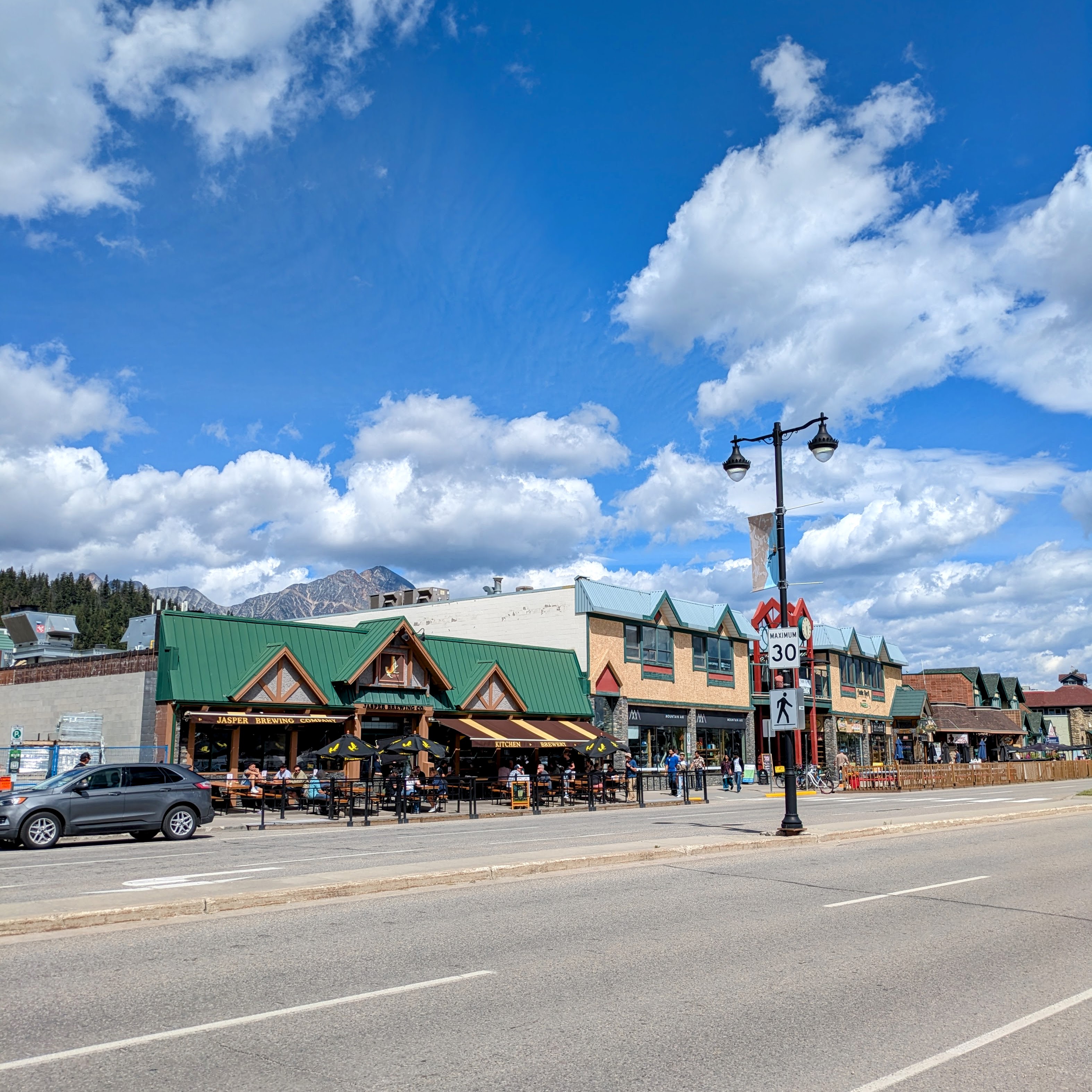
Explore the Town of Jasper
- What the guides say: The municipality of Jasper features a downtown area with various commercial establishments and statues of a bear. While the atmosphere is curated to be pleasant and is generally agreeable on the surface, it is a town populated by humans, all of whom have complex personal histories and have likely experienced at least one very cold winter.
- What they don’t tell you: The small downtown area, with its rustic buildings and curious statues of a bear, seems a pleasant enough place, but one must remember that pleasantries often mask a great deal of sorrow. I think that the more you’re involved in something, the more you see the flaws, and this town has many charming, heartbreaking cracks. Behind every smiling shopkeeper and quaint café, there is a story of a long winter, a lost hiker, or an unfulfilled ambition.
- Go for: A pleasant surface of rustic buildings, quaint cafés, and statues of a bear named Jasper.
- Cost: Free to wander.
- Where to Go: Most of the town’s charm is centered on Patricia Street (Map) and Connaught Drive (Map).
- Small Town: Unlike Banff, Jasper has a strict cap on development to maintain its agreeable small-town feel.
- Photography: Photograph the historic Jasper Park Information Centre (built in 1913) for a quintessential mountain town look (Map).
- Verdict: Pleasantries often mask sorrow and long winters, but you should wander the streets anyway.

Indulge in a local food tour
- What the guides say: This involves moving from one establishment to another to consume prepared nutrients. A food tour provides an opportunity to observe local culinary techniques and social interactions. It allows for the systematic ingestion of regional calories while watching other people discuss the seasoning of their appetizers.
- What they don’t tell you: While some people find comfort in food, I find it to be a source of constant disappointment. However, a food tour might offer a glimpse into the local customs and culinary habits, allowing one to observe the peculiar behavior of others while feigning interest in their deviled eggs.
- Go for: The systematic ingestion of regional calories while observing the peculiar behavior of other hungry humans.
- Cost: Approximately $160 CAD.
- Try: Half-Day Jasper Culture Food Tour
- Planning Tip: Come hungry; these tours usually involve four stops with a significant amount of prepared nutrients.
- Don’t Miss: Sampling local game meats or wild-berry-infused desserts that reflect the regional culinary techniques.
- Verdict: Food is a source of constant disappointment, but you should take the tour anyway.
Ponder the Two Brothers Totem Pole
- What the guides say: This is a vertical wooden structure carved with specific iconography. It depicts a narrative regarding two siblings and their travels. It serves as a permanent physical reminder of familial relationships.
- What they don’t tell you: This imposing wooden structure tells a story of two brothers who made a long and arduous journey. It is a cautionary tale, if you ask me, of the lengths people will go to in the name of a sibling, a bond that is often far more complicated than anyone wishes to admit.
- Go for: A vertical lesson in complicated familial relationships carved into a permanent piece of cedar.
- Cost: Free.
- The Artist: The pole was carved by Haida artist Gwaii Edenshaw and his brother, reflecting the very theme of the monument.
- Location: It is located near the Jasper train station; take a moment to read the interpretive signs about the arduous journey it depicts.
- Photography: Shoot from a low angle to capture the full 13-meter height against the mountain backdrop.
- Verdict: Sibling bonds are more complicated than cedar, but you should ponder the carvings anyway.

Search for the Jasper the Bear statues
- What the guides say: The town maintains a consistent theme involving a fictional ursine mascot named Jasper. You will find his likeness in various locations. This is an example of branding, a process where a community adopts a singular image to promote tourism, regardless of how many actual, non-statue bears are currently in the vicinity.
- What they don’t tell you: This town has a peculiar obsession with a fictional bear. One can find statues and images of this mascot in various places. It is a constant reminder that even in the face of great natural grandeur, people will always find a way to create a mascot and a souvenir shop, a tragic but unavoidable truth.
- Go for: A scavenger hunt for a fictional bear that serves as a tragic but unavoidable symbol of branding.
- Cost: Free.
- Origin Story: Jasper the Bear was created in 1948 as a comic strip character before becoming the town’s mascot.
- Photography: Lean against the bear for the classic “I am a tourist” photo that proves the success of the branding.
- Verdict: People will always find a way to create a mascot, but you should find the bear anyway.

Unsettling Encounters and Celestial Dread
Activities involving things that watch you from the shadows, or from the terrifying reaches of deep space.
Attend a dark sky preserve event
- What the guides say: Jasper is a designated Dark Sky Preserve, meaning light pollution is strictly limited. This allows for the clear observation of stars, which are massive, luminous spheres of plasma. Viewed from here, the sheer number of visible celestial bodies provides a factual demonstration of one’s own astronomical insignificance.
- What they don’t tell you: When night falls upon Jasper, the skies become unnervingly clear. The stars, which in most places are but a few pinpricks of light, here appear in a dazzling and overwhelming display, as if the universe is watching you with a thousand cold eyes. It is a spectacle that can make one feel both profoundly insignificant and terribly exposed.
- Go for: Staring into the cold, thousand eyes of the universe in one of the world’s largest dark sky preserves.
- Cost: Many park programs are free; the Jasper Planetarium has fees (approximately $40 – $125 CAD).
- October: If visiting in October, the Jasper Dark Sky Festival features speakers and massive telescopes for celestial dread (Website).
- Jasper Planetarium: To view the Jasper Planetarium’s dark sky events is to glimpse a universe as vast as it is deeply tragic (Map | Website).
- Best Time: A new moon night offers the most dazzling and overwhelming display of stars.
- Milky Way: Jasper is so dark that you can often see the Milky Way with the naked eye from the town center.
- Verdict: The universe is watching you with a thousand cold eyes, but you should look back anyway.
Seek out the peculiar wildlife
- What the guides say: The local ecosystem includes Cervus canadensis (elk), Ovis canadensis (bighorn sheep), and members of the Ursidae family (bears).
- What they don’t tell you: Jasper is a place where one might encounter creatures with antlers, great horned sheep, and even bears. While some find this exciting, I find it a tiresome reminder that the wilderness is full of unpredictable beasts with no regard for one’s personal safety or the cost of dry cleaning.
- Go for: Observing unpredictable beasts with antlers and zero regard for your clean clothes or personal boundaries.
- Cost: Free.
- Try: Jasper Evening Wildlife Tour or Winter Wildlife Discovery Tour
- Safety Tip: Always stay at least 30 meters away from elk and 100 meters away from bears; they do not respect human boundaries.
- Best Time: Dawn and dusk are the most common times for unsettling encounters with elk and sheep along the roadsides.
- Habituation: The elk in Jasper townsite are so habituated to humans that they often treat the town park as their personal lounge.
- Verdict: The wilderness is full of unpredictable beasts with no regard for you, but you should watch them anyway.


Now that this dreadful list of things to do in Jasper has come to a close, you may find yourself with a growing sense of foreboding. This is a perfectly understandable reaction. But perhaps you are not a person who is easily swayed by the grim and unyielding truths of the natural world. Perhaps you will go to Jasper, despite my solemn warnings, and you will find some small, fleeting moment of enjoyment amidst the rugged scenery. You might stand on the edge of a canyon, its depths a stark reminder of the void, and for a moment, you might forget the great and terrible sorrows that await you. But I assure you, this feeling is as temporary as the last breath of a dying fire. And so, I leave you to navigate your own miserable path. May your journey be filled with fewer catastrophes than I have come to expect from such things.
Further Reading
If one is in search of a less dreadful and more pleasant perspective on Jasper, a number of additional resources exist. These are, of course, presented with the understanding that such information is often a mere sugarcoating on a very bitter pill, and should be consumed with a healthy dose of suspicion.
- Tourism Jasper
- Parks Canada – Jasper National Park
- “An Outlandish Guide to Jasper National Park” from Travel Outlandish