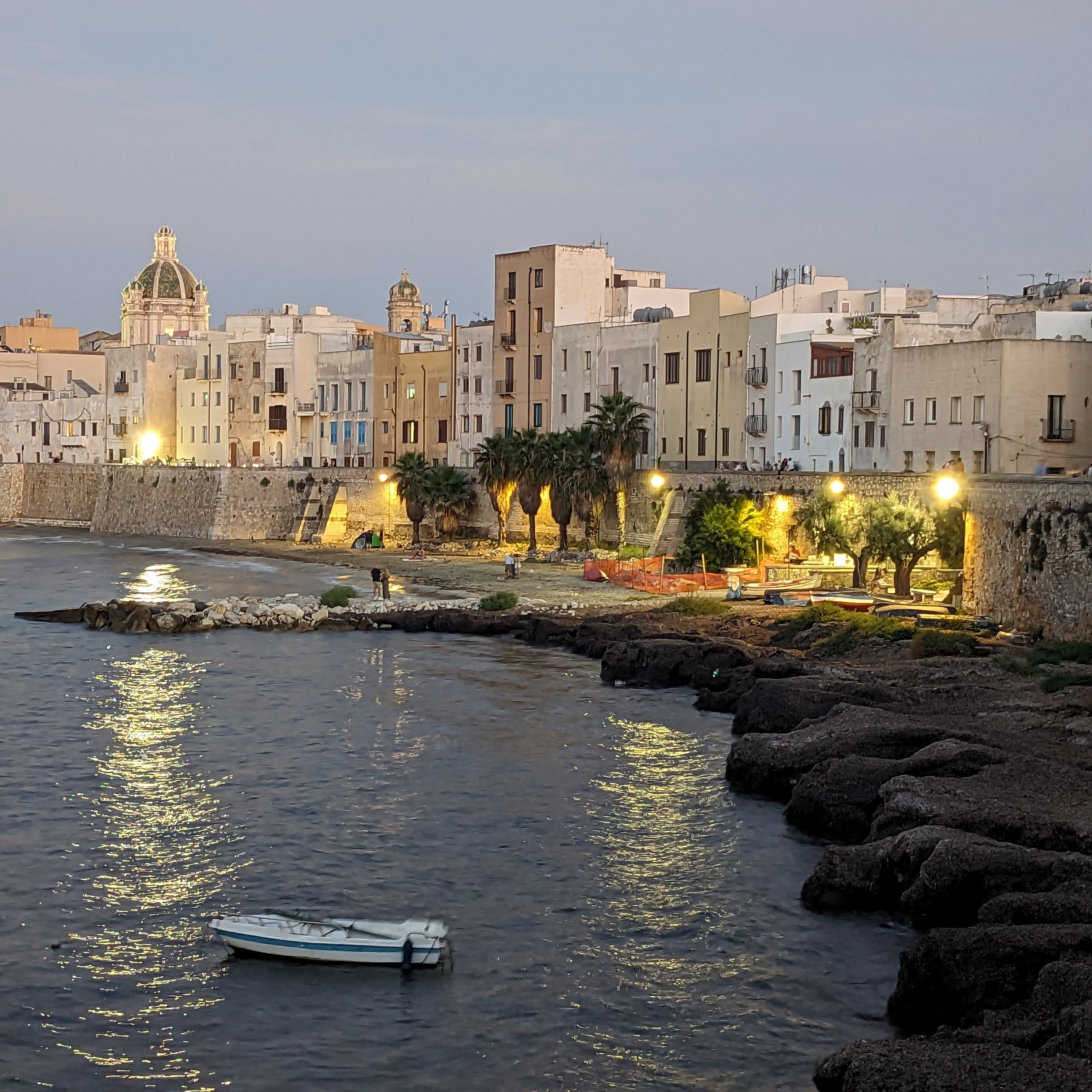
Dear fellow traveler, if you’re looking for yet another delightful “Top 10 Things to do in Trapani” list, you have opened the wrong page. For starters, you will notice – if you have any talent for counting at all – that this list does not contain ten items. A list of ten would suggest a sense of completeness and order that simply does not exist in this wretched world. These recommendations are culled from my own harrowing experiences, though I have included a few locations I have not yet visited, solely because I have heard whispers of their greatness and feel a desperate, perhaps foolish, urge to see them for myself before something goes horribly wrong.
I must caution you: while the tone of this guide is somewhat grim, the logistical information contained within is – most distressingly – entirely accurate. I have meticulously recorded prices and logistical advice with a level of accuracy that is frankly exhausting. Every detail was correct at the time this document was published, though in a world as unstable as ours, accurate is a word that should always be whispered with a note of caution. You may use this information to plan your journey with terrifying efficiency, though why you would want to arrive at your destination any sooner is a mystery that I have no desire to solve.
So if you are looking for a story about a delightful vacation filled with sunshine and joy, you have picked up the wrong travel guide. The word Trapani might sound like the name of a pleasant musical instrument or a type of gourmet pasta, but for the wary traveler, it is merely a gateway to a collection of salt-crusted curiosities and windy disappointments.
I take it as my duty to report on the activities available in this coastal corner of the world, though I would much prefer to report on something less taxing, like the growth of mold on a damp basement wall. In the following paragraphs, you will find a list of things to do in Trapani – each one more likely than the last to leave you feeling windswept, exhausted, and perhaps a little bit suspicious of the local tuna.
If this is your first stop in Italy, read Italy’s Beautiful Disorder: A Travel Guide.
Best Things to See and Do in Trapani (And Why They Might Disappoint You)
In any given metropolis, there is a list of Best Things to See and Do, an optimistic and misleading phrase that suggests these activities will be entirely delightful and without peril. Such a list, however, is merely a catalog of places where one can witness something curious, or perhaps even perform a curious deed oneself. One should approach this list with caution and a healthy dose of suspicion, as no one can truly promise that what you see and do will be anything but an experience of dreadful consequence.
While I endeavor to furnish you with the costs of regular adult admission for the various locales of interest, you must understand that the proprietors of these places will almost certainly offer lesser prices for children, students, the elderly, and other groups in order to make a simple transaction more complicated. You should also be aware of the Trapani Welcome Card, which permits free access to an alarming number of sights and the local public transportation, alongside discounts for yet more sights.
Monuments of Salt and Sorrow
A category for structures that stand as grim reminders that time is a thief and that even a pile of salt can be turned into a reason to stand in a queue.
Take the pointless journey to the windmills of the Saline
- What the guides say: This involves a pedestrian transit toward the coastal perimeter to observe 16th-century windmills featuring red conical roofs. These structures were historically utilized for the mechanical grinding of sodium chloride. Currently, they are stationary wooden artifacts situated adjacent to stagnant brine pools.
- What they don’t tell you: These ancient windmills stand with their wooden arms frozen, like giants who died while trying to wave for help. They once ground salt, but now they primarily serve as a backdrop for tourists to realize that a landscape made of shallow water and white crust is remarkably flat, remarkably salty, and remarkably devoid of any shade whatsoever.
- Best Time: Visit during the golden hour when the setting sun reflects off the salt pans, turning the stagnant brine pools into mirrors of pink and gold.
- Go for: 16th-century engineering and a monochromatic horizon of salt.
- Cost: Free to view.
- Verdict: The contrast of the red conical roofs against the white salt crust is a 10/10 for your Instagram feed.
Endure the theatricality of the Museum of Salt
- What the guides say: Step inside a repurposed salt mill containing an inventory of oxidized iron tools and monochromatic photography. The exhibits utilize an academic tone to describe the process of solar evaporation. It is a small, desiccated repository where a common mineral is presented as a significant cultural artifact through the application of regional commemorative effort.
- What they don’t tell you: Housed in an old mill, this museum features rusty tools and grainy photographs of people doing back-breaking labor. It is a tribute to the misery of the harvest, presented with a dramatic flair that suggests salt is far more exciting than something you sprinkle on a potato. You will leave with a dry throat and a newfound respect for the salt shaker.
- Go for: Tactile crystals and an interactive survey of the sodium industry.
- Cost: Approximately €3.
- Planning: It is a small, desiccated repository that takes less than thirty minutes to fully tour, making it an easy escape from the outdoor sun.
- Verdict: You will leave with a dry throat and a newfound realization that salt is more exciting than a potato condiment.
Stand and gawk at the Torre di Ligny
- What the guides say: Walk to the westernmost terminus of the city, which serves as the geographic boundary between the Tyrrhenian and Mediterranean seas. This 17th-century quadrangular watchtower contains a limited collection of prehistoric lithics and ceramic amphorae. The location provides a high-salinity maritime view and constant exposure to aerosolized seawater.
- What they don’t tell you: A defensive tower perched on the very tip of the coastline, looking out at where the Tyrrhenian and Mediterranean seas collide. It was built to watch for pirates, but now it merely watches for tourists who are trying not to be blown over by the wind. It is a sturdy, lonely sentinel that reminds you that the sea is vast and you are very, very small.
- Go for: Prehistoric lithics and a front-row seat to the collision of two seas.
- Cost: Approximately €2.
- Best Time: Sunset is mandatory; the watchtower cuts a dramatic silhouette against the open water as the aerosolized seawater glows in the fading light.
- Sensory Warning: Expect a heavy coat of salt on your skin and glasses within minutes due to the relentless spray from the colliding tides.
- Photography: Stand at the tip to capture the literal boundary where the Tyrrhenian and Mediterranean seas meet.
- Verdict: Must do (at sunset). It’s free, terrifying, and beautiful. If you don’t feel a slight sense of peril, were you even in Trapani?
Be disappointed by the closed shutters of the Palazzo Senatorio (Palazzo Cavarretta)
- What the guides say: This Baroque structure features a facade decorated with statues and horological instruments. It functions as the municipal headquarters and is an example of 17th-century architectural ostentation that is best observed from a non-interactive distance.
- What they don’t tell you: A grand building adorned with statues and clocks that suggests a great deal of important business is happening inside. However, you will likely find the heavy doors barred and the shutters closed, leaving you to admire the facade while wondering if the senators are hiding from the heat or simply hiding from you.
- Go for: Baroque ostentation and the art of looking at closed shutters.
- Cost: Free (exterior observation).
- Architecture Fact: The elaborate facade features statues representing the virtues of the city, standing guard over municipal operations that you are entirely excluded from seeing.
- Verdict: Go anyway; the shutters may be closed, but the stunning Baroque facade alone is a masterclass in elegant, historical exclusion.
Ecclesiastical and Optical Alarms
Spaces where one is confronted with either the agony of the saints or the treachery of one’s own eyes, neither of which provides any real relief.
Contemplate the sadness within the Chiesa delle Anime Sante del Purgatorio (Church of Purgatory, Massacre of the Innocents)
- What the guides say: This religious structure houses the Misteri, a group of twenty wooden sculptural representations of the Passion of Christ produced in the 17th and 18th centuries. The figures are characterized by a high degree of anatomical realism and an aesthetic of profound emotional distress. The interior illumination is low, contributing to a sense of atmospheric melancholy.
- What they don’t tell you: The statues have expressions of such profound agony that you will find yourself apologizing for things you haven’t even done yet. It is a dark, silent gallery of holy distress.
- Go for: Anatomical realism and twenty wooden sculptures of profound emotional distress.
- Cost: Free (donations encouraged).
- Best Time: Visit during the day when the low interior illumination creates a heavy, atmospheric melancholy.
- Art History: These 17th-century masterpieces are constructed from a unique mix of wood, canvas, and glue, allowing for highly expressive, agonizing facial details.
- Close-Up Details: Look closely at the hands of the statues; the anatomical realism extends to strained veins and cracked fingernails.
- Verdict: It is the most expensive-looking humble church you will ever see. The catacombs are a nice palate cleanser.
Be confused and slightly frightened by the Easter Procession of the Misteri
- What the guides say: This is a 24-hour continuous event where the aforementioned statues are transported through the city by human bearers. The activity involves a specific rhythmic gait and the performance of funeral marches by brass ensembles. It is a documented test of physical stamina involving high concentrations of incense and liquified wax.
- What they don’t tell you: For 24 hours, local men carry the aforementioned heavy statues through the streets on their shoulders, swaying in a rhythmic, mournful dance. The air is thick with incense and the sound of brass bands. It is a grueling display of faith and physical endurance that makes your own walk to the bakery seem like a shameful lapse in character.
- Go for: 24 hours of funeral marches, incense, and liquefied wax.
- Cost: Free to observe.
- Best Time: The event lasts 24 hours, starting at 2 PM on Good Friday.
- Crowd Strategy: Position yourself on a side street early along the route rather than the main square to witness the swaying rhythmic gait up close.
- Health Tip: The high concentration of incense and the sheer duration of the event can induce a trance-like state of exhaustion.
- Verdict: Go anyway; it is terrifying, hypnotic, and exhausting, but you haven’t truly seen the city until you’ve been judged by a 24-hour funeral march.
Witness the burden of containment at the Museum of Illusions
- What the guides say: This gallery utilizes holograms and forced perspective to create perceptual paradoxes. The exhibits are designed to create a sense of cognitive dissonance. It is a confined environment that serves as a reminder that visual data in high-contrast Mediterranean lighting may be subject to neurological misinterpretation.
- What they don’t tell you: A place where the walls tilt, the floors vanish, and your brain begins to suspect that your eyes have been lying to you since birth. It is a disorienting collection of visual tricks that proves that reality is a fragile concept, especially when you are currently trapped in a room that makes you look like a giant while your friend looks like a pebble. You will pose in gravity-defying rooms, trying to look like you are having fun while your inner ear screams in protest. It is a calculated, mirrored labyrinth that reminds you that seeing is not believing, and believing is often a mistake.
- Go for: Holograms, forced perspective, and photographic traps.
- Cost: Approximately €14.
- Planning Tip: Tickets should be purchased ahead of time to ensure admission.
- Photography: This is specifically designed for your camera; the more ridiculous the pose, the better the illusion.
- Verdict: It’s a tourist trap that earns its reputation by making you doubt the stability of the very ground you stand on.
Seek a fraudulent serenity by visiting the Sanctuary of Maria SS. Annunziata
- What the guides say: This basilica contains the Madonna of Trapani, a 14th-century marble sculpture attributed to Nino Pisano. The interior air contains a high density of floral scents and contains numerous silver ex-votos – objects offered in fulfillment of a vow. It provides a thermal refuge from the exterior, provided the user is comfortable with the aesthetic density of the high altar.
- What they don’t tell you: A grand basilica that houses a famous marble statue of the Madonna. The interior is lush and ornate, designed to inspire awe and a sense of peace. However, you will likely find yourself surrounded by clicking cameras and echoing footsteps, realizing that true serenity is difficult to find in a place so popular with people who have loud shoes.
- Go for: A famous marble Madonna and a high density of floral scents.
- Cost: Free.
- Thermal Refuge: The thick historical walls offer a glorious drop in temperature, making it a perfect noon escape when the exterior stone streets are roasting.
- The Silver Walls: Take time to inspect the walls covered in silver ex-votos; these offerings tell centuries of dramatic stories of survival and answered prayers.
- Dress Code: This is a strictly active religious site; ensure your shoulders and knees are covered to avoid being turned away at the threshold.
- Verdict: Go for the cool air and the stunning silver walls, but expect more clicking cameras than quiet prayer.
Wander aimlessly through the Agostino Pepoli Regional Museum
- What the guides say: Located in a former convent, this museum holds everything from archaeological finds to intricate coral carvings. You will wander past crucifixes and ancient vases, feeling the weight of Sicilian history pressing down on you. It is a vast, echoing collection that proves that humans have always been very good at making beautiful things out of very difficult materials.
- What they don’t tell you: Located in a former convent, this museum contains an eclectic inventory including coral carvings, liturgical art, and a 1792 guillotine. The transition from decorative jewelry to instruments of capital punishment is abrupt. The facility includes sun-exposed cloisters and serves as a disorganized catalog of regional history.
- Go for: Coral carvings, crucifixes, and a 1792 guillotine.
- Cost: Approximately €8.
- The Coral Masterpieces: Trapani was world-renowned for coral craftsmanship; the intricate items on display look impossibly detailed to have been carved by hand.
- Atmosphere Warning: The vast, echoing collection can feel a bit spooky around the guillotine display; it is a sharp detour from the delicate liturgical art next door.
- Verdict: Go for the jaw-dropping coral art, stay for the sudden 1792 guillotine, and accept that the historical whiplash is part of the charm.
Culinary Calamities
The dangerous pursuit of nourishment in a land where the fish have been cured into dust and the sugar is a trap for the unwary.
Shamefully devour a Couscous di Pesce
- What the guides say: This regional specialty consists of semolina granules steamed with a spicy fish broth. Unlike versions found in North Africa, this preparation is exclusively maritime. The consumption process requires the manual extraction of bones and shells from the grain, a labor-intensive nutritional event.
- What they don’t tell you: Trapani’s signature dish is a testament to its North African influences. It is a mountain of semolina steamed with a broth made from the bits of fish that nobody else wanted. It is complex, aromatic, and far too much food for one person. You will eat it until you can no longer move, wondering if you are now more couscous than human.
- Go for: The spicy broth and the realization that semolina is a heavy-duty carb.
- Cost: Approximately €15 – €25.
- Try: La Bettolaccia.
- Portion Warning: These mountains of semolina are massive; consider splitting one order between two people to avoid immediate food-coma paralysis.
- Best Time: Dinner, because you will need to sleep immediately afterward.
- Verdict: Go for the rich maritime broth and the massive carb mountain, but plan an immediate post-meal nap because you will leave defeated.

Face the slippery truth of eating Bottarga (Cured Roe)
- What the guides say: Bottarga is the salted and cured roe pouch of flathead grey mullet or bluefin tuna. It possesses a high concentration of sodium and a persistent oily texture. When grated over pasta, it provides a concentrated flavor profile of the Mediterranean, which may remain on the palate for a significant duration.
- What they don’t tell you: This is the dried, salted pouch of fish eggs, often called the gold of the sea. It has a flavor so intense and briny that it feels like the ocean is trying to personally settle a debt with your tongue. You will eat it thinly sliced over pasta, trying to look sophisticated while your thirst grows to a catastrophic level.
- Go for: The salt. So much salt.
- Cost: High – it’s the gold of the sea for a reason.
- Planning Tip: Order a very large bottle of mineral water simultaneously. You will need it.
- The Truth: It’s actually preserved fish eggs, which sounds less appetizing than it tastes (hopefully).
- Verdict: Go in knowing exactly what it is, and it becomes tolerable – even impressive.
Labyrinths, Liminal Spaces, and Illusory Escapes
Narrow pathways, sun-bleached streets, and manicured patches of dirt designed to ensure you remain perpetually disoriented, or briefly deluded into thinking you’ve escaped the heat.
Allow yourself to get lost in the Centro Storico (Old Town)
- What the guides say: The historic center is a high-density maze of narrow corridors characterized by overhead laundry lines. The geometric similarity of the alleys often results in a failure of human navigational systems. Residents observe from balconies as visitors attempt to exit the labyrinth.
- What they don’t tell you: The streets here were built by people who clearly hated maps. You will wander into a narrow alleyway, follow it through three turns, and emerge exactly where you started, only more confused. The buildings lean over you, whispering secrets in Italian, while you desperately search for a landmark that isn’t a church or a cat. They say that anything will give up its secrets if you love it enough, but I suspect this labyrinth requires a level of affection that most tourists simply cannot muster after forty minutes of walking in circles.
- Go for: The high-density maze of narrow corridors and the quintessential Italian atmosphere.
- Cost: Free.
- Photography: Look up to capture the laundry line aesthetic, but keep your camera strap tight; those narrow alleys make for easy bumps.
- History: The geometric layout was designed to confuse invaders, which explains why your GPS will likely give up within five minutes.
- Verdict: You’ll arrive irritated and leave convinced it was necessary.

Walk the unforgiving length of Corso Vittorio Emanuele
- What the guides say: This is a pedestrian thoroughfare lined with Baroque palaces. The white stone used in the construction has a high albedo, reflecting solar radiation and increasing the perceived temperature. It is the primary site for the passeggiata, an evening ritual of social display performed while slowly dehydrating.
- What they don’t tell you: The main pedestrian artery of the old town, lined with grand palazzos and shops selling things you don’t need. It is a polished, stone gauntlet where you will be buffeted by crowds and the smell of fried dough. It is the heart of the city, beating with a rhythm that is both festive and exhausting, depending on how much your feet hurt.
- Go for: The grand Baroque palaces and the evening passeggiata social ritual.
- Cost: Free (unless you succumb to the shops).
- Best Time: Visit during the golden hour when the white stone glows, but wear polarized sunglasses to combat the intense glare.
- Shopping Trap: The storefronts look beautiful, but the prices include a heavy tourist premium; look for side-alley boutiques instead.
- Verdict: Go for the glowing Baroque palaces at golden hour, but prepare your sunglasses and your stamina for a blinding, crowded stone gauntlet.
Stand beneath the overhanging menace of the Porta Oscura (Clock Tower)
- What the guides say: The Porta Oscura features an astronomical clock dating to 1596 that tracks the lunar and solar cycles. This stone archway serves as a narrow transit point between the port and the medieval center. The clock operates with a mechanical indifference to the humans passing beneath the shadowed threshold.
- What they don’t tell you: The Porta Oscura (Dark Gate) features an astronomical clock from 1596 that tells the time, the zodiac signs, and the phases of the moon. You will stand beneath it, looking up at the complicated dials, and realize that even if you knew what time it was, you would still be late for your dinner reservation. It is a beautiful, mechanical reminder of your own tardiness.
- Go for: The 1596 astronomical clock that tracks the sun, moon, and zodiac.
- Cost: Free.
- Superlative: It is one of the oldest astronomical clocks in Europe and still functions with mechanical precision.
- Verdict: Go anyway for a glimpse of 1596 mechanical magic, even if you have absolutely no idea how to read the dials.
Walk the endless stalls of the Via Giovanni Battista Fardella
- What the guides say: This is a long, linear commercial boulevard that represents the modern economic center of the city. It contains a high density of retail outlets and internal combustion engine emissions. It provides a contrast to the medieval district, demonstrating that municipal life continues at a high-decibel, contemporary pace.
- What they don’t tell you: The long, straight shopping street of the modern city, where the locals go to buy shoes and appliances. It is a bustling, noisy contrast to the old town, filled with the roar of scooters and the frantic energy of commerce. You will walk until your legs ache, realizing that even in Sicily, people still need to buy sensible socks.
- Go for: A dose of modern Sicilian life and a break from the museum feel of the old town.
- Cost: Free to walk; variable for shopping.
- Normal: This is the best place to find normal amenities like pharmacies or hardware stores if you’ve forgotten essentials.
- Warning: Watch out for the high density of scooters; they consider the sidewalk a suggestion, not a rule.
- Siesta Schedule: Unlike the tourist center, shops on this commercial boulevard close strictly between 1 PM and 4 PM for the afternoon pause.
- Verdict: Go for the sensory overload of real Sicilian life; just watch your ankles for rogue scooters and time your visit around the afternoon siesta.
Observe the false tranquility of the Piazza Mercato del Pesce
- What the guides say: This semi-circular plaza formerly housed the regional fish market. It now contains a statue of Venus and is frequently subject to the sound of the adjacent surf. The current silence is a historical anomaly compared to the vocal commercial activity that previously defined the space.
- What they don’t tell you: Once the site of a frantic fish market, this semi-circular plaza by the sea is now a quiet space with a statue of Venus. It looks peaceful, but the stones still hold the memory of thousands of dead sardines and shouting fishermen. It is a scenic spot to watch the waves, provided you don’t mind the ghosts of fish-sales past.
- Go for: The semi-circular architecture and the stunning view of the waves against the stone.
- Cost: Free.
- History: While it’s peaceful now, the acoustic design was originally meant to carry the shouts of fishmongers across the entire square.
- Best Time: Sunset, as the statue of Venus is backlit by the Mediterranean.
- Verdict: Free, unavoidable, and quietly excellent if you stand still long enough.
Enter the grounds of the Villa Margherita
- What the guides say: This public park contains large ficus trees with extensive aerial root systems. It is a fenced enclosure that provides a reduction in municipal noise and a rare area of maintained turfgrass. It offers a temporary escape from the surrounding stone and particulate matter.
- What they don’t tell you: The city’s main public park, featuring giant ficus trees with roots that look like they are trying to swallow the benches. It is a manicured island of shade where you can watch ducks in a pond and pretend the humidity isn’t real. It is a pleasant distraction that serves as a reminder that even in a city of salt, things can still grow if they are watered enough.
- Go for: The massive Ficus trees with roots that look like alien tentacles.
- Cost: Free.
- Ficus macrophylla: The trees are Ficus macrophylla, known for their ability to eventually swallow anything left near them – including benches.
- Escape Plan: A great spot for kids or for anyone needing to escape the city’s particulate matter and noise for thirty minutes.
- Verdict: You could skip this, but you would also regret skipping it.
Logistical Nightmares
The foolhardy attempt to use mechanical transport to escape your surroundings, which usually results in motion sickness or a long wait in the heat.
Queue dutifully for the cable car to Erice
- What the guides say: This involves standing in a line to enter a glass cabin that ascends to an altitude of 750 meters. The journey provides a vertical perspective of the salt pans and the Egadi Islands.
- What they don’t tell you: You will stand in a hot, glass-walled station, waiting for a small metal bubble to carry you up a mountain. As you dangle from a wire high above the jagged rocks, you will wonder if the view is worth the sudden realization of how thin a cable actually is. The experience induces a physiological response in the stomach due to the swaying of the cabin and the significant distance from the ground. It is a scenic ascent that doubles as a test of your nervous system’s structural integrity.
- Go for: The terrifying yet beautiful 750-meter vertical ascent.
- Cost: Approximately €9 (one-way) or €15 (round trip).
- Photography: Keep your lens close to the glass to minimize reflections of the cabin interior.
- Warning: The cabins sway significantly in the wind; if you have a weak stomach, look at the horizon, not the ground.
- Verdict: This is function masquerading as spectacle; it lasts minutes but the sheer terror of the height stays with you much longer.

Take a perilous hydrofoil ride to Favignana
- What the guides say: Board a high-speed nautical vessel that utilizes hydrofoils to lift the hull above the water.
- What they don’t tell you: A high-speed boat that skims across the waves with a violence that suggests the ocean has offended the captain. You will sit in a cramped, plastic-smelling cabin as the vessel slams into the water, feeling every vibration in your teeth. It is an efficient way to reach an island, provided you don’t mind arriving with a slightly rearranged internal anatomy.
- Go for: High-speed nautical thrills and getting to the islands in record time.
- Cost: Approximately €15 – €25 (round trip).
- Helpful Tip: Sit toward the back of the vessel if you are prone to motion sickness; the front takes the hardest hits from the waves.
- Warning: The diesel smell inside the cabin can be as intense as the mechanical vibrations.
- The Island: Favignana is a butterfly-shaped scrap of land where the sun bakes secrets into bleached stone. Here, the grim history of trapped tuna haunts the azure waves, offering a dreadfully picturesque escape for those who mistake isolation for peace.
- Verdict: It lasts minutes and stays with you much longer.
Secure a rental of a scooter
- What the guides say: This involves participating in the high-density traffic of Trapani using a two-wheeled motorized vehicle. It requires high levels of concentration to navigate among delivery vehicles and pedestrians. While it provides high mobility, it also entails a significant disregard for the operator’s long-term physical integrity.
- What they don’t tell you: The ultimate Italian gamble. You will be given a small, motorized two-wheeler and expected to navigate a city filled with aggressive drivers and unpredictable cobblestones. You will zip through traffic, your heart in your throat, feeling very brave until you realize that everyone else on the road is much larger and much faster than you.
- Go for: Feeling like a movie star for five seconds before a truck honks at you.
- Cost: Approximately €20 – €40 per day plus your sanity.
- Try: Noleggio Trapani.
- Insurance: Check your insurance twice; Sicilian traffic laws are mostly vibes-based.
- Photography: Take a photo of the scooter before you drive it, just in case you return it in pieces.
- Verdict: If you only do one thing that makes you mildly resent the city, make it this.
In summary, Trapani is a city of salt, wind, and ancient shadows – three things that rarely lead to a comfortable nap. Whether you have spent your time counting the windmills that stand like skeletal giants along the coast, or hiding in the dark corners of the Church of Purgatory, you will eventually realize that a vacation is simply a way to be miserable in a more expensive zip code.
As the sun sets over the Egadi Islands, casting a glow that many mistakenly call romantic rather than an ominous reminder of the passing of time, you would be wise to pack your trunk and depart. For in Trapani, as in life, the most beautiful sights are often just a prelude to a very long, very damp boat ride into the unknown.
Further Reading
If one is in search of a less dreadful and more pleasant perspective on Trapani, a number of additional resources exist. These are, of course, presented with the understanding that such information is often a mere sugarcoating on a very bitter pill, and should be consumed with a healthy dose of suspicion.
- Visit Sicily: Official Portal for Trapani
- “The Best Things to Do in Trapani, Sicily” – from Jamie Chance Travels (but beware, this site may try to talk to you)
- “Where Odysseus threw a barbecue: exploring Sicily’s Favignana island” from The Guardian
- “10 Delightful Things to Do in Trapani, Sicily” from Along Dusty Roads